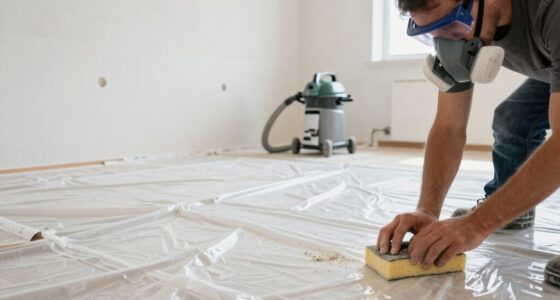
To handle fresh drywall dust before priming, start by isolating the area with plastic sheeting or barriers to contain dust. Vacuum the drywall thoroughly with a HEPA-filter vacuum to remove airborne particles, then wipe surfaces with a damp or tack cloth to catch any remaining dust. Wear protective gear and guarantee proper ventilation for safety. Using these techniques will give you a smooth, dust-free surface, and if you keep exploring, you’ll discover even more tips for a perfect finish.
Key Takeaways
- Use a HEPA-filter vacuum to thoroughly remove airborne dust from the drywall surface.
- Wipe the surface with a damp or tack cloth to pick up remaining fine dust particles.
- Seal off the work area with plastic sheeting to contain dust during cleanup.
- Wear personal protective gear, including a dust mask, goggles, and gloves.
- Enhance air quality by using portable air purifiers and ventilating the space before priming.

Have you ever wondered why proper dust removal is essential before priming drywall? It’s a critical step that can’t be overlooked if you want a smooth, professional finish. Drywall dust is fine and lightweight, which means it easily becomes airborne and settles into every nook and cranny. If you skip the cleaning process, this dust can cause uneven primer adhesion, leading to a rough surface and possible future imperfections. Additionally, drywall dust contains fine particles that can irritate your eyes, skin, and respiratory system. That’s why managing dust properly isn’t just about aesthetics; it’s about your safety and the quality of your work.
When it comes to handling drywall dust, dust containment plays a fundamental role. You want to prevent the spread of dust to other areas of your home or workspace. Using plastic sheeting or temporary barriers around the drywall area helps contain the dust during cleaning. Employing a vacuum with a HEPA filter is one of the most effective methods to remove fine particles without redistributing them into the air. These vacuums trap tiny dust particles, reducing airborne contamination and making cleanup safer and more efficient. After vacuuming, wipe the surface with a damp cloth or tack cloth to pick up any remaining dust. This step guarantees that the drywall surface is clean and ready for priming, resulting in a smoother finish. Incorporating proper air filtration methods can further improve indoor air quality during and after the cleanup process.
Safety precautions are essential during this process. Always wear personal protective equipment such as a dust mask or respirator, safety goggles, and gloves. This shields you from inhaling airborne dust and prevents irritation to your eyes and skin. Good ventilation is also key—open windows or run an exhaust fan to help air circulate and carry dust outside. If you’re working in a confined space, consider setting up a portable air purifier to improve air quality. Remember, drywall dust can linger and pose health risks, especially if inhaled over time, so taking these precautions isn’t just about convenience; it’s about protecting your health. Proper dust removal techniques are crucial to ensure a safe and effective cleanup.
As an affiliate, we earn on qualifying purchases.
Frequently Asked Questions
Can I Skip Cleaning Drywall Dust Before Priming?
You shouldn’t skip dust removal techniques before priming because dust can ruin the finish. Proper priming preparation involves thoroughly cleaning the drywall surface to remove loose dust and debris, ensuring the primer adheres well. Use a damp cloth or vacuum to pick up drywall dust, and then lightly sand the surface. Skipping this step can lead to uneven primer application, adhesion issues, and a less durable paint job.
What Tools Are Best for Removing Drywall Dust?
You’ll want to use a power vacuuming tool and dust mitts for the best results. Power vacuums with HEPA filters easily remove drywall dust without spreading it around, saving you time and effort. Dust mitts are perfect for wiping down surfaces, ensuring all residual particles are gone. Don’t worry about the mess—these tools make cleanup straightforward, giving you a dust-free surface ready for priming.
How Long Should I Wait After Sanding Before Priming?
You should wait at least 24 hours after sanding before priming to guarantee proper dust removal and ideal primer adhesion. During this time, vacuum and wipe down the drywall thoroughly to eliminate dust particles that could interfere with the primer’s bond. Making sure the surface is clean and dust-free helps the primer stick better, provides a smooth finish, and prevents future peeling or uneven texture issues.
Is It Necessary to Wear a Mask During Dust Cleanup?
You should definitely wear a mask during dust cleanup because respirator importance can’t be overstated. Dust mask safety is essential to protect your lungs from fine drywall particles that can cause irritation or respiratory issues. A proper respirator provides better filtration than a regular dust mask, ensuring you’re safe from airborne dust. Always choose the right mask, wear it correctly, and prioritize your health during cleanup to avoid inhaling harmful dust.
Can Wet Cleaning Methods Damage the Drywall Surface?
Did you know that improper surface preparation can cause paint to peel within months? Wet cleaning methods won’t damage drywall if done carefully; avoid excessive moisture and harsh scrubbing. Lightly dampen a sponge or cloth to gently remove dust, ensuring a clean surface for better paint adhesion. Proper surface prep prevents issues down the line, so take your time with moisture control to keep your drywall looking great and lasting longer.
dust containment plastic sheeting
As an affiliate, we earn on qualifying purchases.
As an affiliate, we earn on qualifying purchases.
Conclusion
Don’t let drywall dust hold you back from a perfect finish. Taking the time to properly clean and prep your walls might seem tedious, but it’s worth it for a smooth, professional-looking paint job. Skipping this step can lead to uneven primer and paint, wasting your effort and money. Trust me, your future self will thank you for the extra care—because nothing beats the satisfaction of a flawless, long-lasting finish that truly shines.
portable air purifier for dust removal
As an affiliate, we earn on qualifying purchases.
As an affiliate, we earn on qualifying purchases.
dust mask respirator for construction
As an affiliate, we earn on qualifying purchases.
As an affiliate, we earn on qualifying purchases.