
TL;DR
Ideal Home contributor Hannah Carvell says she found discounted handmade Moroccan tiles through a Bristol shop after retail tiles and delivery were estimated at about £500 or more. Her account also describes unexpected installation work, including removing a metal backing plate and buying more tiles than her initial estimate allowed.
Screen printer and Ideal Home contributor Hannah Carvell says she found a lower-cost way to add handmade Moroccan tiles to her living-room fireplace after her preferred options were estimated at about £500 or more, including delivery. She bought discounted leftover tiles from a Bristol-based importer, but the project also brought extra work and a shortfall in the amount she had first estimated.

Get furniture and decor delivered free with Prime
- Fast, free delivery on millions of items
- Prime Video, Amazon Music and more included
- Member-only deals all year
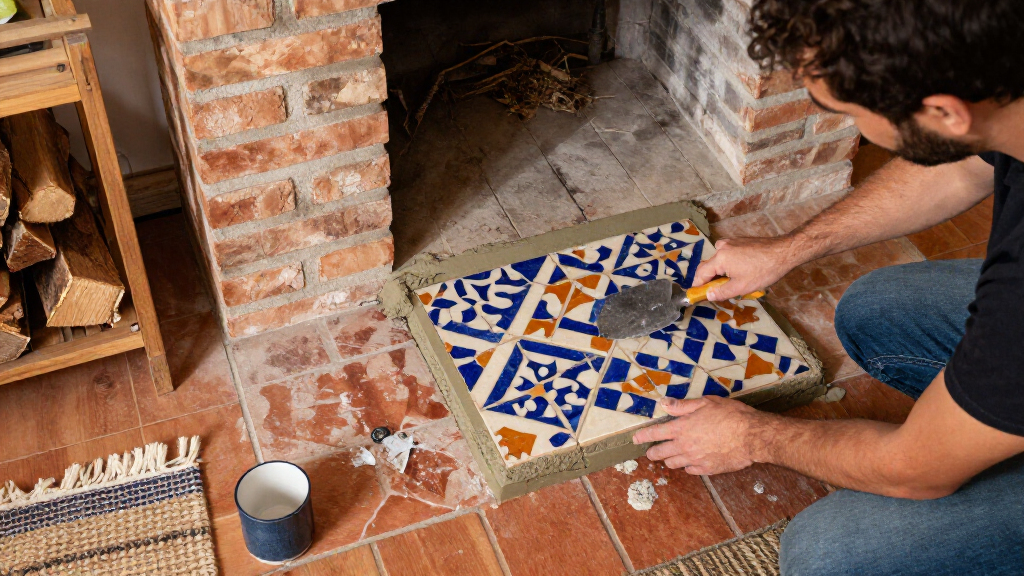
Carvell had already painted the fireplace’s relatively new brick surround Dulux Heritage Sage Green, matching the rest of the colour-drenched living room. She says she chose to paint it because the bricks were shiny and uniform, unlike original brickwork she would have left untouched. She then decided to replace the black metal sheet behind the log burner with Moroccan fireplace tiles.
After looking at options from Maitland & Poate, Otto Tiles and Fired Earth, Carvell ordered samples and was drawn to Otto Tiles’ Amber Arch tiles. Her measurements suggested she needed 1.5 square metres, but she says even that quantity from the brands she had researched, with delivery charges, would bring the cost to around £500 or more. She did not give a final project total or a like-for-like price for the tiles she eventually bought.
Carvell found a Bristol shop, the Moroccan Encaustic Tile Company, through Facebook Marketplace. The shop imports tiles from Marrakech, and collecting in person meant she could avoid an £80 delivery charge. Rather than commission a new design, which would have required waiting and added cost, she chose discounted leftover mint-green glazed tiles. A local log-burner fitter quoted £60 to remove and later refit the stove, according to Carvell.
A lower-cost route to Moroccan tiles with extra work to plan for
Hannah Carvell found discounted leftover tiles at a Bristol shop after her preferred retail options were estimated at around £500 or more. The final project cost and completion are unreported.
How she sourced the tiles
Local collection and leftover stock helped her pursue the look without ordering a bespoke batch.
Carvell found the Moroccan Encaustic Tile Company in Bristol through Facebook Marketplace.
She selected discounted mint-green glazed tiles imported from Marrakech.
Picking up the tiles avoided the £80 delivery charge.
Where costs stand
The reported figures show potential savings, but they do not establish the finished project budget.
| Item | Reported detail | What remains unknown |
|---|---|---|
| Preferred retail tiles | Around £500 or more with delivery | Final price of purchased tiles |
| Local collection | £80 delivery charge avoided | Total savings |
| Stove work | £60 removal and refitting quote | Final labour and project cost |
Unexpected work changed the plan
The fireplace needed more than a tile order and a straightforward fitting.
- A stubborn metal backing plate had to be cut out.
- Tile thickness meant another course of bricks was needed for clearance.
- Her initial estimate was 1.5 square metres.
- Planning the pattern showed she needed at least as much tile again.
How the Tile Search Cut Costs
Carvell’s account shows how leftover stock and local collection can change the cost of a small home project when preferred handmade finishes are beyond budget. The reported £80 delivery saving and discounted tiles offered a route to the look she wanted without ordering a bespoke batch, though the source does not state how much she ultimately saved overall.
It also illustrates why a material estimate is not the same as a finished-project budget. Carvell says the stove needed to be removed, a stubborn metal plate had to be cut out, and the tiles’ thickness meant the fireplace opening needed another course of bricks. Those complications affected the work and required help beyond simply applying tiles.
Products Worth Considering

Roborock Qrevo S Pro Robot Vacuum and Mop, 18,500 Pa Suction

Shark AI Ultra Robot Vacuum with Matrix Clean and Self-Empty Base

TCL 55-Inch F7D Series QLED 4K UHD Smart Fire TV (2026)
As an affiliate, we earn on qualifying purchases.
From Green Paint to Glazed Tile
The tiling idea followed a broader living-room makeover that Carvell had discussed in earlier Ideal Home contributions. She writes that painting the walls led to sanding the wooden floors, and that extending the room’s green colour scheme to the fireplace prompted her to reconsider the area around the log burner.
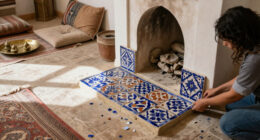
Her account distinguishes the painted brick surround from the fireplace’s inner area: the bricks were painted, while the intended tilework was for the space behind the burner after removal of its metal backing. Carvell says the backing plate would not shift, and she and a friend eventually removed it with an angle grinder, finding a brick wall behind it. The source does not provide a full technical description of the fireplace or the tiles’ installation method.
Final Cost and Work Still Unreported
The account does not provide the final tile quantity, total project cost or a precise comparison with the roughly £500-or-more retail estimate. It also ends after Carvell and her husband discovered they needed at least as much tile again as the 1.5 square metres she had initially expected, so the source does not confirm how she obtained the additional tiles or whether the installation was completed.
Other details are also absent, including the exact tile price, the cost of materials and labour beyond the fitter’s £60 quote, and any technical specifications for the fireplace. The account describes a personal project and does not establish that the same approach or costs would apply to other homes.
More Tiles Needed to Finish
Carvell’s account reaches a turning point when the laid-out pattern shows that 1.5 square metres is not enough. The immediate next step is to source additional tiles before the work can proceed as planned. The source does not say whether more discounted stock was available, what the final cost became, or when the log burner was refitted.
Readers considering a similar project would need to confirm the required quantity and the stove’s clearances with appropriate professionals before work begins. Carvell’s article reports her own experience; it does not provide a full installation guide or establish that removing a metal backing or altering brickwork is suitable for every fireplace.
Key Questions
Where did Hannah Carvell find the tiles?
She says she found the Moroccan Encaustic Tile Company, a Bristol-based shop that imports tiles from Marrakech, through Facebook Marketplace. She chose discounted leftover mint-green glazed tiles.
How much were the tiles she first considered?
Carvell estimated that 1.5 square metres from the brands she had researched, plus delivery, would cost around £500 or more. The source does not give the final price of the tiles she bought.
How did she reduce delivery costs?
Carvell says she collected the tiles from the Bristol shop herself, avoiding an £80 delivery charge.
Why did the project require more work than expected?
The metal backing plate behind the log burner was difficult to remove, and Carvell says the tiles were thick enough that the burner would not have enough clearance unless another course of bricks was added. Laying out the pattern also showed that she needed substantially more tile than her initial estimate.
Is the final project cost known?
No. Carvell’s account gives the initial retail estimate and a £60 quote for removing and refitting the stove, but it does not report the final total or confirm how she sourced the additional tiles.
Source: idealhome.co.uk