
To stop brush drag on fast-drying paints, start by thoroughly cleaning and conditioning your brushes to guarantee smooth performance. Mix your paint to a thinner, more fluid consistency, adding small amounts of water or thinner if needed. Work quickly in manageable sections, using swift, even strokes to prevent paint from drying on your brush. Keep your brushes conditioned and your workspace properly humid to maintain ideal drying times. For more tips, you’ll discover how proper techniques can make your finish smoother and more professional.

Get furniture and decor delivered free with Prime
- Fast, free delivery on millions of items
- Prime Video, Amazon Music and more included
- Member-only deals all year
Key Takeaways
- Use high-quality, well-conditioned brushes with soft bristles for smoother application on fast-drying paints.
- Maintain proper paint consistency by thinning with water or compatible thinner to ensure smooth glide.
- Work in small sections with swift, even strokes to prevent paint from drying on the brush.
- Regularly recondition brushes and rinse when switching colors to keep performance optimal.
- Adjust workspace humidity and work efficiently to minimize the drying time and reduce brush drag.

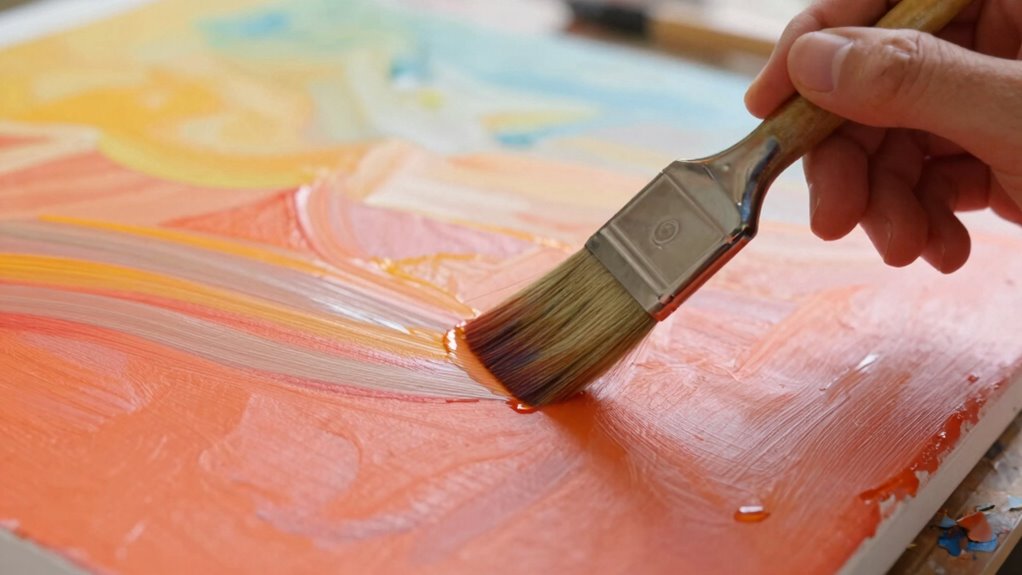
When working with fast-drying paints, brush drag can quickly become a frustrating obstacle that hampers your progress and affects your finish. The key to minimizing this frustration lies in proper brush conditioning and managing paint consistency. Brush conditioning involves preparing your brush so that it glides smoothly over the surface, reducing resistance and preventing uneven strokes. Before you start painting, thoroughly clean your brush to remove any dust, debris, or residual paint that could cause drag. Applying a brush conditioner or using a high-quality brush with soft, flexible bristles can also help maintain optimal brush performance throughout your project. A conditioned brush holds paint better and distributes it more evenly, which is essential when working with fast-drying paints that set quickly.
Equally important is controlling paint consistency. Fast-drying paints tend to thicken rapidly or dry on the brush if not thinned properly, increasing resistance and making brush strokes feel rough. To prevent this, always mix your paint to a smooth, even consistency, adding a small amount of water or a compatible thinner if necessary. The goal is to achieve a fluid, workable texture that allows the brush to glide effortlessly across the surface. If the paint feels too thick or sticky, it’s likely to create more drag. Conversely, if it’s too thin, you might lose coverage and control. Regularly stir your paint during application to maintain its consistency, especially if you notice it thickening or drying out on the brush. Additionally, understanding the properties of fast-drying paints can help you better manage their unique challenges and optimize your technique. Being aware of the paint’s drying time can also assist in planning your workflow to minimize issues with brush drag.
Another tip is to work in manageable sections and avoid overloading your brush. Dip only the tip of the brush and tap off excess paint before applying. This prevents excess paint from pooling and drying too quickly, which causes increased drag. Also, try to work swiftly and smoothly, maintaining a steady hand to keep the paint flowing evenly. Keep your brush conditioned throughout your project by periodically rinsing and reconditioning as needed, especially when switching between colors or finishes. Incorporating proper paint application techniques can further reduce the likelihood of brush drag and ensure a more professional finish. Paying attention to indoor air quality can also help ensure that drying times are consistent and predictable, reducing the risk of uneven drying that can contribute to drag. Adjusting your workspace’s humidity levels can further influence drying time and improve your overall results. With proper brush conditioning and attentive control of paint consistency, you’ll find that brush drag diminishes significantly, allowing you to achieve a smooth, professional-looking finish even with fast-drying paints.
high-quality soft bristle paint brushes
As an affiliate, we earn on qualifying purchases.
As an affiliate, we earn on qualifying purchases.
Frequently Asked Questions
Can Using a Different Brush Type Reduce Drag?
Yes, switching your brush type can reduce drag, especially if you choose one that’s compatible with your fast-drying paint. Opt for a brush with softer, synthetic bristles designed for swift application and smooth flow. Make sure the brush is suitable for your paint’s consistency and drying time. Using the right brush type improves your control, minimizes drag, and results in a more even, professional finish.
Does Temperature Affect Brush Drag on Fast-Drying Paints?
Yes, temperature affects brush drag on fast-drying paints. When it’s warm, paint dries quickly, increasing drag and making your brush stick. Cooler temperatures slow drying, allowing smoother application and better control with your brush technique. To minimize brush drag, work in a moderate environment, maintain consistent temperatures, and adjust your brush pressure accordingly. This way, you’ll achieve a smoother finish and better manage fast-drying paint’s unique challenges.
Are There Specific Brands Known for Less Brush Drag?
Did you know that some brands’ paints dry 20% faster than others? For less brush drag, choose brands known for high brush quality, like Winsor & Newton or Liquitex. These paints tend to glide smoothly, reducing drag and making application easier. Keep in mind, better brush quality often means a longer drying time, but it considerably improves your painting experience by providing a smoother finish.
How Does Paint Viscosity Influence Brush Drag?
Paint viscosity directly impacts brush drag by affecting its flow characteristics. Thicker, high-viscosity paint has a more substantial consistency, making it harder for your brush to glide smoothly, increasing drag. Conversely, lower-viscosity paints with better flow characteristics allow for easier application, reducing drag. Adjusting paint consistency with thinning agents can help, ensuring your brush moves effortlessly and your finish stays smooth, especially with fast-drying paints.
Can Surface Preparation Minimize Brush Drag Issues?
Think of surface preparation as laying a smooth, welcoming carpet—your brush glides effortlessly. You can minimize brush drag issues by smoothing out surface texture and controlling environmental humidity. A properly prepared surface reduces resistance, allowing your brush to flow smoothly. Keep humidity in check to prevent paint from drying too quickly and creating a rough surface. This proactive approach guarantees a sleek finish, making your painting experience much more enjoyable.
As an affiliate, we earn on qualifying purchases.
Conclusion
To conclude, preventing brush drag on fast-drying paints is all about choosing the right tools, using proper techniques, and maintaining your brushes well. With practice, you’ll find it easier to achieve smooth, even strokes, making your work look professional. Did you know that 70% of painters report improved results after switching to higher-quality brushes? So, investing in good tools and techniques can make a real difference in your painting experience.
As an affiliate, we earn on qualifying purchases.
As an affiliate, we earn on qualifying purchases.
Fall Picks
fall essentials
As an affiliate, we earn on qualifying purchases.