To spot previous moisture damage, look for visual signs like mold, discoloration, or fuzzy patches on the walls, especially near seams or plumbing. Check for bubbles, peeling paint, or soft, spongy areas when pressing on the surface. Notice if there’s a musty smell or damp feeling behind the wall. Focus on humid zones like bathrooms or basements, and consider using moisture meters for a thorough assessment. Keep exploring to learn how to identify these issues early and prepare your walls properly.

Get furniture and decor delivered free with Prime
- Fast, free delivery on millions of items
- Prime Video, Amazon Music and more included
- Member-only deals all year
Key Takeaways
- Look for visible mold, discoloration, or fuzzy patches indicating past moisture exposure.
- Check for paint bubbling, blistering, or peeling as signs of trapped moisture beneath the surface.
- Press gently on walls to detect soft, spongy, or pliable areas that suggest water damage.
- Use moisture meters to identify areas with elevated moisture levels before refinishing.
- Inspect corners, seams, and near plumbing for stains, water marks, or signs of previous leaks.
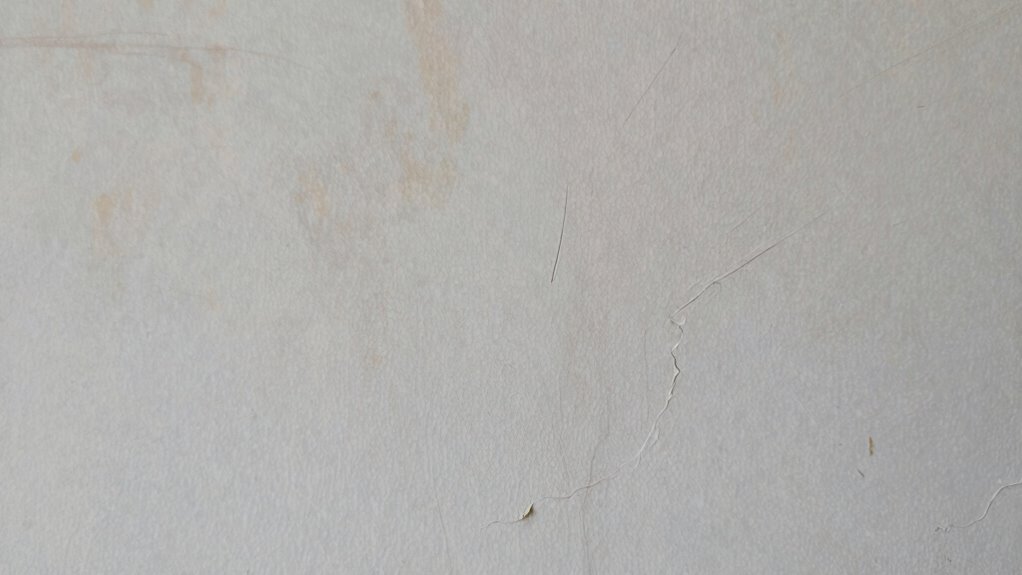
Moisture damage can quietly compromise your walls, making it essential to identify the signs early before repainting. When moisture seeps into your walls, it creates conditions ripe for mold growth, which not only damages the paint but also poses health risks. Look closely at your walls for any dark spots or fuzzy patches—these are telltale signs of mold, especially in areas prone to humidity like bathrooms, kitchens, or basements. If you notice a musty smell lingering even after airing out the space, it’s a clear indication that moisture has infiltrated deeper than just the surface.
Early signs of moisture damage include mold, dark spots, and musty odors indicating deeper infiltration.
Another common indicator of moisture damage is paint bubbling. When moisture gets trapped beneath the paint layer, it causes the surface to swell and form bubbles or blisters. These bubbles can be small or large, and if left unaddressed, they tend to peel or flake off easily. Keep an eye on the walls, especially in spots where water might have been or where there’s poor ventilation. Bubbles often appear suddenly and can be mistaken for normal paint wear, but they’re actually a warning sign that moisture has compromised the integrity of the wall. Additionally, ventilation issues can exacerbate moisture buildup, making it harder for walls to dry out properly. Ensuring proper airflow can help prevent further damage.
You should also look for discoloration or staining, which often accompanies moisture issues. Yellow, brown, or dark patches can indicate water leaks or seepage, especially around seams, corners, or near plumbing fixtures. These stains might not always be obvious at first glance—they can look like dirt or age-related discoloration—but when combined with other signs like mold or bubbling paint, they point to a deeper moisture problem. Recognizing water intrusion early can save you from extensive repairs later. It’s also helpful to understand that moisture detection techniques, such as using a moisture meter, can provide a more accurate assessment of hidden damage.
Checking for soft or spongy spots on the wall surface is equally important. Gently press on these areas; if they feel unusually pliable or give way under pressure, moisture has likely accumulated inside the wall cavity. This can lead to structural weakening over time if left unaddressed. Being aware of moisture intrusion and its signs can help prevent more extensive damage in the long run.
As an affiliate, we earn on qualifying purchases.
Frequently Asked Questions
Can Moisture Damage Occur Without Visible Stains?
Yes, moisture damage can occur without visible stains. Hidden stains often lurk behind walls or within paint layers, making moisture indicators tricky to spot. You might notice subtle warping, peeling paint, or a musty smell, all signs of unseen moisture. It’s crucial to check for these moisture indicators carefully, as the damage could be hidden, leading to mold growth or structural issues if left unaddressed.
How Long After Water Damage Can Mold Develop?
Mold can develop within 24 to 48 hours after water damage if indoor ventilation is poor, which impacts air quality. When moisture remains trapped inside walls or ceilings, mold spores thrive, often unnoticed until odors or visible growth appear. To prevent mold, improve indoor ventilation quickly after water exposure, dry out affected areas thoroughly, and monitor air quality. Acting fast limits mold growth and protects your home’s air health.
Are There Specific Tools to Detect Hidden Moisture?
Imagine uncovering hidden dangers beneath your walls—moisture meters and infrared cameras are your best tools. Moisture meters detect dampness through surfaces, revealing areas that look dry but hide moisture. Infrared cameras visualize temperature differences, exposing concealed leaks or water intrusion. These tools help you identify hidden moisture before refinishing, preventing mold growth and costly repairs. Using them guarantees your walls stay safe, healthy, and free from unseen water damage.
Can Paint Peel Without Prior Moisture Signs?
Yes, paint can peel without obvious prior moisture signs. Poor surface preparation or inadequate paint adhesion often cause peeling, even if you don’t notice moisture damage. If you skip cleaning or fail to prime the walls properly, the paint might not stick well, leading to peeling later. Always guarantee thorough surface preparation—cleaning, drying, and priming—to prevent peeling and improve paint longevity, especially in areas prone to moisture.
How Does Humidity Affect Moisture Damage Detection?
High humidity levels make moisture absorption more likely, which can hide signs of damage. When humidity stays elevated, walls absorb more moisture, making it harder to detect previous damage visually. To spot moisture issues, you should monitor humidity levels regularly with a hygrometer and look for subtle signs like discoloration or soft spots. Lower humidity helps reveal hidden damage, so controlling indoor moisture is key to early detection.
As an affiliate, we earn on qualifying purchases.
Conclusion
By paying close attention to signs like discoloration, musty smells, or bubbling paint, you can catch moisture damage before it worsens. Think of it as reading the silent whispers of your walls—listening before they finally give in. Addressing these issues early not only saves you time and money but also preserves the integrity of your home. Don’t wait for the storm to strike; be the vigilant guardian of your walls’ health.
As an affiliate, we earn on qualifying purchases.
As an affiliate, we earn on qualifying purchases.
Halloween Picks
halloween
As an affiliate, we earn on qualifying purchases.