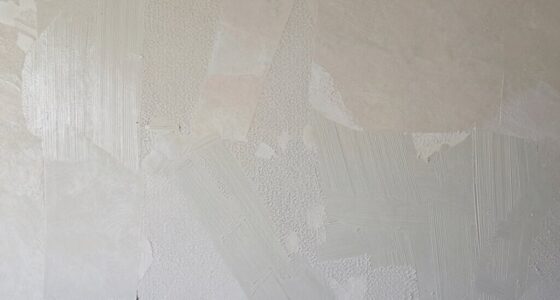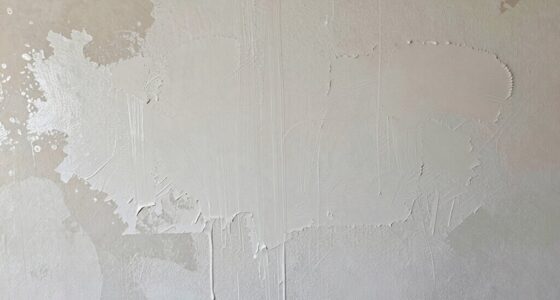

Thermal cameras help you understand strange wall damage by revealing temperature variations that aren’t visible to the naked eye. They detect moisture behind walls as cooler areas and show insulation gaps through uneven thermal patterns. These variations can point to hidden issues like leaks or structural weaknesses. By visualizing these thermal clues, you gain insights into damage causes and extent. Keep exploring to discover more about how this technology can protect your property.
Key Takeaways
- Thermal cameras detect temperature anomalies indicating hidden moisture, insulation issues, or structural weaknesses behind walls.
- They reveal irregular thermal patterns that explain unseen damage causes.
- Infrared imaging visualizes temperature differences linked to water intrusion or insulation failure.
- Thermal maps help differentiate between cosmetic and structural damage.
- They guide targeted inspections by pinpointing areas with abnormal heat signatures.

Thermal cameras have become an essential tool for detecting wall damage that’s invisible to the naked eye. When you’re faced with strange patterns of wall damage—such as unexplained bulges, cracks, or discolorations—these cameras reveal more than what you see on the surface. They utilize infrared imaging to detect variations in temperature, which often correlate with underlying issues like moisture intrusion, insulation gaps, or structural weaknesses. This technology enables you to perform a more detailed structural analysis, providing insights that traditional visual inspections can’t offer.
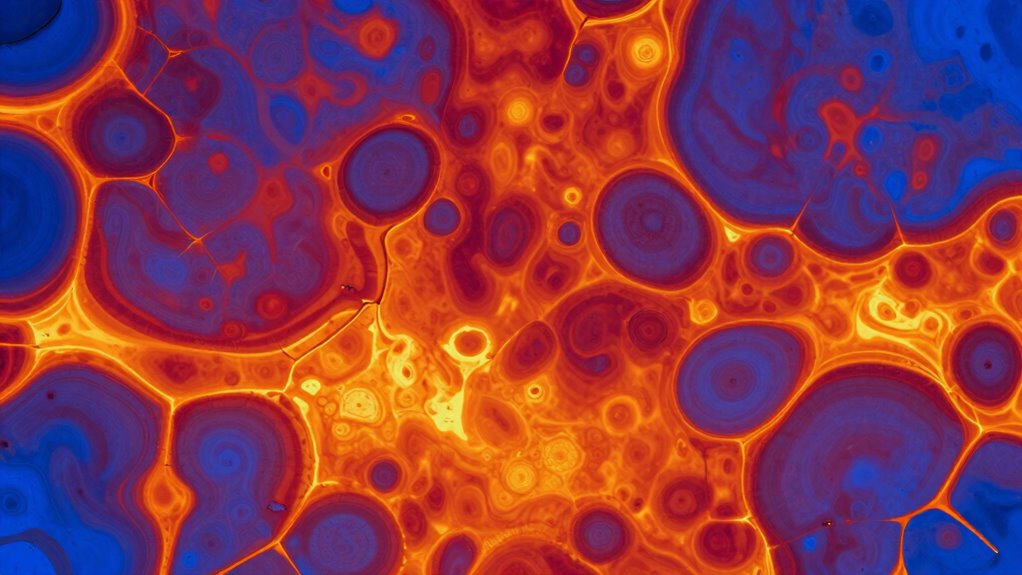
With thermal cameras, you can identify hidden problems early, before they escalate into costly repairs. When inspecting a wall, you’ll notice that certain areas emit heat differently—hotter or colder spots—indicating areas where moisture might be present or where insulation has failed. Infrared imaging allows you to visualize these temperature differences precisely, helping you understand the root cause of the damage. For example, a damp patch behind the wall might appear as a cooler zone, while areas with poor insulation might show uneven thermal patterns. These subtle thermal clues can explain why damage patterns are irregular or seem to defy logic at first glance.
As you analyze these thermal images, you can better interpret the structural integrity of the wall. You’ll see that some damage isn’t just cosmetic but points to deeper issues that could compromise the wall’s stability. Infrared imaging provides a detailed map of temperature variations, guiding you to areas needing further investigation. This process enhances your structural analysis, allowing you to pinpoint moisture ingress, insulation failures, or even hidden cracks that aren’t visible to the naked eye. In many cases, thermal imaging reveals patterns that correlate with specific types of damage, such as water leaks following a particular path or areas where structural materials have weakened over time. Understanding thermal imaging is crucial for identifying issues that are beyond the scope of standard visual inspections, and incorporating infrared technology into your assessment toolkit can significantly improve diagnostic accuracy.

Thermal Imaging Camera, Dual-Light Infrared Thermal Camera for Home Inspection
- Dual-Light Fusion Imaging: Combines infrared heat maps with visual images
- Enhanced IR Sensor Resolution: 96×96 IR sensor upgraded to 240×240 TISR
- Clear Thermal Details: Detects water leaks, insulation gaps, and overheating
As an affiliate, we earn on qualifying purchases.
As an affiliate, we earn on qualifying purchases.
Frequently Asked Questions
Can Thermal Cameras Detect Hidden Mold Behind Walls?
Yes, thermal cameras can detect hidden mold behind walls by identifying moisture detection issues. Mold often thrives in damp, hidden areas, and thermal imaging reveals temperature differences caused by moisture buildup. When you use a thermal camera, you can spot these temperature variations, indicating potential hidden mold. This helps you locate moisture problems early, preventing mold growth and reducing health risks without invasive inspections.
How Accurate Are Thermal Cameras in Cold or Humid Environments?
Imagine Sherlock Holmes with a modern twist—you’ll find thermal cameras struggle in cold or humid environments. You might face calibration challenges, making readings less reliable. Environmental limitations like moisture or low temperatures distort thermal signals, reducing accuracy. So, in these conditions, thermal cameras aren’t foolproof; their effectiveness depends on proper calibration and stable conditions. Be cautious, as you might get misleading results if environmental factors aren’t considered.
Do Thermal Cameras Work on All Wall Materials?
Thermal cameras work on most wall materials, but material compatibility and surface reflectivity can affect their effectiveness. Smooth, reflective surfaces like glass or shiny metal may produce false readings due to high reflectivity, while porous materials like brick or drywall usually provide accurate thermal images. To get the best results, you might need to adjust camera settings or apply a matte coating to reflective surfaces, ensuring reliable detection of temperature variations.
Can Thermal Imaging Identify Structural Issues Beyond Temperature Differences?
Yes, thermal imaging can identify structural issues beyond temperature differences by analyzing material conductivity and image resolution. You can detect moisture intrusion, insulation gaps, or even hidden cracks, as these problems alter heat flow. High-resolution thermal cameras let you see subtle temperature variations, helping you pinpoint potential weaknesses in wall structures. This makes thermal imaging a valuable tool for early diagnosis and preventing costly repairs.
What Is the Cost Difference Between Thermal Cameras and Traditional Inspection Tools?
You’ll find that thermal cameras generally have a higher initial cost compared to traditional inspection tools. The cost comparison shows that equipment expenses for thermal imaging devices can range from a few thousand to tens of thousands of dollars, depending on features. While traditional tools like moisture meters or borescopes are cheaper upfront, thermal cameras offer broader diagnostic capabilities, which might save you money in the long run by catching issues early.

HF96 Thermal Camera with AI Scene Detection, Laser Pointer, -4°F~1022°F
- AI Scene Detection: Automated water leak and insulation gap detection
- All-in-One Tool: Thermometer, thermal camera, laser pointer combined
- User-Friendly Controls: Easy button operation for various functions
As an affiliate, we earn on qualifying purchases.
As an affiliate, we earn on qualifying purchases.
Conclusion
By now, you can see how thermal cameras reveal hidden issues behind wall damage that the naked eye misses. In fact, studies show that up to 60% of hidden defects can only be detected through thermal imaging, saving you time and money in repairs. So, next time you notice strange wall patterns, remember that thermal cameras aren’t just gadgets—they’re essential tools for uncovering the unseen and preventing costly future damage.

TOPDON TC004 Mini Thermal Imaging Camera, 240 x 240 TISR Resolution
- Enhanced Thermal Resolution: 128×128 to 240×240 TISR technology
- Wide Field of View: 40°x30° for detailed inspections
- High Refresh Rate: 25Hz for smooth thermal images
As an affiliate, we earn on qualifying purchases.
As an affiliate, we earn on qualifying purchases.
TOPDON TC004 Mini Thermal Imaging Camera, 240 x 240 TISR Resolution
- Enhanced Thermal Resolution: 128×128 to 240×240 TISR technology
- Wide Field of View: 40°x30° for detailed inspections
- High Refresh Rate: 25Hz for smooth thermal images
As an affiliate, we earn on qualifying purchases.
As an affiliate, we earn on qualifying purchases.