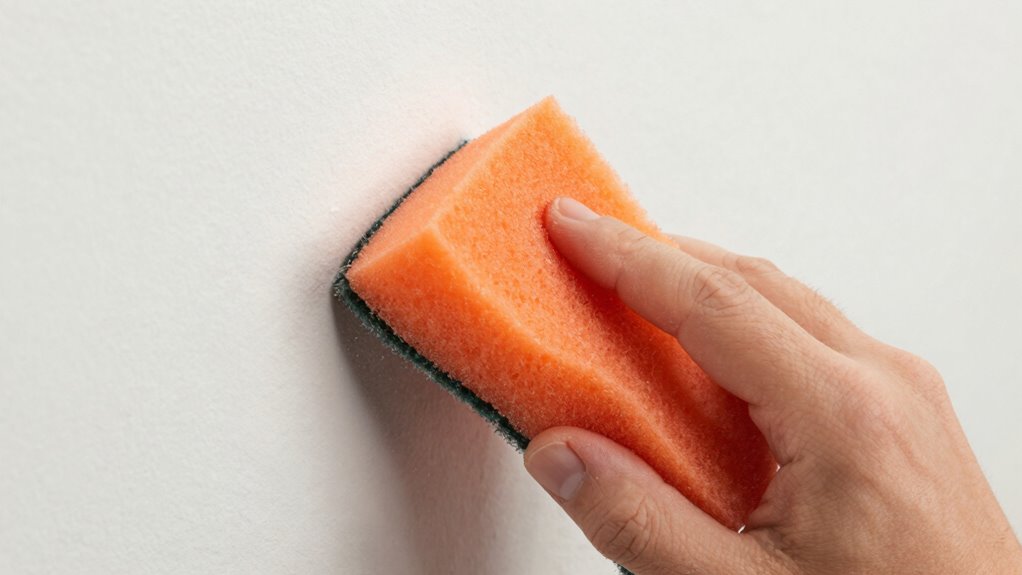
Sanding sponges beat paper in tight wall areas because they easily conform to uneven surfaces and tricky contours, giving you better control. They reach corners, edges, and tight spots more effectively, reducing the risk of damaging delicate surfaces. Plus, their cushioned surface offers comfort and stability, helping you maintain steady pressure for smooth results. Keep going to discover how their dust management and ergonomic features make sanding even easier.
Key Takeaways
- Sanding sponges conform to uneven surfaces, ensuring thorough coverage in tight wall corners and edges.
- They provide better control and grip, reducing slips and uneven sanding in confined spaces.
- Sanding sponges produce less airborne dust, improving visibility and cleanliness in small, tight areas.
- Their flexibility allows precise shaping around contours, enhancing finish quality on complex wall surfaces.
- Sponges are ergonomically designed for comfort, minimizing fatigue during detailed sanding tasks.
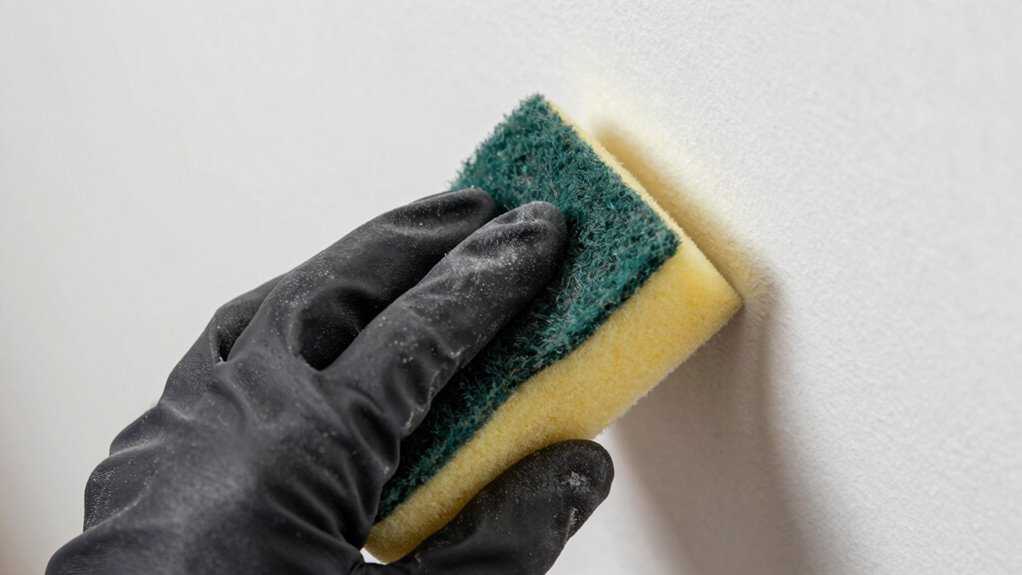
When it comes to sanding, choosing the right tool can make a big difference in your project’s outcome. Sanding sponges stand out in tight wall areas because they offer better control and access than traditional paper. Unlike rigid sheets, sponges conform easily to uneven surfaces, allowing you to reach corners, edges, and tight spots with less effort. This flexibility means you can sand more thoroughly without missing spots or damaging surrounding surfaces. As you work, dust removal becomes easier because sanding sponges tend to produce less airborne dust, especially when used with a vacuum attachment or dust extraction system. This not only keeps your workspace cleaner but also improves visibility, making it easier to see your progress and avoid over-sanding.
Another advantage of sanding sponges is their ergonomic grip. Their soft, cushioned surface molds comfortably in your hand, reducing fatigue during extended sanding sessions. This ergonomic design gives you better control over your movements, enabling precise sanding without slipping or applying uneven pressure. When you’re tackling tight wall areas, this grip becomes especially important, as it helps you maintain steady pressure and achieve a smooth finish. The combination of an ergonomic grip and the sponge’s flexibility means you spend less time correcting mistakes and more time getting the job done efficiently. Additionally, the flexibility of sanding sponges makes them particularly suitable for uneven surfaces, allowing you to adapt easily to different textures and shapes. Incorporating ergonomic tools can further enhance your sanding experience by reducing strain and increasing accuracy. Using appropriate tools like sanding sponges also promotes safer working conditions by minimizing the risk of slips and injuries. Furthermore, choosing the right sanding technique ensures optimal results and prolongs the life of your tools. Being aware of tool maintenance can help keep your sanding sponges in good condition, ensuring they remain effective over multiple projects.
As an affiliate, we earn on qualifying purchases.
Frequently Asked Questions
Are Sanding Sponges More Cost-Effective Than Paper?
Yes, sanding sponges are more cost-effective than paper because they offer better material durability and can be reused multiple times, saving you money in the long run. Their versatile design allows you to sand in tight spaces easily, reducing waste and the need for frequent replacements. While paper might be cheaper initially, sponges provide greater value over time, making them a smart choice for cost efficiency.
How Long Do Sanding Sponges Last Compared to Paper?
Think of sanding sponges as the marathon runners of your toolbox—they last longer than paper. Durability comparison shows sponges resist tearing and wear, so they stay effective through more projects. Plus, their environmental impact is lower since you can rinse and reuse them, reducing waste. Paper, on the other hand, wears out quickly, making sponges a smarter, eco-friendlier choice for your sanding needs.
Can Sanding Sponges Be Used on All Wall Textures?
Yes, sanding sponges work well on most wall textures, including textured surfaces, thanks to their flexibility. You can easily shape them to fit uneven or intricate areas. Their sponge durability allows you to sand more aggressively without tearing or wearing out quickly. This makes them versatile for different wall textures, providing smooth results without damaging the surface. Just make certain you choose the right grit for your specific project.
Do Sanding Sponges Produce Less Dust Than Paper?
Yes, sanding sponges produce less dust than paper, thanks to their design that traps dust particles more effectively. This dust reduction makes sanding cleaner and less messy. Plus, sanding sponges help you achieve better surface smoothness because their flexible, ergonomic shape allows for even pressure across uneven wall surfaces. Overall, they’re a smarter choice for reducing mess and ensuring a sleek, smooth finish in tight wall areas.
Are Sanding Sponges Easier to Store Than Paper Sheets?
Yes, sanding sponges are easier to store than paper sheets because of their storage convenience and space efficiency. You can keep them in a small container or drawer without worrying about them bending or tearing like paper sheets. Plus, their flexible shape makes them more adaptable to different storage options, helping you save space and stay organized. Overall, sanding sponges offer a more practical and compact storage solution for your projects.
As an affiliate, we earn on qualifying purchases.
Conclusion
When you’re working in tight wall corners, sanding sponges are like your trusty dance partner, gliding smoothly where paper struggles to reach. They bend, conform, and hug every contour, turning a tedious chore into a graceful waltz. Paper may be stiff and stubborn, but sanding sponges flow with your hand’s rhythm, making your finish flawless and your project feel like a well-choreographed performance. Embrace the sponge—your silent, agile ally in every tight space.
As an affiliate, we earn on qualifying purchases.
As an affiliate, we earn on qualifying purchases.