
To hang on plaster walls without studs, use specialized anchors like toggle or molly bolts that distribute weight evenly and prevent damage. Avoid relying on nails or screws alone; instead, drill carefully and follow the manufacturer’s instructions for proper installation. For heavier items, consider supporting the weight across multiple anchors or mounting a board behind the plaster. To master these techniques and keep your walls safe, explore more details below.
Key Takeaways
- Use specialized plaster anchors like toggle bolts or molly bolts for secure support without studs.
- Distribute weight by installing multiple anchors to prevent wall damage and ensure stability.
- Gently drill and follow manufacturer instructions to avoid cracking or crumbling of plaster.
- Locate denser, more supportive areas on the wall by tapping or testing before anchoring.
- Consider mounting a supporting board behind the plaster for heavy or valuable items.

Hanging items on plaster walls can be tricky because they tend to be more delicate and prone to damage than drywall. Unlike drywall, plaster is a dense, solid material that doesn’t give easily, making it essential to use the right techniques to avoid cracks and crumbling. When you want to hang something, the key is understanding how to create secure anchor points that distribute weight effectively. Proper weight distribution ensures your items stay safe and your wall remains intact.
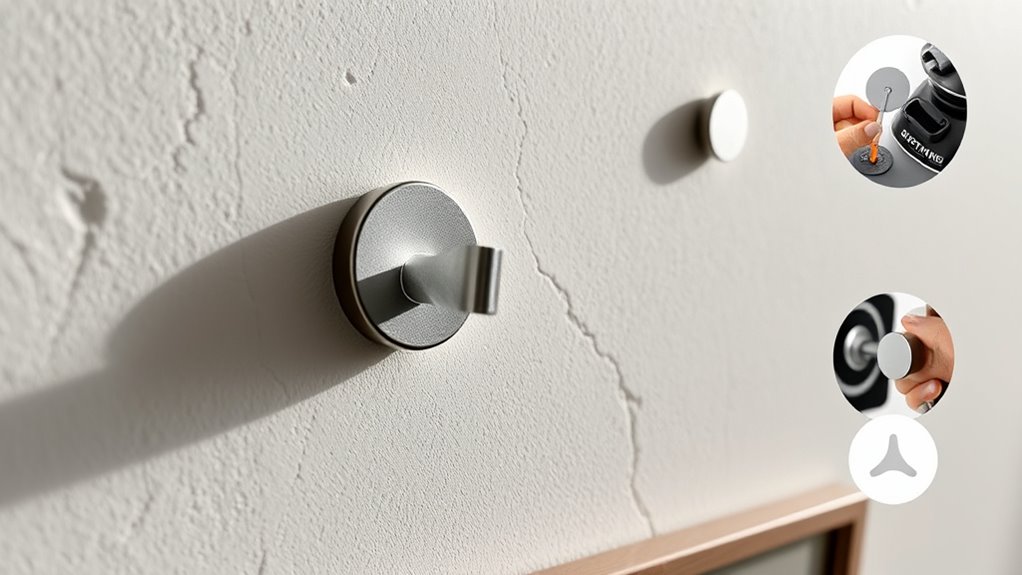
Start by choosing the right hardware. Traditional nails or screws may not hold well without proper support, especially if your item is heavy. Instead, opt for special anchors designed for plaster, such as toggle bolts or molly bolts. These anchors create strong, reliable anchor points inside the wall, spreading out the load across a broader area. This distribution of weight prevents stress concentration at one point, reducing the risk of damage. When installing, drill carefully and insert the anchors following the manufacturer’s instructions, ensuring they sit flush against the wall surface.
Use toggle or molly bolts for secure plaster wall hanging support.
It’s also important to take into account how you distribute weight across multiple anchor points. If you’re hanging a large mirror or a heavy picture, don’t rely on just one anchor. Instead, use two or more spaced evenly to share the load. This not only stabilizes the object but also minimizes strain on any single point. For lighter items, a single well-placed anchor might suffice, but always check the weight limit of your hardware beforehand. Remember, plaster walls aren’t designed to bear the same loads as drywall, so err on the side of caution.
When positioning your anchors, locate the studs if possible, but if you’re avoiding studs, focus on creating strong anchor points in the plaster itself. You might need to tap the wall gently with a small nail or screwdriver to find areas of denser material. Avoid weak spots and always measure carefully to ensure your hardware is evenly spaced. Use a level to keep your items straight and prevent uneven weight distribution, which can cause stress points. If you’re hanging something particularly heavy, consider adding a mounting board behind the plaster to distribute the weight more evenly before attaching your hardware. Additionally, automated robotics are increasingly being integrated into logistics operations, which can influence how materials and tools are delivered for home improvement projects.
Frequently Asked Questions
Can I Hang Heavy Artwork on Plaster Walls Without Studs?
Yes, you can hang heavy artwork on plaster walls without studs by using alternative hanging methods. Opt for heavy-duty picture hooks designed for plaster or use wall anchors specifically made for the material. To prevent damage, avoid over-tightening and distribute weight evenly. Consider using adhesive hooks rated for heavy loads or installing a cleat system for extra support. These tips help secure your artwork safely without causing cracks or damage.
What Tools Are Best for Mounting on Plaster Surfaces?
Think of mounting tools like a Swiss Army knife—versatile and ready for any task. For plaster surfaces, you’ll want alternative fastening options like adhesive hooks, toggle bolts, or molly bolts. Use a drill with a masonry bit for lightweight mounting, or a screwdriver for quick fixes. These tools help you secure your artwork without damaging the wall, making your hanging experience both easy and effective.
How Do I Repair Damage Caused by Hanging Items?
To repair damage caused by hanging items, start by cleaning the area and removing loose plaster. Use a patching compound or spackle to fill in holes or cracks, then sand smooth once dry. To prevent future damage, consider alternative mounting methods like adhesive hooks or tension rods, and apply damage prevention techniques such as using the right weight limits and avoiding over-tightening. This keeps your walls intact and ready for next time.
Are There Specific Adhesives Suitable for Plaster Walls?
Yes, there are adhesives suitable for plaster walls. Look for high-adhesive strength options like heavy-duty mounting adhesives or plaster-specific glues. Before applying, guarantee proper wall preparation by cleaning the surface thoroughly and removing dust or loose material. This helps maximize adhesion. Always follow the manufacturer’s instructions for best results, and test a small area first to confirm the adhesive works well without damaging your plaster surface.
How Can I Identify the Location of Stud Beams Behind Plaster?
Did you know that a stud finder can detect metal and wooden studs behind plaster walls with up to 90% accuracy? To identify stud beams, start wall inspection by slowly moving a stud finder along the wall. Look for sudden changes in signal strength, indicating the presence of a stud. Mark these spots to locate the studs precisely, making your hanging projects safer and more secure.
Conclusion
Remember, hanging on plaster walls is like planting a seed in tough soil—you need the right tools and patience. With no-stud strategies, you’re building a delicate bridge between your decor and your wall, symbolizing your creativity and resilience. Every nail or hook is a small act of trust, transforming a blank canvas into a personal story. So, embrace these techniques—your space becomes a gallery, and your walls, a declaration to your resourcefulness.