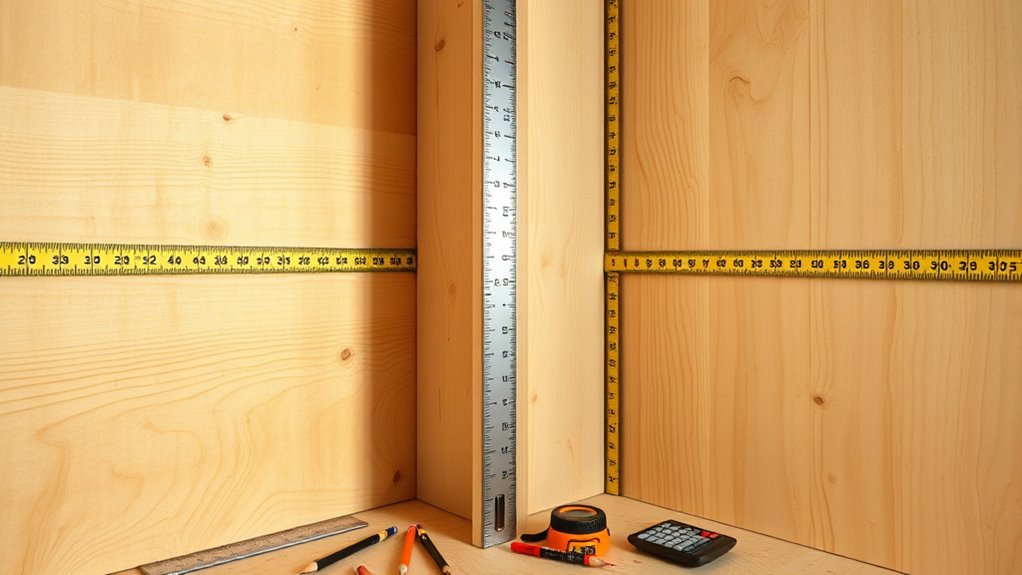

When measuring walls in metric and imperial systems, you’ll need to convert units precisely. In the metric system, measurements are based on tens, so dividing or multiplying by 10, 100, or 1000 gets you the equivalent units. For imperial, it involves converting inches, feet, or yards using factors like 12 inches per foot. Knowing these conversions helps guarantee accurate measurements for your projects. Keep going to discover how to make these conversions quickly and correctly.

Get furniture and decor delivered free with Prime
- Fast, free delivery on millions of items
- Prime Video, Amazon Music and more included
- Member-only deals all year
Key Takeaways
- Convert imperial measurements by dividing inches by 12 to get feet, or by 36 for yards.
- Use decimal conversion in metric, e.g., centimeters to meters by dividing by 100.
- For mixed measurements, convert all to inches (imperial) or centimeters (metric) before comparison.
- Utilize measurement tools or conversion charts to ensure accurate wall length calculations.
- Double-check conversions to prevent errors in material estimation and layout planning.

When it comes to measuring walls, understanding the differences between metric and imperial systems is essential. As you tackle a project involving wall measurements, you’ll quickly realize that knowing how to perform unit conversion is critical for maintaining measurement accuracy. Whether you’re working with centimeters and meters or inches and feet, being able to convert between these systems ensures your measurements are precise and reliable. This is especially important when ordering materials, planning layouts, or comparing specifications from different sources.
Understanding metric and imperial units is key for accurate wall measurements and conversions.
In the metric system, measurements are straightforward because they’re based on multiples of ten. If your wall is measured in centimeters, converting to meters simply involves dividing by 100. For example, a wall that’s 250 centimeters long equals 2.5 meters. This simplicity makes metric units easy to work with, especially when you’re calculating areas or volumes. On the other hand, the imperial system relies on inches, feet, and yards, which can complicate conversions. Converting inches to feet, for example, requires dividing by 12, since there are 12 inches in a foot. If your wall measures 144 inches, it converts to 12 feet. Remembering these conversion factors helps you maintain measurement accuracy, avoiding costly mistakes.
When measuring in imperial units, you’ll often need to convert between feet and inches or yards. For instance, if a wall is 8 feet 6 inches long, you might prefer to express it solely in inches for certain calculations. In that case, multiply the feet by 12 and add the remaining inches: (8 x 12) + 6 = 102 inches. Conversely, converting inches back to feet and inches helps when you’re planning layouts or buying materials. Precise unit conversion ensures that your measurements align with the actual dimensions, preventing errors that could compromise the integrity of your project. Additionally, understanding unit conversion principles can help you communicate measurements more effectively across different regions or standards. To effectively manage unit conversion, keep a reference chart handy or use digital tools, such as online converters or measurement apps. These tools can help you quickly switch between metric and imperial units, ensuring measurement accuracy at each step. Remember that even small miscalculations can lead to discrepancies, so double-check your conversions before proceeding. Accurate conversions are the backbone of quality work, especially when dimensions must fit perfectly or when custom materials are involved.
Products Worth Considering

Samsung 42-Inch S90H OLED 4K Smart TV Bundle

LG C2 Series 65-Inch OLED evo 4K Smart TV (OLED65C2PUA, 2022)

Roborock RockNeo Q110H Wire-Free Robot Lawn Mower
As an affiliate, we earn on qualifying purchases.
Frequently Asked Questions
How Do Different Countries Handle Wall Measurement Standards?
Different countries handle wall measurement standards by adopting their own unit systems, like metric or imperial, to guarantee measurement consistency. You should be aware that many nations prefer metric for its unit standardization, simplifying calculations and communication. Others still use imperial units, especially in the US. To avoid confusion, always confirm which measurement system is in use, so you can accurately interpret dimensions and maintain measurement consistency across projects.
Are There Tools Specifically Designed for Metric and Imperial Conversions?
You might think specialized tools aren’t necessary, but many measurement tools are built specifically for unit conversion, making your job easier. Digital calipers and laser distance meters often include features for metric and imperial measurements, allowing quick, accurate conversions. There are also apps and handheld devices designed for precise measurement and unit conversion, ensuring you get the right dimensions regardless of the measurement system used.
What Challenges Arise When Converting Wall Measurements Between Systems?
When converting wall measurements between systems, you face challenges with unit conversion accuracy and measurement precision. Small errors can lead to miscalculations, affecting your project’s fit and finish. You might find that rounding issues or inconsistent conversion factors cause discrepancies. To avoid these problems, double-check your calculations, use reliable conversion tools, and always aim for precise measurements, ensuring your project stays on track regardless of the measurement system.
How Do Measurement Errors Affect Construction Projects?
Measurement errors can considerably impact your construction projects by causing delays and increasing costs. Calibration discrepancies and poor measurement precision lead to inaccurate wall dimensions, which may result in structural issues or misaligned components. These errors can compromise safety and quality, forcing you to redo work or make costly adjustments. To avoid these problems, ensure your tools are properly calibrated and maintain high measurement precision throughout the project.
Is There a Universal Standard for Measuring Walls Worldwide?
There isn’t a universal standard for measuring walls worldwide, but international standards like ISO help promote measurement consistency. You should follow local building codes and standards, which often specify measurement practices. To guarantee accuracy, always use calibrated tools and double-check measurements. While global standards aim to unify measurements, regional differences still exist, so it’s essential to verify which standards apply in your project location.
Conclusion
When measuring walls, understanding both metric and imperial systems is vital. Did you know that approximately 60% of the world uses the metric system, making conversions essential for international projects? Whether you’re using meters or feet, knowing how to switch between them helps you avoid mistakes and saves time. Ultimately, mastering these conversions guarantees your measurements are accurate, no matter which system you’re using. So, keep practicing, and you’ll measure walls confidently across any system!