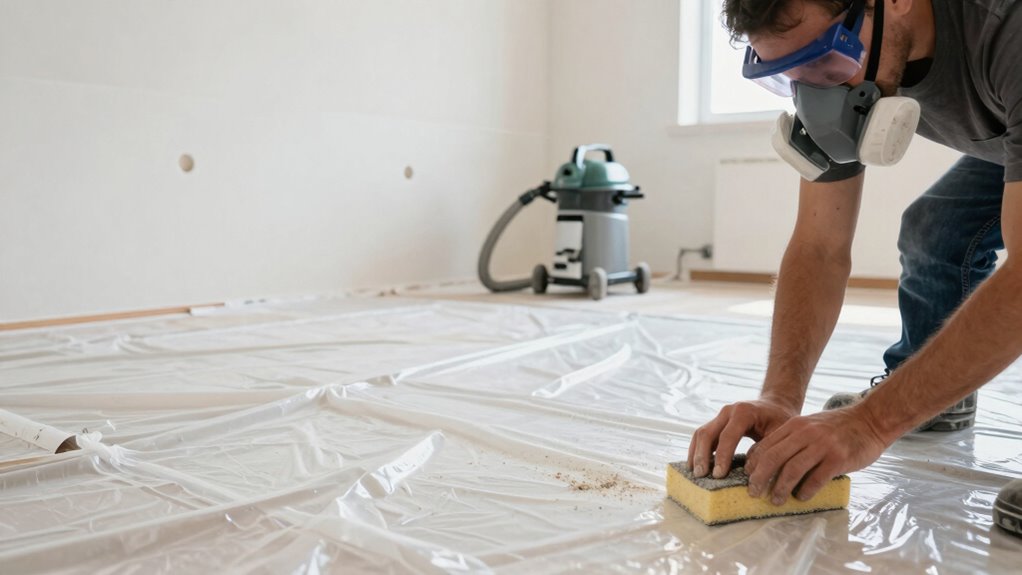

To prevent drywall sanding dust from taking over your house, set up plastic sheeting or tarps around your work area and seal doorways and vents with painter’s tape. Use a box fan or exhaust fan to direct airflow outside, minimizing dust spread, and employ vacuum sanders connected to shop vacs to trap dust at the source. Wear protective gear to keep yourself safe and clean up thoroughly afterward. Keep going for more tips to maintain a cleaner, safer home during your project.

Get furniture and decor delivered free with Prime
- Fast, free delivery on millions of items
- Prime Video, Amazon Music and more included
- Member-only deals all year
Key Takeaways
- Use plastic sheeting and painter’s tape to create a sealed barrier around the work area.
- Set up exhaust fans to direct dust outside and improve airflow control.
- Employ dust control tools like vacuum sanders to capture dust at the source.
- Properly remove and dispose of containment materials after sanding.
- Wear personal protective equipment to reduce inhalation of airborne dust particles.

Sanding drywall can quickly turn your entire house into a cloud of dust if you’re not careful, making cleanup a formidable task. To prevent this, you need to effectively manage dust containment from the start. Set up plastic sheeting or tarps around your work area, sealing off doorways, vents, and air returns. Use painter’s tape to secure the plastic, creating a barrier that traps most of the airborne particles. This simple step keeps dust from drifting into other rooms and settling on furniture, floors, and fixtures. Keep in mind, no containment method is perfect, but the tighter your barriers, the less dust escapes.
In addition to physical barriers, improving ventilation is crucial. Opening windows and doors helps create airflow that pushes dust particles away from your work zone, preventing them from lingering in the air. If possible, set up a box fan or exhaust fan pointing outward to direct dust outside. This not only clears the air but also reduces the concentration of airborne particles, making it safer to breathe during sanding. Avoid using HVAC systems or air conditioners that recirculate air, as they can spread dust throughout the house. Instead, focus on directed airflow that pulls dust out of the space altogether. Utilizing dust control methods can further enhance containment efforts and reduce cleanup time. Using a drywall vacuum sander can make a significant difference. These tools connect to a shop vac or similar vacuum system, capturing dust as you sand. This minimizes the amount of airborne particles and reduces cleanup time. Pair this with your dust containment setup for maximum efficiency. When you’re done sanding, don’t forget to carefully dispose of or clean the plastic sheeting and filters to prevent dust from spreading later. Additionally, maintaining proper dust containment practices ensures a safer environment during your project. Incorporating proper personal protective equipment, such as a dust mask or respirator, is essential because some fine particles can escape even the best containment efforts.
drywall dust containment plastic sheeting
As an affiliate, we earn on qualifying purchases.
As an affiliate, we earn on qualifying purchases.
Frequently Asked Questions
What Safety Gear Is Essential During Drywall Sanding?
You should wear protective gear like a dust mask or respirator to prevent inhaling fine drywall dust, which can be harmful. Safety goggles protect your eyes from dust particles, and gloves keep your hands clean and safe from irritants. Use dust containment methods, such as plastic sheeting or a sanding booth, to minimize dust spread. These precautions help guarantee your safety and keep your workspace cleaner during drywall sanding.
How Long Does Drywall Dust Typically Linger?
Drywall dust typically lingers for several days to a week, depending on ventilation and cleanup efforts. To keep dust levels low, use air purifiers, open windows, and regularly clean surfaces. You can also minimize dust spread by sealing off work areas and wearing safety gear. Consistent cleaning and good airflow help clear drywall dust faster, making your space safer and more comfortable during renovation.
Can I Use a Vacuum for Dust Removal?
Yes, you can use a vacuum for dust removal, but make sure it has a high-efficiency particulate air (HEPA) filter to effectively trap drywall dust. Use it along with air filtration systems to improve indoor air quality and minimize dust spread. Setting up dust containment barriers also helps, preventing dust from circulating throughout your house. Regular vacuuming with the right equipment keeps dust levels manageable and protects your living space.
What’s the Best Way to Clean Walls After Sanding?
After sanding, you want a pristine surface for paint touch-ups, but dust containment is essential. First, gently wipe walls with a damp cloth or a microfiber duster to remove loose dust—this prevents it from settling into your paint. For thorough cleaning, use a vacuum with a HEPA filter to catch fine particles. Carefully inspect for remaining dust, then proceed with your paint touch-ups for a flawless finish.
How Do I Prevent Dust From Spreading to Other Rooms?
To prevent dust from spreading to other rooms, you should prioritize dust containment and room isolation. Use plastic sheeting or tarps to seal off the work area, creating a barrier that keeps dust contained. Set up a portable air scrubber with a HEPA filter to trap airborne particles, and keep windows and doors closed. These steps help guarantee dust stays confined, making cleanup easier and protecting the rest of your house.
vacuum drywall sander with dust collection
As an affiliate, we earn on qualifying purchases.
As an affiliate, we earn on qualifying purchases.
Conclusion
By sealing off your work area and using proper dust control methods, you can keep drywall sanding from spreading like wildfire through your house. Think of it as building a fortress around your project—blocking dust from invading every corner. With careful planning and the right tools, you’ll contain the mess and enjoy a smoother finish without turning your home into a dusty battlefield. Keep your space safe, clean, and under control—your home will thank you.
As an affiliate, we earn on qualifying purchases.
dust mask or respirator for sanding
As an affiliate, we earn on qualifying purchases.
As an affiliate, we earn on qualifying purchases.
Fall Picks
fall essentials
As an affiliate, we earn on qualifying purchases.