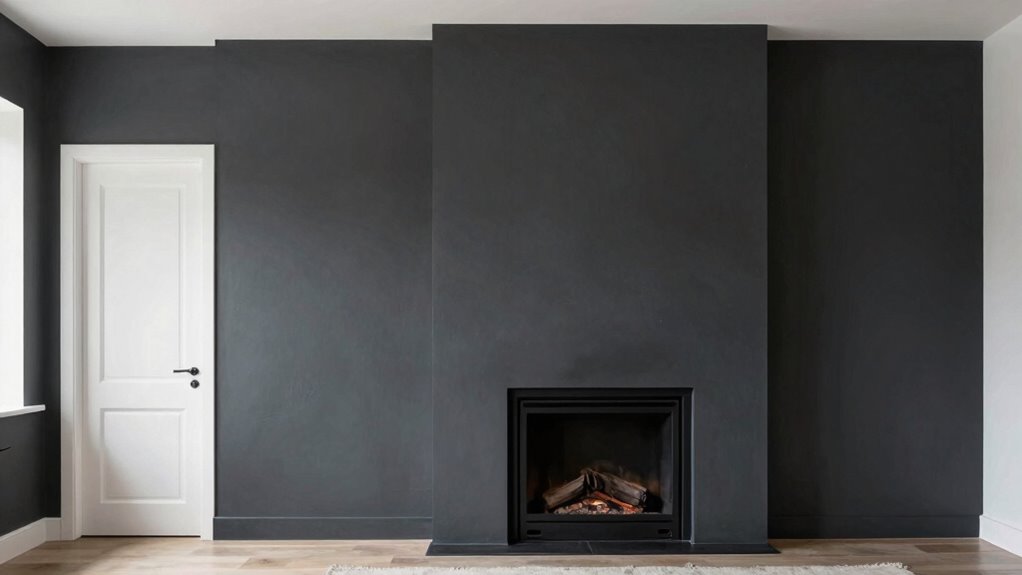

When you overlook door placement in your feature wall design, it can create visual chaos and break the room’s flow. Doors act as pathways that guide the eye and connect different areas smoothly. Misaligned or awkwardly placed doors can make your feature wall look out of place or overshadowed, disrupting the room’s harmony. Proper planning guarantees your feature wall complements door locations, making your space feel cohesive and polished. Keep exploring to discover how to perfect this balance.

Get furniture and decor delivered free — and shop member deals
- Fast, free delivery on millions of items
- Access to Prime Big Deal Days deals on October 6–7
- Prime Video, Amazon Music and more included
Key Takeaways
- Ignoring door placement can disrupt visual harmony, making the feature wall appear out of place.
- Poor alignment causes textures and colors to be overshadowed or broken up by doors.
- Awkward door positioning breaks the continuity and flow of the feature wall.
- Disregarding door locations diminishes the visual impact and cohesiveness of the room design.
- Lack of strategic planning results in a cluttered, unbalanced aesthetic that reduces the feature wall’s effectiveness.

Have you ever wondered how the right combination of feature walls and door placement can transform a room? It’s not just about picking a bold color or a textured wall; it’s about harmony. When designing a space, many focus on creating a stunning feature wall with eye-catching color contrast or interesting wall textures, but they overlook how door placement influences the overall flow. It neglects the importance of visual harmony, which is crucial for a cohesive design. Neglecting this aspect can lead to a feature wall feeling out of place or even obstructed, diminishing its visual impact.
Color contrast is a powerful tool, but it requires thoughtful placement. If you place a vibrant, textured wall opposite a door that opens directly into it, the feature can get lost or appear disconnected. Doors often serve as visual pathways that guide the eye, and if a door interrupts a feature wall’s continuity, it can break the room’s rhythm. For example, a richly textured wall with deep hues might look stunning on its own, but if a door cuts through it awkwardly or is positioned right beside it, the contrast and textures can look disjointed. The eye is naturally drawn to the door, distracting from the wall’s beauty and making the room feel cluttered rather than cohesive.
Thoughtful door placement preserves feature wall harmony and enhances room flow.
Wall textures add depth and interest, but they also demand careful consideration of door placement. If a door is situated at an awkward angle or too close to a textured feature wall, it can create visual clutter. You might find yourself fighting to make the textures stand out because the door interrupts the flow. Proper placement allows the textures and color contrasts to be appreciated fully. When you position doors thoughtfully, you create a natural framing for the feature wall, enhancing its visual appeal without competing for attention. This balance ensures the textures and colors shine, rather than get overshadowed or broken up.
Additionally, understanding the impact of door positioning on visual harmony can help prevent mismatched or unbalanced room designs. Recognizing the interplay between elements in interior design can elevate your overall space, making it feel more intentional. Ultimately, feature walls fail when they ignore how doors are placed because they disrupt the visual harmony you’re trying to achieve. A thoughtful approach considers not just the wall’s design, but also how it interacts with door locations. When you align your feature wall with the door’s position, you create a unified look that emphasizes color contrast and wall textures. This harmony guides the eye smoothly across the room, making your design feel intentional and polished. Ignoring door placement can sabotage your efforts, but with careful planning, you can turn your space into a visually stunning and cohesive environment.
door placement planning for feature walls
As an affiliate, we earn on qualifying purchases.
As an affiliate, we earn on qualifying purchases.
Frequently Asked Questions
How Do Door Placements Vary Across Different Room Types?
Door placements vary across rooms to maintain room and door symmetry, creating a balanced look. In living rooms, doors are often centered or aligned with windows to enhance symmetry, while bedrooms may have doors positioned for privacy and flow. You should consider how door positions affect room symmetry, as poorly placed doors can disrupt visual harmony. Proper placement guarantees your feature wall complements the overall design, avoiding awkward proportions or focal point imbalance.
Can Feature Walls Work Without Considering Door Positions?
You can’t paint a masterpiece with a blind eye to door placement—it’s like trying to dance without knowing the rhythm. Without considering door positions, feature walls often clash with decorative accents and disrupt color coordination, making the room feel disjointed. To succeed, plan your focal point around doorways, ensuring your feature wall enhances the space rather than fighting against it. Thoughtful placement transforms chaos into harmony.
What Are Common Mistakes in Aligning Feature Walls With Doors?
You often make the mistake of ignoring door placement when aligning your feature wall. This can disrupt the flow of decorative accents and create awkward color contrast, making the space feel unbalanced. To avoid this, make sure your feature wall complements door positions, highlighting architectural details. Proper alignment enhances visual harmony, emphasizing the design’s purpose. Remember, thoughtful placement of decorative accents and color contrast is key to a cohesive, appealing look.
How Does Door Size Influence Feature Wall Design?
Door size is the heartbeat of your feature wall design, guiding how you balance wall proportions. A large door demands a bold, expansive wall to create harmony, while a small door calls for a delicate approach. Ignoring door size can make your space feel off-balance, like a puzzle missing a vital piece. By tailoring your design to door dimensions, you guarantee your feature wall becomes a seamless, engaging focal point.
Are There Alternative Design Strategies When Door Placement Is Limited?
When door placement limits your options, you can create a focal point elsewhere, like a fireplace or artwork, to draw attention and maintain visual flow. Use strategic lighting and contrasting colors to emphasize these areas, guiding the eye naturally through the space. Incorporating textures or patterns can also add depth, ensuring your design remains balanced and engaging, even with restricted door placement.
wall textures and color contrast wall art
As an affiliate, we earn on qualifying purchases.
As an affiliate, we earn on qualifying purchases.
Conclusion
Ignoring door placement when designing a feature wall is like trying to fit a puzzle piece where it doesn’t belong—nothing clicks into place. Your space should flow naturally, with the wall enhancing rather than competing with doorways. When you neglect this harmony, the feature wall becomes an awkward interruption, disrupting the room’s rhythm. To truly succeed, consider the whole picture; otherwise, your stunning wall risks becoming a jarring note in an otherwise beautiful melody.
room flow and door alignment accessories
As an affiliate, we earn on qualifying purchases.
As an affiliate, we earn on qualifying purchases.
decorative wall framing for feature walls
As an affiliate, we earn on qualifying purchases.
As an affiliate, we earn on qualifying purchases.
Halloween Picks
halloween
As an affiliate, we earn on qualifying purchases.