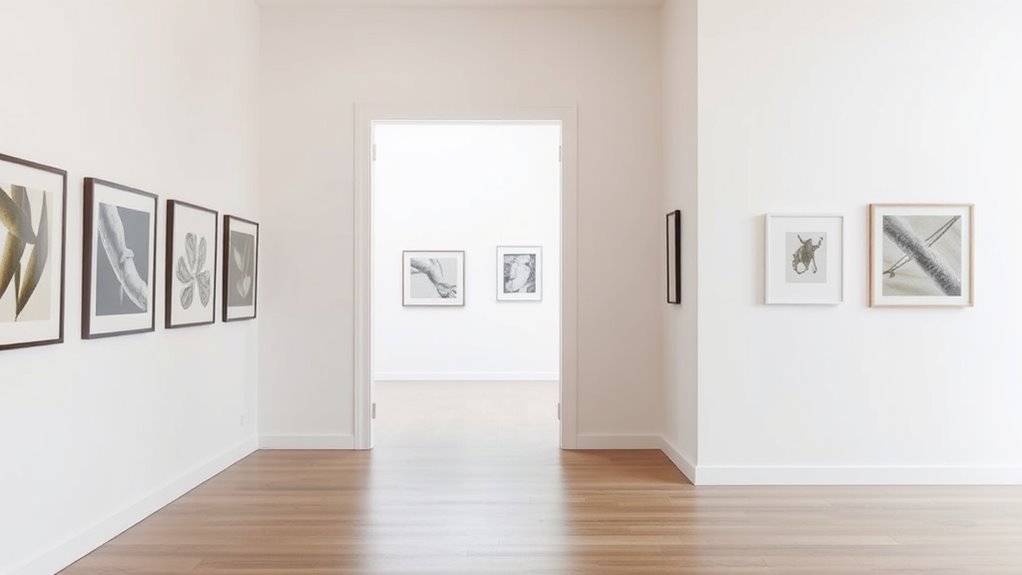
To align your gallery walls with doorways and sightlines, start by identifying key architectural features like door tops or eye-level lines. Hang artwork so the top edges or centers of your frames follow these visual cues, creating a harmonious flow. Adjust spacing slightly to balance the wall and guarantee the gallery complements rather than competes with nearby features. For more detailed tips on perfect alignment and achieving visual symmetry, continue exploring the most effective techniques.

Get furniture and decor delivered free with Prime
- Fast, free delivery on millions of items
- Prime Video, Amazon Music and more included
- Member-only deals all year
Key Takeaways
- Align the gallery’s top edge or center with door frames or sightlines for visual cohesion.
- Use architectural cues, like door thresholds or molding, to guide the gallery placement.
- Adjust spacing between artworks to create a balanced flow that complements doorways.
- Position the gallery slightly off-center if doors are asymmetrical, maintaining overall room harmony.
- Step back regularly to ensure the gallery aligns smoothly with architectural features from multiple angles.
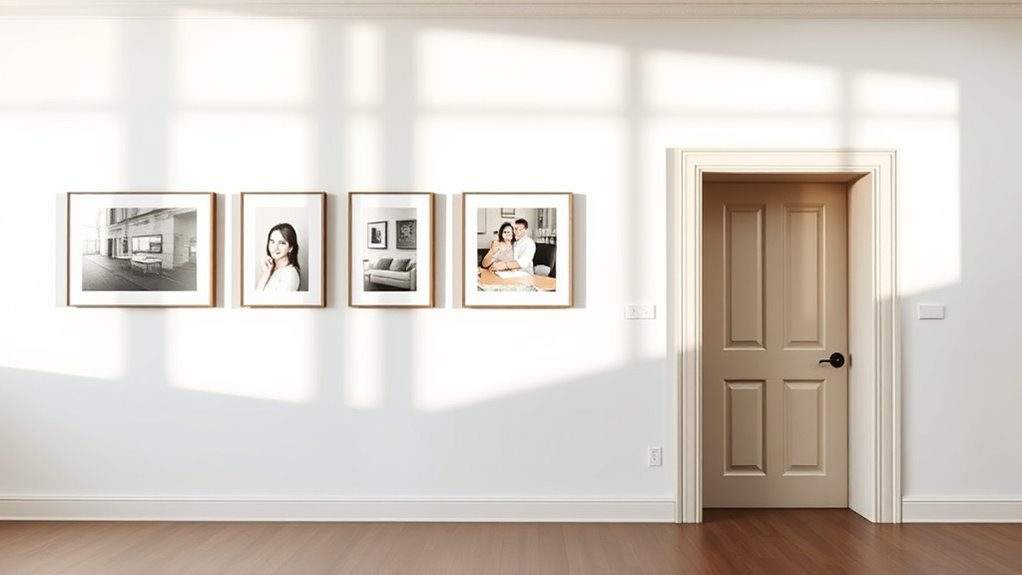
Creating a perfectly aligned gallery wall can transform any space, but it often feels tricky to get everything just right. To achieve that polished look, you need to pay close attention to frame spacing and wall symmetry, especially when aligning your gallery with doorways and sightlines. The key is to create a sense of harmony between your art and the architectural elements around it, so it feels intentional rather than haphazard. Start by considering the height at which you hang your pieces; generally, eye-level—about 57-60 inches from the floor—is a good rule of thumb. However, when aligning with doorways, you want to ensure the gallery’s center or top edge aligns visually with the door frame or the line of sight toward it, creating a cohesive flow. This might mean adjusting your frame spacing slightly so that the overall arrangement looks balanced, even if individual pieces aren’t perfectly centered.
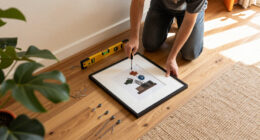
When thinking about wall symmetry, look at the space around the gallery and the room’s architectural features. If your doorway is off-center, you don’t have to center your gallery perfectly in the wall; instead, aim for visual balance by shifting the entire arrangement slightly to one side. Use painter’s tape to lay out the gallery on the wall, experimenting with different placements before committing. This helps you see how frame spacing impacts the overall symmetry and ensures the arrangement complements the doorway or sightline rather than competing with it. Maintaining consistent frame spacing—typically 2 to 4 inches between frames—creates a unified look and prevents the wall from appearing cluttered or uneven. If your gallery includes different-sized pieces, consider grouping smaller frames closer together and larger ones slightly further apart to maintain visual flow.
As you fine-tune your gallery, step back frequently and examine how it aligns with the door or the line of sight from different angles. Check if the top edges of your frames follow a straight line or if they create an unintended tilt. Adjust the spacing and positioning as needed, always keeping in mind the room’s symmetry and the architectural cues. Remember, the goal is to guide the eye smoothly across the gallery and toward the doorway or focal point, not to create perfect mathematical symmetry—unless that’s your aesthetic. With patience, a little trial and error, and attention to frame spacing and wall symmetry, you’ll craft a gallery that feels deliberate, balanced, and visually pleasing. Additionally, understanding interior design basics can help you develop a cohesive approach to arranging art and architectural elements for a harmonious space.
gallery wall picture hanging kit
As an affiliate, we earn on qualifying purchases.
As an affiliate, we earn on qualifying purchases.
Frequently Asked Questions
How Do I Measure for a Gallery Wall Around Irregular Doorways?
To measure for a gallery wall around irregular doorways, start by evaluating the doorway framing and noting irregular spacing. Use painter’s tape to outline the area on the wall, mimicking the shape of the doorway. Measure the height and width of these taped sections, then plan your artwork layout accordingly. This way, your gallery wall will fit perfectly, complementing the unique doorway framing and irregular spacing.
What Are the Best Lighting Options for Gallery Walls Near Doorways?
For gallery walls near doorways, consider installing gallery lighting like adjustable wall sconces to highlight your artwork effectively. Wall sconces add ambient light and can be positioned to avoid glare or shadows, enhancing the visual appeal. You might also incorporate picture lights or track lighting for more focused illumination. Choose fixtures that complement your decor, and verify the lighting is adjustable for the best viewing experience around doorways.
How Can I Ensure Gallery Wall Height Complements High or Low Ceilings?
Think of your ceiling height as the rhythm of a song—high ceilings call for bold, expansive art, while low ceilings need smaller, cohesive pieces. To guarantee your gallery wall complements this, choose art scale that balances the space—large pieces for grandeur or a tight cluster for intimacy. Position the wall so it feels grounded, roughly eye level, creating harmony with your ceiling height and making your artwork sing in perfect tune.
What Are Common Mistakes When Aligning Gallery Walls to Sightlines?
When aligning gallery walls to sightlines, you often overlook symmetry concerns, which can make the arrangement feel unbalanced. Avoid placing artwork too high or low, disrupting focal point alignment, and creating visual tension. Confirm your gallery wall complements natural sightlines, like doorways or furniture, to maintain harmony. Double-check that the central pieces are at eye level and aligned with key architectural features for a cohesive, polished look.
How Do I Maintain Visual Balance With Asymmetrical Door Placements?
To maintain visual balance with asymmetrical door placements, you should focus on distributing visual weight evenly across your gallery wall. Use symmetry strategies, like pairing artwork of similar size and color, to create harmony. Balance larger pieces with smaller ones on the opposite side, and consider adjusting the height to align with door edges. This approach keeps your space feeling cohesive, even with asymmetrical door arrangements.
art frame spacers for gallery walls
As an affiliate, we earn on qualifying purchases.
As an affiliate, we earn on qualifying purchases.
Conclusion
By aligning your gallery walls with doorways and sightlines, you create a harmonious flow that feels intentional and inviting. When done thoughtfully, your space not only looks cohesive but also enhances your everyday experience. Did you know that rooms with well-aligned decor can boost mood and reduce stress? So, take the extra step to plan your gallery layout—small adjustments make a big difference in transforming your home into a sanctuary of comfort and style.
As an affiliate, we earn on qualifying purchases.
As an affiliate, we earn on qualifying purchases.
Fall Picks
fall essentials
As an affiliate, we earn on qualifying purchases.