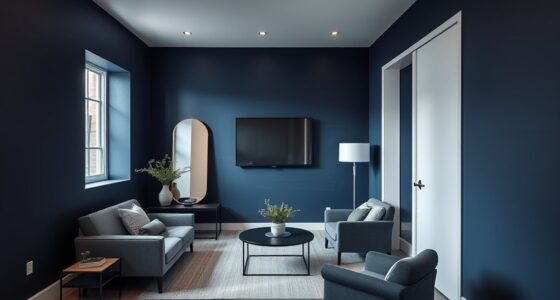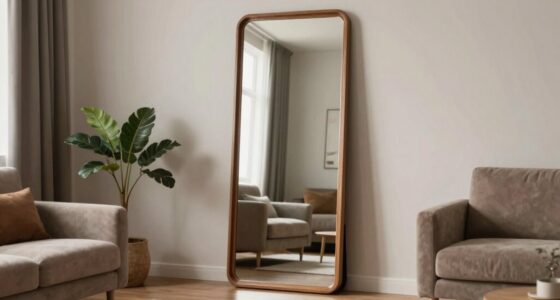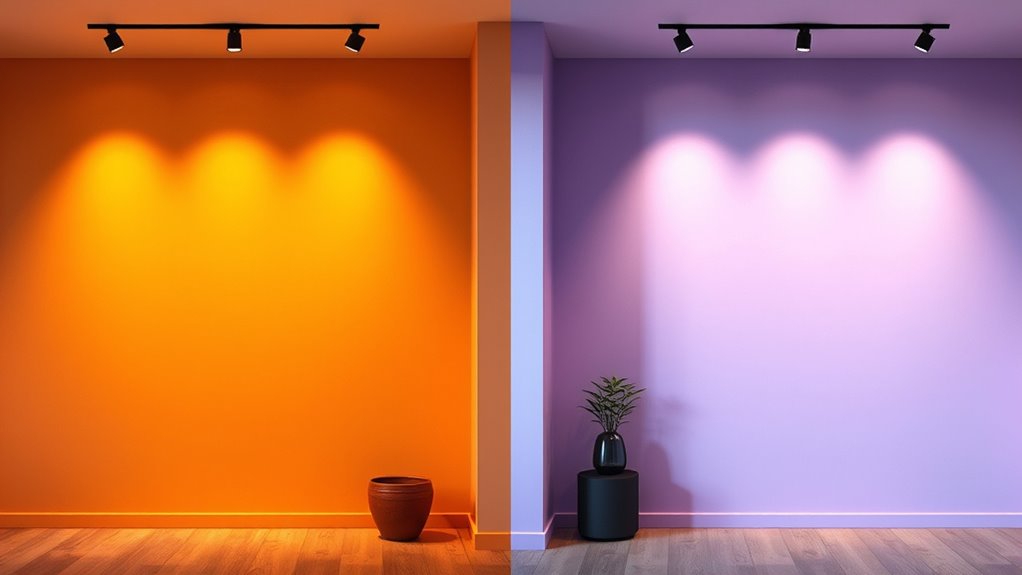

Choosing warm or cool lighting impacts how your wall colors appear and the room’s overall mood. Warm lighting (yellow/amber) enhances earthy or warm hues, creating a cozy, inviting space. Cool lighting (bluish) makes neutral or cool wall tones stand out, giving a modern, energetic vibe. Natural daylight is usually neutral, but artificial temperatures can alter perceptions, emphasizing or diminishing certain shades. Exploring these effects can help you create the ambiance you desire, if you keep exploring further.

Get furniture and decor delivered free with Prime
- Fast, free delivery on millions of items
- Prime Video, Amazon Music and more included
- Member-only deals all year
Key Takeaways
- Warm lighting (yellow/amber) enhances warm wall tones like terracotta, creating cozy, inviting atmospheres.
- Cool lighting (bluish hues) highlights cool wall colors such as gray or blue, emphasizing a modern, energetic vibe.
- Daylight, being neutral or slightly cool, can influence how wall colors appear under different lighting conditions.
- Artificial lighting’s color temperature at night can either reinforce or alter the perceived warmth or coolness of wall colors.
- Matching or contrasting lighting with wall color helps achieve balanced, intentional room ambiance.
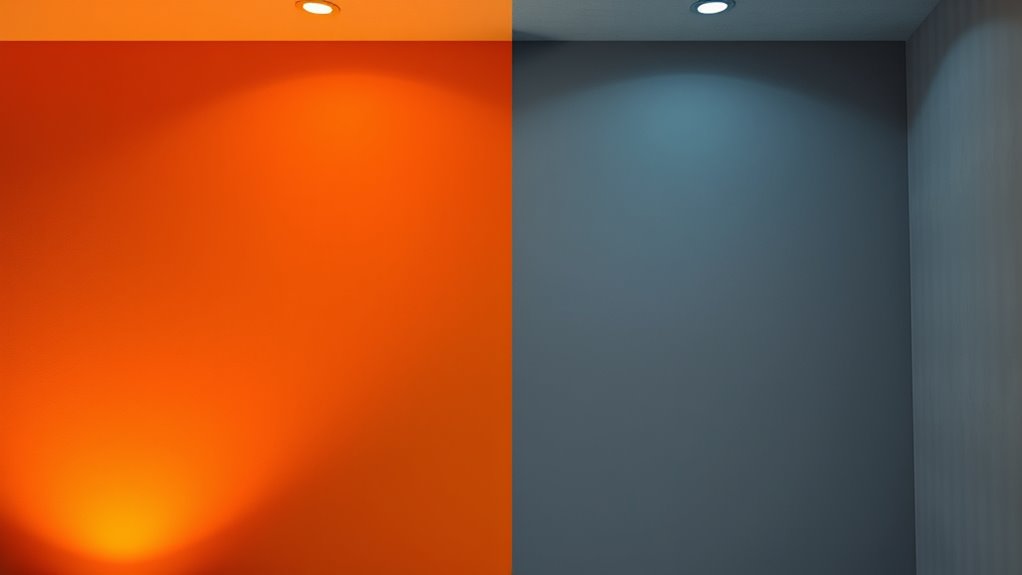
Choosing the right wall color can considerably influence the mood and atmosphere of a room, especially when you consider its color temperature. The way lighting effects interact with your wall color plays a vital role in shaping the space’s overall feel. Warm lighting, with its yellow or amber tones, creates a cozy, inviting environment, while cool lighting, characterized by bluish hues, offers a crisp, energetic vibe. When selecting your wall color, think about how these lighting effects will complement or contrast with it. For instance, warm lighting enhances earthy or warm hues, reinforcing a sense of comfort and intimacy. Conversely, cool lighting can make cooler or neutral shades stand out, lending a modern, fresh look.
Understanding color harmony is essential in achieving the desired ambiance. If you choose a warm-colored wall, like terracotta or soft beige, pairing it with warm lighting emphasizes a harmonious, unified appearance. This combination can make a space feel more welcoming and relaxing. On the other hand, cool-colored walls such as light gray or icy blue work well with cool lighting, creating a sleek, sophisticated atmosphere. When you intentionally match or contrast the lighting effects with your wall color, you guarantee a balanced visual impact that aligns with your mood goals.
Matching warm or cool wall colors with appropriate lighting creates a cohesive, inviting, and sophisticated atmosphere.
Lighting effects can dramatically alter how your chosen wall color appears throughout the day and night. During daylight, natural light tends to be neutral or slightly cool, which can change how warm or cool your walls seem. In the evening, artificial lighting becomes more prominent, and its color temperature can either enhance or diminish the wall’s original tone. For example, warm bulbs can make a cool-colored wall appear more inviting, while cooler bulbs might make warm hues look stark or subdued. Being mindful of this interplay allows you to create a consistent atmosphere regardless of the time of day.
Color harmony also guides your choices in furniture and decor, ensuring everything complements your wall color and lighting setup. If you opt for warm wall tones, incorporating accents in deeper reds or oranges can reinforce the cozy vibe. For cool walls, metallic or glass accents can amplify the sleek, modern feel. When you consider lighting effects alongside these color harmonies, you craft a space that feels intentional and cohesive. Ultimately, understanding how color temperature and lighting effects influence your wall color helps you design a room that truly reflects your desired ambiance—whether warm and inviting or cool and energizing. Additionally, paying attention to lighting effects can help you adapt your space as your mood or needs change over time.
warm LED light bulbs for living room
As an affiliate, we earn on qualifying purchases.
As an affiliate, we earn on qualifying purchases.
Frequently Asked Questions
How Does Lighting Affect Mood and Perception?
Lighting psychology plays a key role in shaping your mood and perception. Warm lighting creates a cozy, inviting atmosphere, boosting relaxation, while cool lighting energizes and sharpens focus. Your environment’s lighting influences your feelings and behavior, aligning with color psychology principles. By choosing the right lighting, you can enhance comfort or productivity, directly affecting how you perceive your space and your overall emotional state.
Can Wall Color Influence the Perceived Warmth of Lighting?
Your wall color can dramatically change how warm or cool your lighting feels—it’s like magic! Light walls with warm tones enhance the cozy, inviting feel of warm lighting, while cool-colored walls amplify a sleek, modern vibe with cool lighting. This interplay is key in wall color psychology and interior design harmony, shaping mood and perception. So, choose your wall hues wisely—they’re more powerful than you think!
What Are the Best Lighting Options for Small Spaces?
For small spaces, opt for LED bulbs with a warm color temperature to create a cozy atmosphere. Incorporate accent lighting, like wall sconces or small lamps, to add depth and highlight key areas without overwhelming the room. Use layered lighting to make the space feel larger and more inviting. Avoid harsh, bright lights, and instead, focus on soft, warm illumination that enhances the room’s size and charm.
How Does Natural Light Interact With Wall Colors?
Natural light interacts with wall colors by reflecting the daylight spectrum, influencing how colors appear. You’ll notice that in rooms with ample natural light, warm colors may look more vibrant, while cool tones can seem calmer. To achieve wall color harmony, consider how sunlight shifts throughout the day, enhancing or muting certain shades. Adjust your wall colors accordingly to maximize their beauty and create a balanced, inviting space.
Are There Color Temperature Tips for Different Room Functions?
Ever wondered how to match lighting to a room’s purpose? For workspaces like offices, opt for cooler lighting with higher color temperatures to enhance focus, using strategic lighting placement and sharp color contrast. Cozy areas like bedrooms benefit from warm lighting with lower color temperatures, creating relaxation. Think about how the light’s warmth or coolness complements the room’s function and mood, making your space both functional and inviting.
As an affiliate, we earn on qualifying purchases.
Conclusion
By choosing warm or cool lighting, you’re painting a mood on your walls’ canvas. Warm tones wrap your space in a cozy, golden embrace, while cool hues invite crisp clarity and modern elegance. Think of your lighting as the brushstroke that transforms your room into a vibrant masterpiece. So, pick your palette wisely—let your walls glow with the perfect harmony of color temperature, turning your home into a sanctuary that feels just right.
adjustable color temperature smart bulbs
As an affiliate, we earn on qualifying purchases.
As an affiliate, we earn on qualifying purchases.
wall paint samples for warm and cool tones
As an affiliate, we earn on qualifying purchases.
As an affiliate, we earn on qualifying purchases.
Fall Picks
fall essentials
As an affiliate, we earn on qualifying purchases.