To safeguard your art from harsh shadows, install wall sconces at eye level or slightly above (around 60-72 inches from the floor) and keep them evenly spaced on either side of the artwork. Avoid placing them too close or too far apart, and aim for symmetrical placement. Use fixtures with diffused or soft light to prevent direct glare. Proper positioning and careful fixture selection guarantee even illumination, and if you continue, you’ll learn tips to perfect your lighting setup.

Get furniture and decor delivered free with Prime
- Fast, free delivery on millions of items
- Prime Video, Amazon Music and more included
- Member-only deals all year
Key Takeaways
- Install sconces at eye level or slightly above (60-72 inches from the floor) to provide even, glare-free illumination.
- Space sconces evenly on either side of the artwork to create a balanced, symmetrical lighting frame.
- Use fixtures with diffused shades to soften light and prevent harsh shadows or reflections on the art.
- Position sconces at an appropriate distance from the artwork to avoid casting unwanted shadows.
- Adjust light direction and fixture placement to ensure uniform wash over the art without creating glare or uneven shadows.
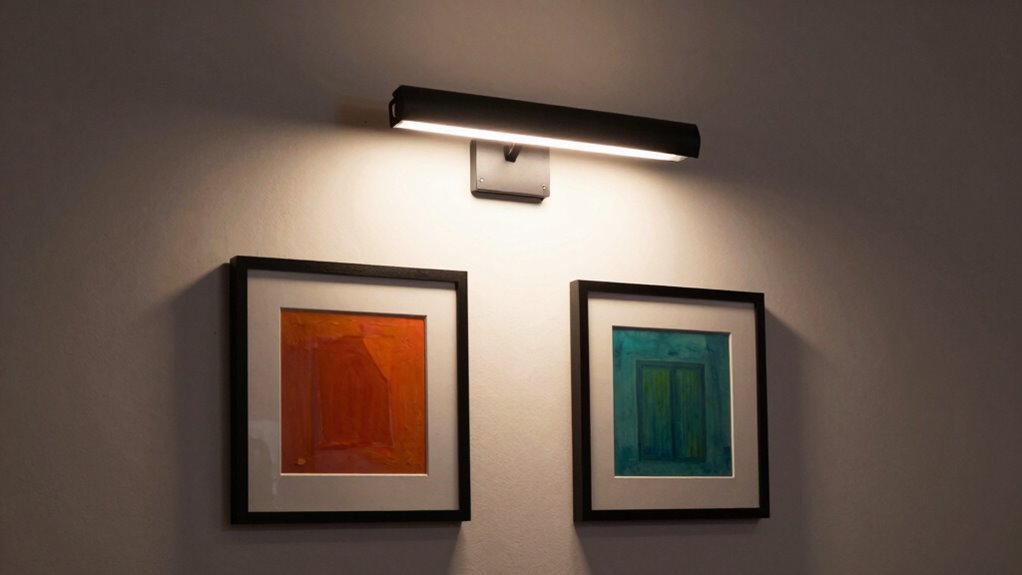
When hanging art with wall sconces, following a simple placement rule can make a big difference in achieving a balanced and visually pleasing display. The key is to position your sconces so they provide ambient lighting without casting harsh shadows on your artwork. Proper placement ensures your art remains the focal point, illuminated evenly and attractively. To accomplish this, consider the height and spacing of your sconces relative to the art piece. Typically, sconces should be installed at about eye level or slightly above, around 60-72 inches from the floor, so their light complements the artwork without overpowering it. When the sconces are placed too high or too low, the light can create unwanted shadows or glare, detracting from the visual harmony you want to achieve. Additionally, choosing fixtures with diffused lighting can help spread light evenly and prevent harsh spots. Fixture styles also play a role in how well your sconces blend with your art. Choose fixtures that complement your room’s decor and provide diffused, soft lighting to avoid harsh spots or reflections. For example, frosted glass or fabric shades work well because they scatter light gently across the wall, creating a warm, inviting ambiance. Metal or minimalist fixtures can add a modern touch but should still be positioned thoughtfully to prevent the light from falling directly onto the art. The goal is to create a layer of ambient lighting that enhances both the wall and the artwork without overwhelming it. The placement rule emphasizes that sconces should be spaced evenly on either side of the art, at a height that allows the light to wash over it uniformly. This means avoiding placing sconces too close together or too far apart, as inconsistent spacing can lead to uneven lighting and shadows. When installing multiple fixtures, aim for symmetry to frame the artwork gracefully. Also, consider the direction of the light. Fixtures with adjustable arms or shades can help you direct light precisely where it’s needed, eliminating harsh shadows behind or beside the art. In essence, the right wall-sconce placement isn’t just about aesthetics; it’s about protecting your art from the damage that harsh shadows and direct lighting can cause. Proper lighting placement is crucial for both safeguarding your artwork and creating a cohesive ambiance. A well-planned lighting plan can also help you achieve the desired effect and prevent unintentional glare or uneven illumination. By paying attention to fixture styles, height, spacing, and light direction, you create a balanced environment that highlights your artwork beautifully while maintaining a cozy, ambient glow in the room. A good understanding of lighting principles can further optimize the visual effect and prevent unintended shadows. This simple rule can transform your space, making your art stand out without the distraction of uneven or harsh lighting.
As an affiliate, we earn on qualifying purchases.
Frequently Asked Questions
How Do Different Wall Colors Affect Sconce Placement?
You should consider wall color contrast when placing sconces, as darker walls may require higher placement to avoid glare, while lighter walls need less height for balanced illumination. Follow sconce height guidelines to guarantee even lighting and avoid harsh shadows, especially on painted or textured surfaces. Adjusting placement based on wall color helps highlight your art and creates a warm, inviting ambiance without overpowering the space.
Can Sconce Placement Be Adjusted After Installation?
Yes, sconce placement can be adjusted after installation if you choose fixtures with adjustable features. You can modify the sconce height or angle to reduce harsh shadows or improve overall lighting. Carefully loosen or reposition the fixture to achieve the desired illumination, but make sure to turn off the power first. With adjustable fixtures, you have flexibility in fine-tuning your lighting to best suit your space and art display needs.
What Types of Light Bulbs Are Best for Art Lighting?
You should choose LED bulbs for art lighting because they emit minimal heat and produce consistent, bright illumination without damaging the artwork. If you prefer a warmer glow, incandescent options are available, but they generate more heat and can harm delicate pieces over time. Opt for bulbs with a high Color Rendering Index (CRI) to guarantee colors appear vibrant and true. Always select dimmable bulbs for better control over lighting intensity.
How Does Room Size Influence Sconce Positioning?
Think of your room as a canvas—its size shapes your sconce placement. For large rooms, you’ll want higher sconce placement and more spaced-out lighting to evenly illuminate the space without overwhelming it. Smaller rooms benefit from lower, closer sconces to avoid overpowering the area. Measure your room dimensions carefully and set your sconces at an appropriate height to guarantee balanced lighting—creating harmony between art, space, and ambiance.
Are There Specific Safety Considerations for Wall Sconces?
Yes, safety is essential when installing wall sconces. You should guarantee proper electrical wiring to avoid short circuits or electrical fires. Always check that connections are secure and use the correct wattage bulbs to prevent overheating. Additionally, keep sconces away from flammable materials and ensure they’re mounted securely to avoid falls or damage. Following these safety considerations helps protect your home from fire hazards and electrical issues.
As an affiliate, we earn on qualifying purchases.
Conclusion
By following this simple wall-sconce placement rule, you create a space where art breathes without harsh shadows, illuminating your favorite pieces softly and evenly. Imagine the gentle glow that caresses each brushstroke, contrasting with the starkness of unlit walls. In this subtle dance of light and shadow, your art becomes the centerpiece, inviting viewers into a warm, inviting gallery within your home. With thoughtful placement, you turn everyday walls into a mesmerizing showcase.
adjustable wall sconces for artwork
As an affiliate, we earn on qualifying purchases.
As an affiliate, we earn on qualifying purchases.
As an affiliate, we earn on qualifying purchases.
Columbus Day / Indigenous Peoples' Day Picks
long weekend sales
As an affiliate, we earn on qualifying purchases.