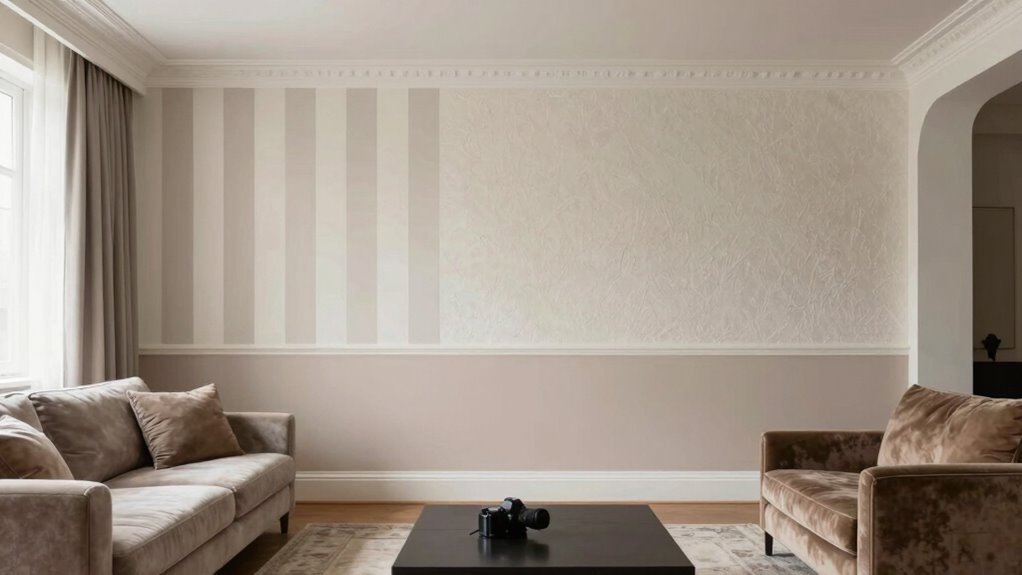

To correct room proportions with wall treatments, use color contrast to draw attention to specific areas—light colors on upper walls and darker shades below can make ceilings seem higher. Incorporate vertical textures like paneling or elongated patterns to emphasize height, or horizontal textures such as wide planks to widen narrow spaces. Combining these techniques thoughtfully creates balance and interest, enhancing your room’s overall harmony. Keep exploring how these strategies can transform your space further.

Get furniture and decor delivered free — and shop member deals
- Fast, free delivery on millions of items
- Access to Prime Big Deal Days deals on October 6–7
- Prime Video, Amazon Music and more included
Key Takeaways
- Use darker colors on lower walls and lighter colors on upper walls to create the illusion of higher ceilings.
- Incorporate vertical textures, like paneling or elongated patterns, to visually increase ceiling height.
- Apply horizontal textures or wide planks in narrow rooms to make them appear wider and more balanced.
- Combine contrasting colors and textures to emphasize specific areas and correct disproportionate features.
- Scale wall treatments appropriately to ensure they complement the room’s size without overwhelming or underwhelming.
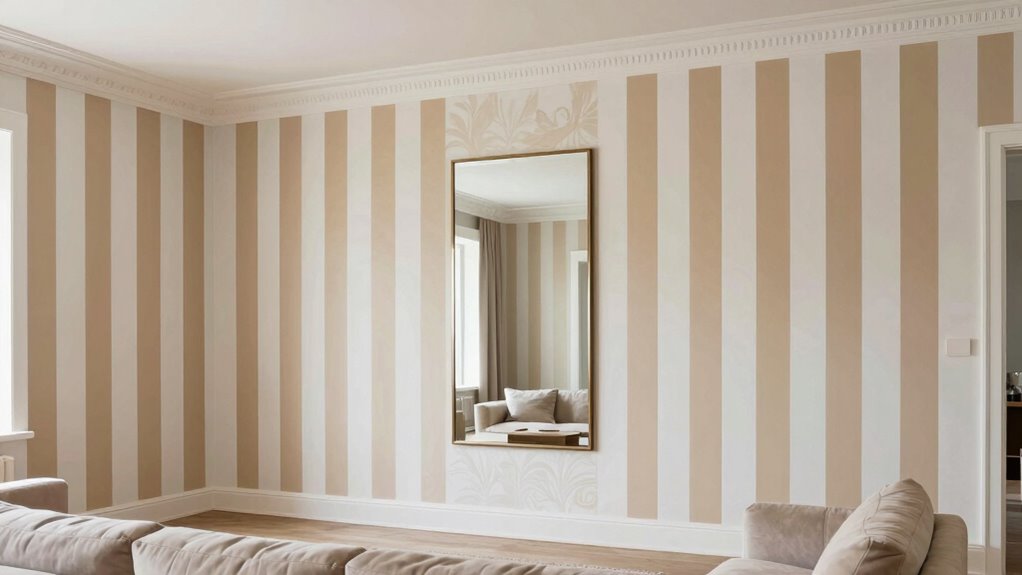
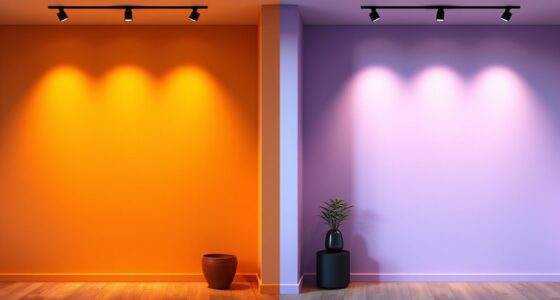
When a room feels off-balance or awkward, the right wall treatments can help correct its proportions and create a more harmonious space. One effective approach is to use color contrast strategically. If your room’s ceiling feels too low or the walls seem overwhelming, painting the upper portion a lighter shade while darkening the lower part can create the illusion of greater height. Conversely, if the room feels narrow, using bold, contrasting colors on the longer walls can make the space appear wider. The key is to select hues that enhance the natural architecture, drawing attention to certain areas and balancing out disproportionate features. Color contrast isn’t just about paint; it extends to wallpaper, murals, or decorative panels. These elements can add visual interest and help redefine the room’s proportions by shifting focus or creating a sense of depth.
Another powerful tool for correcting room proportions lies in texture variation. When a room feels flat or lackluster, adding textured wall treatments can create a sense of depth and dimension. For example, textured wallpaper, wood paneling, or even fabric wall coverings introduce tactile qualities that draw the eye and break up large, monotonous surfaces. If your ceilings seem too low, vertical textures like paneling or elongated patterns can give the illusion of height. Conversely, horizontal textures, such as wide planks or horizontal shiplap, can widen a narrow space, making it feel more balanced. Texture variation also plays a role in emphasizing certain parts of a room, guiding the eye upwards or outwards as needed to correct skewed proportions. Understanding how color contrast influences visual perception can help you make more informed choices for your space. Exploring different wall treatments can further enhance these effects by adding variety and visual interest. Incorporating texture variation thoughtfully can also help in balancing the overall harmony of the room, making it feel more inviting and well-designed. Additionally, considering the scale and proportion of wall treatments ensures they complement the room’s dimensions, preventing treatments from overwhelming or underwhelming the space.
wall paneling for ceiling height illusion
As an affiliate, we earn on qualifying purchases.
As an affiliate, we earn on qualifying purchases.
Frequently Asked Questions
Can Wall Treatments Make a Small Room Appear Larger?
Yes, wall treatments can make a small room appear larger. You can use light color schemes on the walls to reflect more light and create an airy feel. Incorporating texture patterns, like subtle wallpaper or textured paint, adds visual interest without overwhelming the space. Vertical stripes or elongated patterns can also draw the eye upward, emphasizing height and making the room seem more spacious.
Which Wall Treatments Are Best for High Ceilings?
For high ceilings, textured finishes and patterned wallpapers work best. They add visual interest and help break up the height, making the space feel more inviting. Opt for vertical patterns or large-scale designs to emphasize the height or horizontal textures to create a cozy, balanced look. These treatments draw the eye around the room, making high ceilings feel less overwhelming and more proportionate to the overall space.
Are There Wall Treatments Suitable for Damp or Humid Environments?
Yes, there are wall treatments suitable for damp or humid environments. You should look for moisture-resistant finishes like ceramic tiles, vinyl wallpaper, or sealed stone. Humidity-friendly materials such as treated wood panels or fiber cement boards work well too. These options help prevent mold and damage, ensuring your walls stay durable and looking good despite high humidity or damp conditions.
How Do Wall Treatments Affect Room Acoustics?
Wall treatments considerably influence room acoustics by affecting sound absorption and enhancing overall sound quality. When you add materials like fabric panels or textured wall coverings, they absorb excess sound waves, reducing echoes and reverberation. This acoustic enhancement creates a more comfortable space for conversations or listening. By choosing the right wall treatments, you can optimize sound quality, making your room feel more balanced and pleasant.
Can Wall Treatments Be Easily Removed or Changed Later?
Ever wondered if wall treatments are permanent? Many types are designed for easy removal or change later, making the removal process quite straightforward—especially with options like removable wallpaper or fabric panels. Keep in mind, though, that certain treatments, like built-in moldings or wall panels, can be more challenging to remove and may have higher cost implications. So, choose versatile options if you think you’ll want to swap or update them later.
horizontal wall planks for room widening
As an affiliate, we earn on qualifying purchases.
As an affiliate, we earn on qualifying purchases.
Conclusion
By carefully choosing and applying wall treatments, you can dramatically alter your room’s proportions—making it feel larger, cozier, or more balanced. But the true power lies in knowing when to push boundaries and when to embrace subtlety. The right treatment can transform your space in unexpected ways, leaving you wondering: what’s possible next? Keep experimenting, because the secret to perfect proportions could be just a wall away—and it’s waiting for you to uncover it.
textured wallpaper for wall dimension
As an affiliate, we earn on qualifying purchases.
As an affiliate, we earn on qualifying purchases.
color contrast paint for room proportions
As an affiliate, we earn on qualifying purchases.
As an affiliate, we earn on qualifying purchases.
Evergreen bestsellers Picks
bestsellers
As an affiliate, we earn on qualifying purchases.