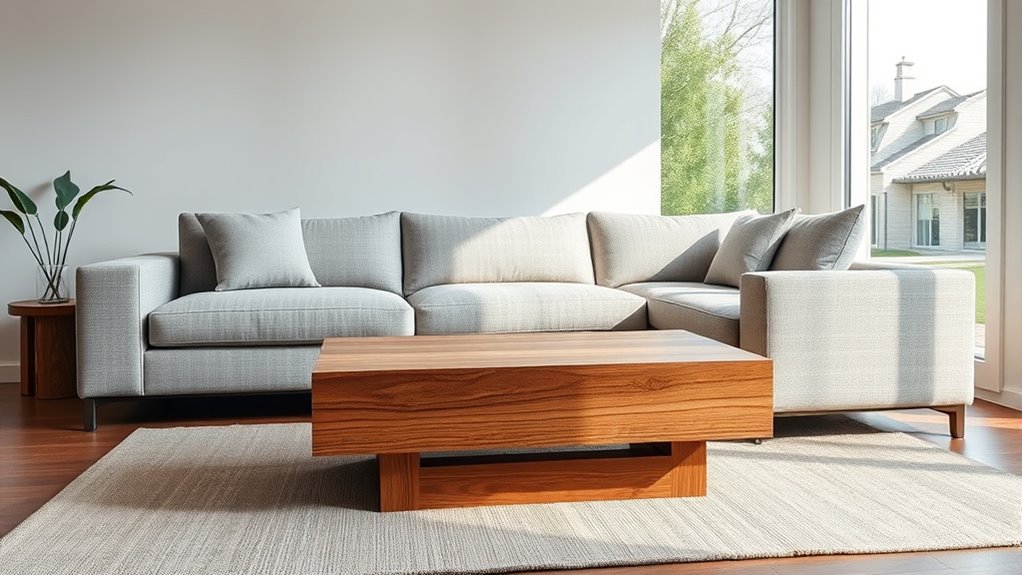

The 2/3 rule helps you choose and arrange furniture with proportional widths, creating a balanced, cohesive look in your space. It suggests that some pieces, like sofas or tables, should be about two-thirds the width of larger items or the room itself. Following this guideline can improve the overall flow and prevent cluttered or mismatched arrangements. Keep going to discover how this simple rule can transform your room’s style and harmony.
Key Takeaways
- The 2/3 rule suggests furniture should be approximately two-thirds the width of a main piece for visual harmony.
- It helps create proportional relationships and balanced aesthetics among different furniture pieces.
- Applying this rule ensures furniture sizes complement each other, enhancing room cohesion and flow.
- The rule simplifies furniture arrangement decisions by providing a clear guideline for width compatibility.
- Combining the 2/3 rule with color coordination enhances overall room harmony and visual interest.
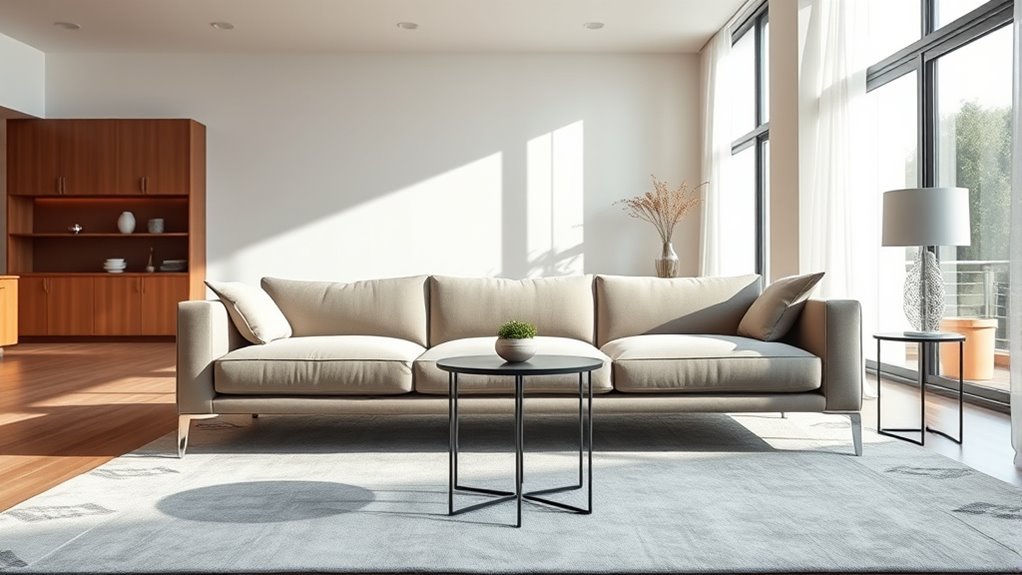
Ensuring your furniture pieces are aligned in width can dramatically improve the look and functionality of your space. When furniture sizes are consistent or follow a specific proportion, your room feels more cohesive and balanced. One effective way to achieve this is by applying the 2/3 rule, which guides you in selecting and arranging pieces that complement each other in width. This rule helps you create harmony, making your room look thoughtfully curated rather than cluttered or mismatched. Incorporating space optimization techniques can further enhance the room’s layout by maximizing utility while maintaining aesthetic appeal. Color coordination plays an essential role alongside width alignment. When your furniture pieces follow a proportional width pattern, choosing colors that complement or contrast appropriately enhances the overall aesthetic. For instance, pairing a wide sofa with narrower side tables in coordinating hues can create visual interest without overwhelming the space. Similarly, sticking to a cohesive color palette across furniture pieces ensures that even varied widths contribute to a unified look. This combination of width alignment and color coordination prevents the room from appearing chaotic and helps you highlight specific design elements.
Frequently Asked Questions
How Do I Measure Furniture Widths Accurately?
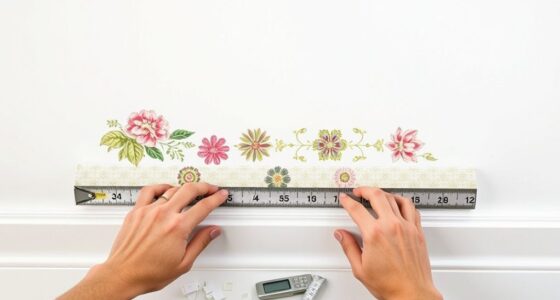
To measure furniture widths accurately, use measuring techniques like a tape measure or a ruler, ensuring you record the widest points of each piece. Stand directly in front of the furniture, keep the measuring tool straight, and note the dimensions clearly. Double-check your measurements for precision, especially when considering furniture dimensions for fitting spaces. This way, you’ll get reliable measurements that help you plan your space effectively.
Can the 2/3 Rule Be Applied to Irregularly Shaped Furniture?
Yes, you can apply the 2/3 rule to irregular-shaped furniture, but it’s more challenging. You’ll need to make custom measurements for each section of the piece, focusing on the most prominent widths. Use those measurements to determine the 2/3 point for alignment, ensuring visual balance. Keep in mind, irregular shapes require more precise, custom measurements to achieve a harmonious look with other furniture or decor.
What Tools Are Best for Aligning Furniture Using This Rule?
You should use measuring tapes and laser levels to align furniture using the 2/3 rule effectively. Measuring tapes help you get precise dimensions, ensuring your furniture aligns perfectly, while laser levels project straight lines for accurate placement. Together, these tools make it easier to follow the 2/3 rule, especially when dealing with multiple pieces or complex layouts, helping you achieve a balanced and professional look.
Does the 2/3 Rule Apply to All Room Sizes?
You’ll find the 2/3 rule works well in most room sizes, as about 80% of interior designers recommend it for ideal space utilization. While room size considerations matter, this rule offers aesthetic flexibility, helping furniture placement feel balanced. Larger rooms may allow for deviations, but the 2/3 proportion generally creates a harmonious look across various spaces, making your room feel inviting and well-organized.
How Can I Adjust the Rule for Existing Furniture Layouts?
To adjust the 2/3 rule for your existing furniture layout, start by furniture resizing if pieces are too large or small. You can also make layout adjustments by shifting furniture to improve balance and flow, even if it means repositioning or replacing certain items. Keep in mind that flexibility is key; adapt the rule to fit your space and furniture to create a harmonious, functional room.
Conclusion
By embracing the 2/3 rule, you craft a harmonious space where furniture flows seamlessly, like notes in a well-composed melody. Imagine your room as a finely tuned orchestra, each piece perfectly aligned, creating a balanced symphony of style and function. With this simple guideline, you transform clutter into elegance, turning your living area into a sanctuary that feels both thoughtfully curated and effortlessly inviting. Your harmonious design begins with understanding and applying this elegant rule.