To use texture in wall art without fighting your wall finish, choose materials and colors that complement rather than compete. If your walls are smooth or glossy, opt for bold, textured pieces in contrasting colors for visual interest. For textured walls, select sleek, subtle art like metal or glass to maintain harmony. Balance is key—consider the room’s overall style and avoid clutter. Keep exploring for tips to perfect your textured wall display effortlessly.

Get furniture and decor delivered free — and shop member deals
- Fast, free delivery on millions of items
- Access to Prime Big Deal Days deals on October 6–7
- Prime Video, Amazon Music and more included
Key Takeaways
- Match or complement the wall’s texture with subtle, harmonious textures in the artwork to avoid visual clash.
- Use smooth, sleek textured materials like glass or metal on textured or matte walls for contrast.
- Incorporate natural fibers and layered woods to add warmth without overpowering textured or patterned walls.
- Choose colors that echo the room’s palette, using bold textures for contrast on neutral or matte walls.
- Ensure the overall texture balance enhances the space without creating visual chaos or competing with the wall finish.
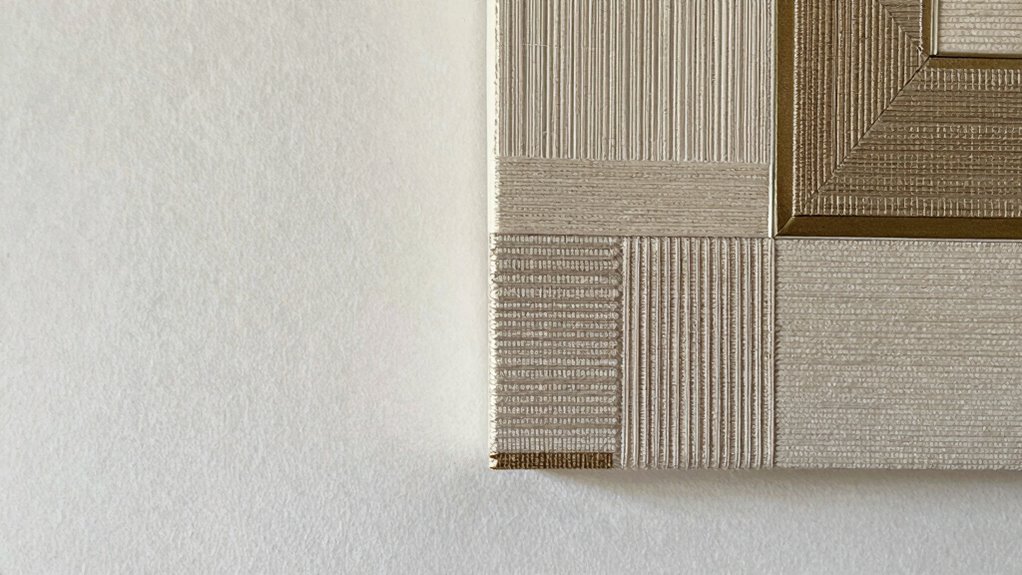
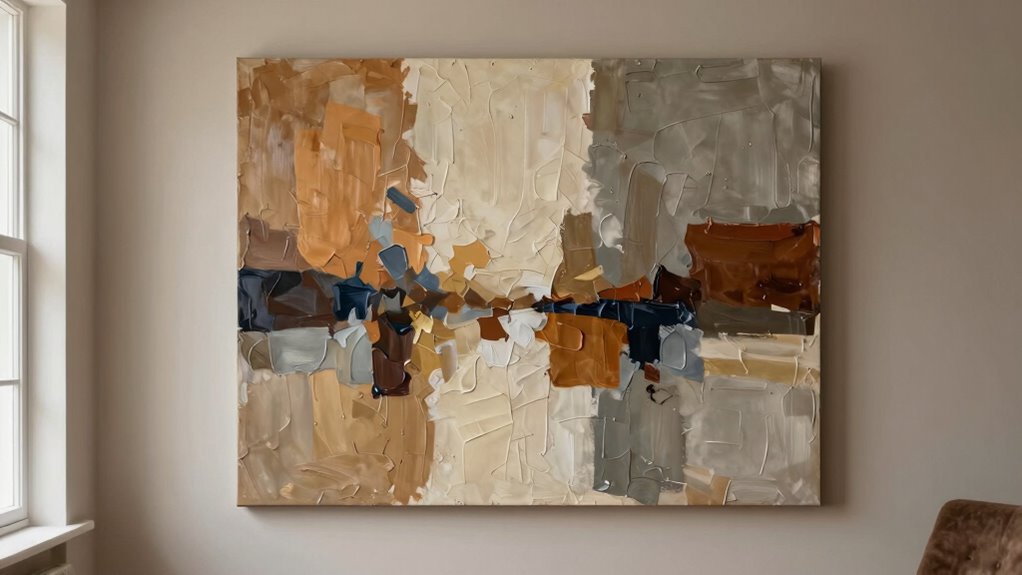
Adding texture to wall art can transform a plain space into a dynamic focal point. When you choose textured pieces, you’re adding depth and interest that keep the eye moving across the room. But you need to be mindful of your wall’s finish so the textured art complements rather than clashes with it. The key lies in balancing color contrast and material selection, guaranteeing your wall art enhances your space instead of fighting against it.
Adding textured wall art creates depth and interest, but balancing materials and color contrast is key for harmony.
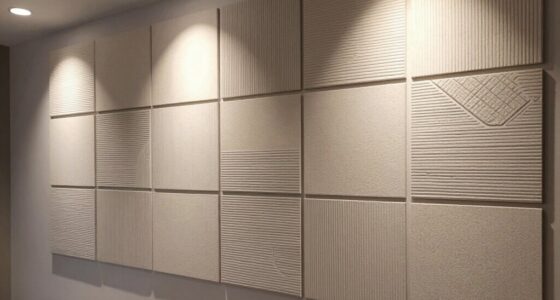
Start by considering your wall’s current finish—whether it’s smooth, matte, or textured itself. If you have a smooth, glossy wall, you have the flexibility to experiment with bold textures and high contrast. You might pick artwork with pronounced ridges, layered materials, or sculptural elements made from thick textiles or carved wood. The contrast in texture will stand out beautifully, creating a striking visual effect. Conversely, if your wall has a textured finish, like a stucco or patterned wallpaper, opt for wall art that either complements or subtly contrasts with that texture. For example, if your wall has a rough finish, smooth, sleek textures like glass or metal can provide a nice balance without overwhelming the space. If you choose textured art, think about how the material plays with your wall’s surface to avoid visual chaos. Incorporating sustainable materials that are eco-friendly can also add an extra layer of meaning and style to your decor. Additionally, understanding the importance of material qualities can help you select pieces that truly resonate with your overall design. Recognizing how different materials reflect light and texture can further enhance your choices. Being aware of material durability can help ensure your artwork maintains its beauty over time and suits the level of wear in your space.
Material selection becomes essential here. When you select your wall art, think about the materials’ inherent qualities. Natural fibers such as burlap, linen, or jute can add a tactile, organic feel that pairs well with neutral or earthy walls. Metal and glass pieces introduce sleekness and shine, creating a contrast in both material and light reflection. Wood, especially when carved or layered, can add warmth and a natural element that complements various wall finishes. For a cohesive look, you might want to stick to a palette that echoes your room’s color scheme, but don’t be afraid to introduce a pop of color through your textured art for visual interest. The goal is to create harmony—so if your wall is a neutral tone, textured art in bold colors or contrasting materials can make your space pop without competing with the wall finish. Additionally, understanding the principles of biodiversity and sustainable materials can inspire eco-friendly choices that enhance your decor and support conservation efforts. Incorporating texture contrast thoughtfully can further elevate the aesthetic appeal of your space.
In the end, when you select textured wall art, think about how the colors and materials interplay with your wall. Your aim is to create a balanced look—where the texture enhances the space rather than fighting with it. By carefully choosing materials and considering color contrast, you guarantee your wall art becomes a cohesive, eye-catching feature that elevates your entire room.
textured wall art for neutral walls
As an affiliate, we earn on qualifying purchases.
As an affiliate, we earn on qualifying purchases.
Frequently Asked Questions
Can Textured Wall Art Work in Small or Narrow Spaces?
Yes, textured wall art can work in small or narrow spaces. To make it effective, you should focus on creating a subtle textural contrast that adds depth without overwhelming. Use color coordination to keep the space feeling cohesive and balanced. Opt for smaller or vertically oriented pieces to enhance the sense of height or width, ensuring the textured art complements rather than clutters the room.
What Are the Best Lighting Options for Textured Wall Art?
Ever wondered how to truly highlight textured wall art? You should incorporate a mix of ambient lighting and accent lighting. Ambient lighting softly illuminates the entire space, creating a warm glow, while accent lighting directs focused beams onto your textured piece, emphasizing its depth. Using adjustable fixtures or wall sconces allows you to control shadows and highlights, making the texture pop and transforming your wall into a mesmerizing focal point.
How Do I Clean Textured Wall Art Without Damage?
To clean textured wall art without damage, use gentle cleaning techniques like dusting with a soft brush or vacuuming with a brush attachment. Avoid harsh chemicals or water that could damage the texture. Instead, lightly dampen a microfiber cloth for spot cleaning. Damage prevention is key—test any cleaning method on a small area first, and always use gentle motions to preserve the intricate details of your textured wall art.
Are There Specific Textures That Complement Certain Wall Finishes?
Think of your wall as a canvas—certain textures, like smooth ceramics, beautifully complement matte or eggshell finishes, creating a serene harmony. For a lively contrast, choose rougher textures like burlap or wood with glossy or semi-gloss finishes, adding visual interest. Material pairing and style harmony guide your choices, helping you create a balanced look that enhances your space without clashing, much like a symphony of textures working in perfect concert.
How Do I Prevent Textured Art From Clashing With Existing Decor?
To prevent textured art from clashing with your decor, focus on color coordination and material harmony. Choose artwork with colors that complement your existing palette, making sure they blend seamlessly rather than compete. Opt for textures that echo your wall finish’s vibe, creating a cohesive look. By aligning color tones and materials, you guarantee your textured art enhances your space rather than fighting against it, resulting in a balanced and stylish environment.
As an affiliate, we earn on qualifying purchases.
Conclusion
Incorporating texture into your wall art can truly elevate your space without clashing with the wall finish. Remember, about 65% of homeowners say that textured art adds depth and personality to their rooms. By choosing the right textures and balancing them with your wall’s surface, you’ll create a harmonious, stylish environment. So go ahead—experiment and have fun! Your walls will thank you for the creative touch, making your home uniquely yours.
As an affiliate, we earn on qualifying purchases.
As an affiliate, we earn on qualifying purchases.
Fall Picks
fall essentials
As an affiliate, we earn on qualifying purchases.