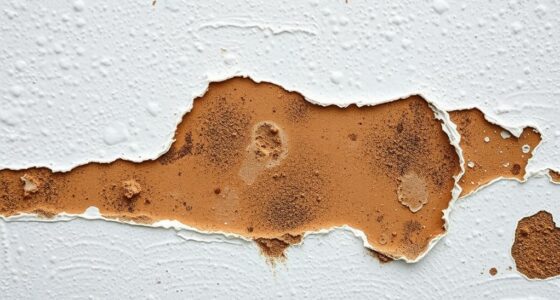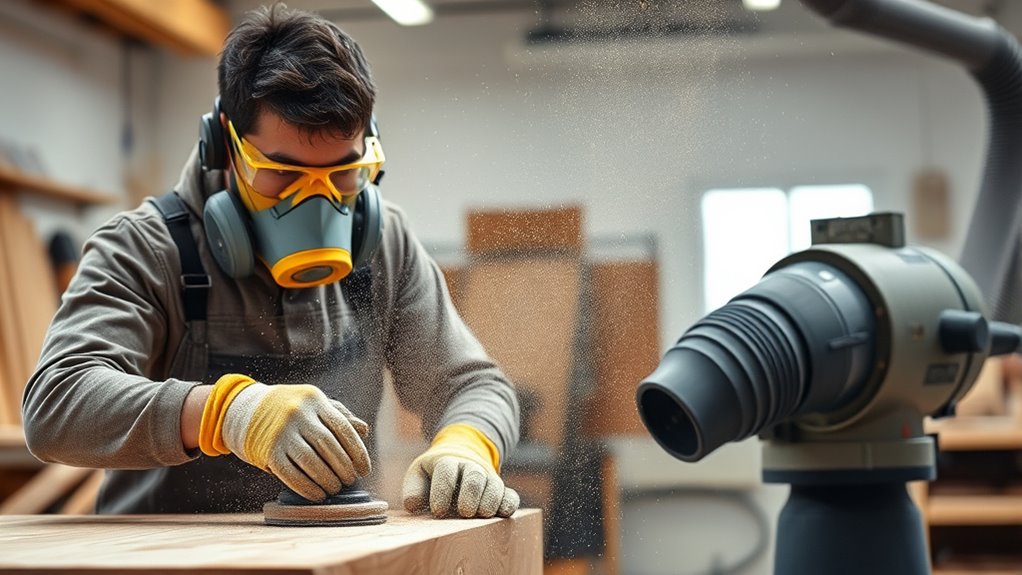

To control dust while sanding, use a combination of air filtration devices like HEPA filters or portable scrubbers placed near your work area, along with dust extraction attachments directly on your power tools. Always wear a properly fitted respirator such as an N95 mask to protect your lungs, and guarantee good ventilation. Regularly clean filters and dispose of dust responsibly. Keep these methods in mind to create a safer, cleaner workspace—more tips are just ahead to help you master dust control.

Get furniture and decor delivered free with Prime
- Fast, free delivery on millions of items
- Prime Video, Amazon Music and more included
- Member-only deals all year
Key Takeaways
- Use HEPA air filters and portable scrubbers positioned near sanding areas to continuously remove airborne dust.
- Attach dust extraction systems directly to power tools to capture dust at the source.
- Wear properly fitted respirators like N95 masks for personal respiratory protection.
- Combine workspace ventilation, air filtration, and PPE for comprehensive dust control.
- Regularly clean tools, replace filters, and dispose of dust responsibly to maintain safety and efficiency.
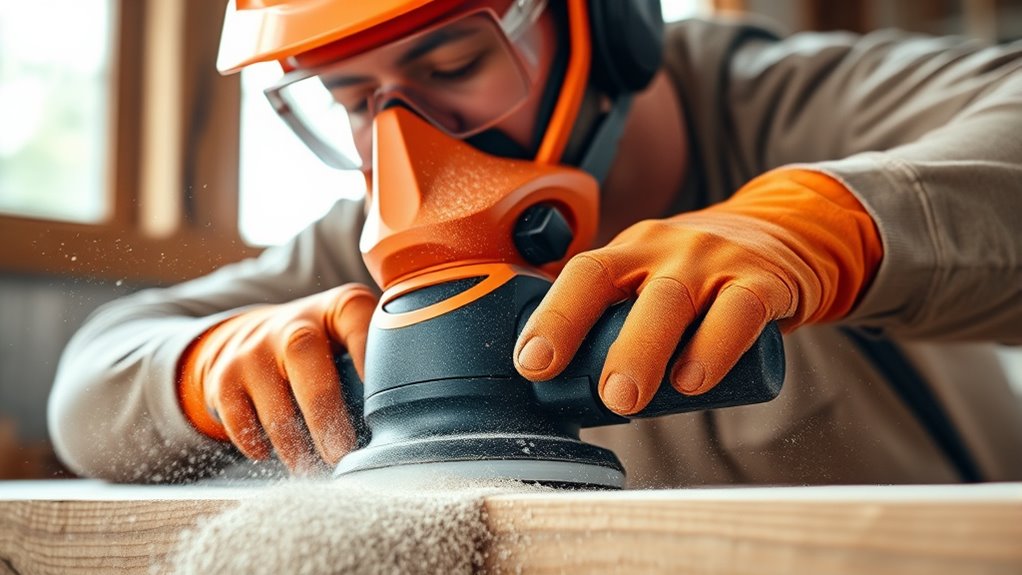
Sanding can produce a notable amount of airborne dust that poses health risks and creates a mess. As you work, the tiny particles become airborne, spreading throughout the area and settling on surfaces. Breathing in this dust can lead to respiratory issues, allergic reactions, or long-term health problems. That’s why implementing effective dust control methods is essential to protect yourself and maintain a clean workspace. One of the most effective ways to do this is through air filtration. Using HEPA air filters or portable air scrubbers can considerably reduce airborne dust levels. These devices draw in contaminated air and trap the particles, preventing them from circulating and settling on surfaces. Proper placement of air filtration units is vital; position them near your sanding area for maximum efficiency, and run them continuously to maintain cleaner air. Not only does this help safeguard your respiratory health, but it also keeps your workspace cleaner and reduces cleanup time after sanding.
However, relying solely on air filtration isn’t enough. Respirator safety plays a critical role in dust control. Wearing a proper respirator, such as an N95 or a half-face respirator with appropriate cartridges, ensures you don’t breathe in harmful dust particles. Fit testing is essential; make sure your respirator fits snugly against your face without gaps. Regularly check and replace filters to maintain their effectiveness, especially if you notice difficulty breathing or if the filters appear clogged. Combining respirator use with good ventilation strategies creates a layered defense against airborne dust. Always remember, a respirator is your last line of defense, so it must be used correctly and consistently.
Additionally, understanding the importance of air filtration in maintaining a safe workspace can help you make informed decisions about your dust control setup. To maximize your dust control efforts, combine air filtration with personal protective equipment. Keep the workspace well-ventilated, and use dust extraction systems attached directly to power tools whenever possible. These systems capture dust at the source, preventing it from becoming airborne in the first place. Regularly clean and maintain your tools and filters to guarantee optimal performance. When you’re finished sanding, take the time to thoroughly clean your workspace, dispose of dust responsibly, and replace filters as needed. This extensive approach minimizes health risks and keeps your environment safer and cleaner. Remember, prioritizing air filtration and respirator safety isn’t just about compliance; it’s about protecting your health and making your work easier and more efficient.
HEPA air purifier for dust removal
As an affiliate, we earn on qualifying purchases.
As an affiliate, we earn on qualifying purchases.
Frequently Asked Questions
Can DIY Dust Control Methods Be as Effective as Professional Systems?
DIY dust control methods can be quite effective if you choose the right tools and techniques, but professional systems generally provide superior dust containment and filtration. You should consider using shop vacuums with HEPA filters, dampening surfaces to reduce dust, and sealing off work areas for DIY solutions. However, for consistent, high-quality results and maximum protection, investing in professional dust control systems is often the better choice.
Are There Eco-Friendly Dust Suppression Options Available?
Did you know that eco-friendly alternatives can reduce dust emissions by up to 50%? You can choose sustainable suppressants like plant-based oils or mineral binders, which are safe for the environment. These eco-friendly options help keep your workspace cleaner and support sustainability. By opting for sustainable suppressants, you’re not only protecting your health but also reducing your ecological footprint during sanding projects.
How Often Should Sanding Equipment Filters Be Replaced?
You should replace sanding equipment filters regularly to guarantee ideal filter maintenance and extend your equipment’s lifespan. Generally, check the filters after every few sanding projects or when you notice a decrease in dust collection efficiency. Replacing filters more often in dusty environments prevents clogging and maintains performance. Proper filter care not only protects your health but also keeps your equipment running smoothly and lasts longer, saving you money in the long run.
What Are the Health Risks of Long-Term Dust Exposure?
Long-term dust exposure puts you at risk of developing serious health issues like lung disease and respiratory issues. Breathing in fine dust particles over time can cause chronic bronchitis, silicosis, or even reduce lung function. To safeguard yourself, always wear proper PPE, make sure effective dust control measures are in place, and limit exposure duration. Regular health check-ups are also essential to catch any early signs of respiratory problems.
Are There Specific PPE Recommendations for Different Sanding Materials?
You should choose PPE based on the sanding material you’re working with. For fine dust, wear a respirator with appropriate filters, like N95 or P100, which meet dust mask standards. For heavy-duty or hazardous sanding materials, opt for a half-face or full-face respirator with appropriate cartridges. Always verify your PPE fits well and is rated for the specific dust type to protect your respiratory health effectively.
dust extraction system for power tools
As an affiliate, we earn on qualifying purchases.
As an affiliate, we earn on qualifying purchases.
Conclusion
By following these dust control methods and wearing proper PPE, you can turn a dusty mess into a safer, cleaner workspace. Think of it like wielding a mighty shield against invisible enemies—dust particles so tiny they could slip through cracks in walls! Stay vigilant, keep your area ventilated, and don your protective gear. With these simple steps, you’ll prevent dust from taking over your space and protect your health like a true sanding superhero.
N95 respirator mask for dust protection
As an affiliate, we earn on qualifying purchases.
As an affiliate, we earn on qualifying purchases.
portable air scrubber for woodworking
As an affiliate, we earn on qualifying purchases.
As an affiliate, we earn on qualifying purchases.
Halloween Picks
halloween
As an affiliate, we earn on qualifying purchases.