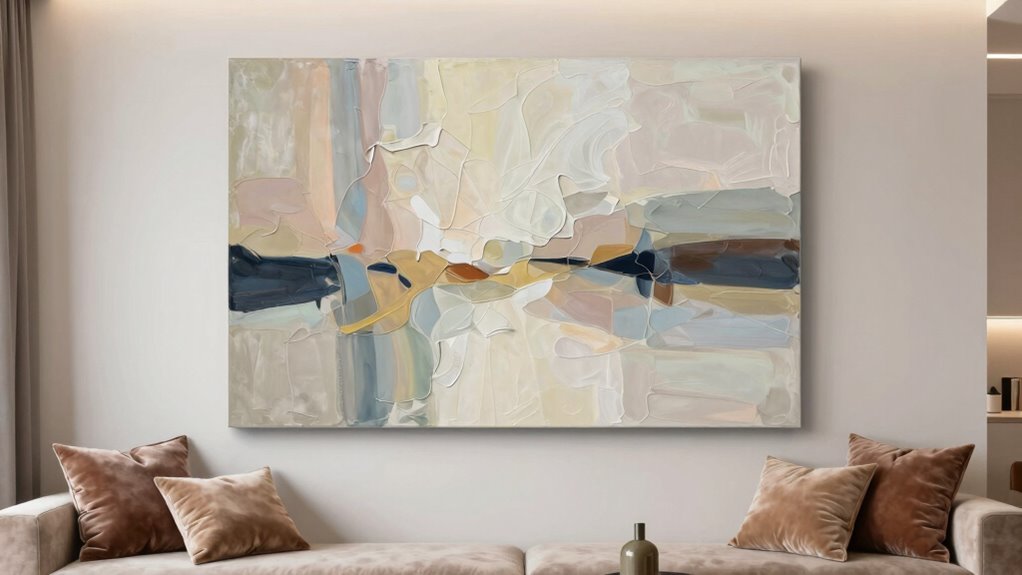

To make your media wall feel softer with art, choose pieces that complement your color scheme and opt for warm, textured frames like wood or matte finishes. Arranging artwork with balance and harmony helps create a cozy, inviting vibe. Incorporate layered, personalized displays to add warmth and personality. Thoughtful placement and cohesive styling can soften the space and make it more welcoming. Keep exploring for more tips on transforming your media wall into a cozy focal point.

Get furniture and decor delivered free with Prime
- Fast, free delivery on millions of items
- Prime Video, Amazon Music and more included
- Member-only deals all year
Key Takeaways
- Incorporate artwork with soft, muted colors to create a calm, inviting atmosphere.
- Use warm-toned or matte-finish frames to add texture and a cozy feel.
- Arrange art with balanced spacing and layered pieces for a relaxed, harmonious look.
- Select pieces that complement the room’s color scheme for visual cohesion.
- Combine different frame styles and sizes to add warmth and visual interest.
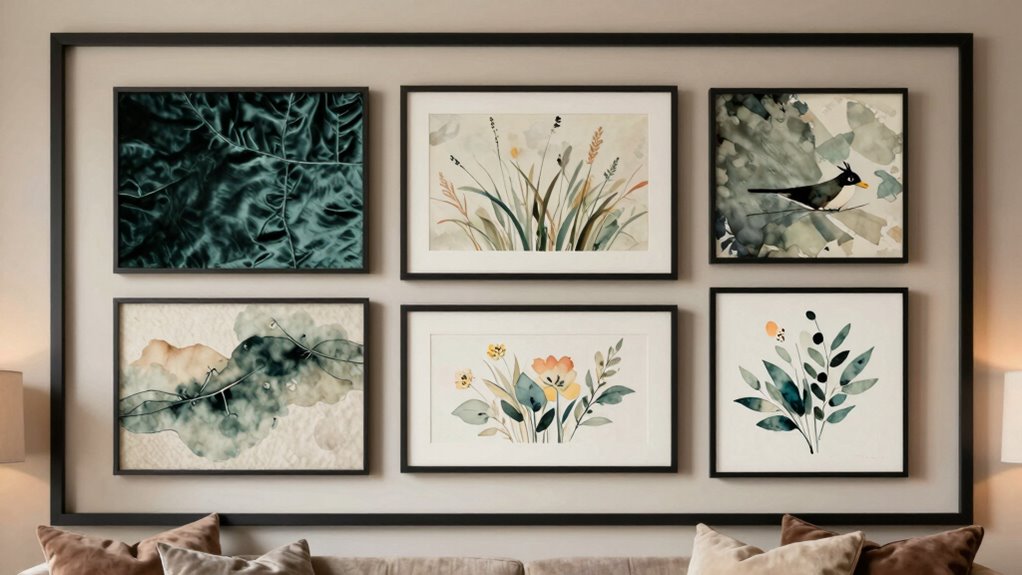
Creating a stunning media wall starts with understanding how to balance style and function. While the primary goal is to showcase your entertainment setup, adding art can soften the space and make it feel more inviting. To do this effectively, you need to pay attention to how you handle color coordination and frame selection. These elements set the tone for the entire wall, transforming a purely functional area into a cozy, curated display.
Start by choosing artwork that complements the existing color scheme. If your wall features neutral tones, opt for art pieces that introduce subtle pops of color or soft hues to create a harmonious look. Conversely, if your room already has bold colors, select art with more subdued palettes to prevent visual overload. The key is to strike a balance—too many contrasting colors can make the space feel chaotic, while too few can make it seem dull. Think about how the colors in your art will interact with your furniture, walls, and other decor. This thoughtful color coordination not only enhances the aesthetic but also brings a sense of cohesion and flow to the space. Incorporating color harmony principles can help guide your choices and ensure a unified look. Additionally, understanding visual balance can help you arrange your artwork more effectively. Being aware of visual weight can ensure your wall feels balanced and inviting rather than cluttered or sparse.
Frame selection plays an essential role in making your media wall feel softer. The right frames can add texture and depth, giving your artwork a finished, polished appearance. For a more inviting, relaxed vibe, consider opting for frames in warm wood tones or matte finishes. These materials tend to soften the visual impact of the artwork, making it feel less stark and more integrated into your room’s overall style. If you prefer a modern look, sleek metal or black frames can create a striking contrast that still maintains a sense of warmth if paired wisely. The size and style of your frames should also match the scale of your art pieces and the wall space. Smaller, uniform frames can create a neat, orderly look, while larger or eclectic frames can add personality and a sense of casual comfort. Incorporating art display techniques can help you arrange your pieces in a way that feels natural and inviting.
Ultimately, blending art into your media wall isn’t just about filling space; it’s about creating a layered, inviting atmosphere. By carefully selecting artwork that aligns with your color palette and choosing frames that add warmth and texture, you soften the overall look while maintaining style. These details help your media wall go from a purely functional setup to a personalized focal point that feels welcoming and well-balanced. When you pay attention to color coordination and frame selection, you craft a space that’s not just visually appealing but also emotionally comforting—making your media wall a true extension of your home’s personality.
As an affiliate, we earn on qualifying purchases.
Frequently Asked Questions
What Color Schemes Work Best for Softening a Media Wall?
You should opt for soft, muted color schemes to soften your media wall. Light blues, gentle greens, and warm neutrals create a calming atmosphere based on color psychology. Complementary palettes, like blush pink and deep charcoal, add visual interest without overwhelming. These choices help your art stand out, while maintaining a cozy, inviting vibe, making your media wall feel warmer and more inviting.
How Can Lighting Enhance the Softness of Media Wall Art?
Oh, because harsh lighting is just so last century, right? You should use ambient lighting to cast a gentle glow, making your media wall feel cozy and inviting. Add accent illumination to highlight softer art pieces without overpowering the space. This layered lighting approach creates a warm, soothing atmosphere that enhances the softness of your art, making your media wall a true haven rather than a glaring spotlight.
Should I Use Textured or Smooth Artwork for a Softer Look?
You should choose textured artwork for a softer look, as it adds depth and a tactile quality that makes the space feel cozy and inviting. Smooth artwork, on the other hand, offers a sleek, clean aesthetic but can sometimes feel more clinical. Opt for textured pieces if you want to create a warm, intimate atmosphere, especially when paired with soft lighting. Smooth artwork works well for modern, minimalistic designs.
How Can Fabric or Textiles Be Incorporated Into Media Wall Art?
You can incorporate fabric or textiles into your media wall art by adding fabric textures and textile accents directly onto your pieces. Use woven or embroidered textiles as backgrounds or frame inserts to create depth and softness. Hang fabric panels or incorporate textile art pieces alongside your images. This approach adds tactile richness, making your media wall feel warmer and more inviting without overwhelming the visual balance.
What Are the Best Framing Options to Create a Cozy Feel?
To create a cozy feel, choose warm, textured frames like wood or fabric-lined options, and opt for a gallery arrangement that feels intimate and balanced. Consider wall color selection—soft, warm hues enhance the inviting atmosphere. Arrange your art pieces at varying heights, but keep them close together to foster a sense of closeness. This approach makes your media wall feel more personal and comforting, inviting relaxation.
muted color wall art for media wall
As an affiliate, we earn on qualifying purchases.
As an affiliate, we earn on qualifying purchases.
Conclusion
To make your media wall feel softer with art, think of it as wrapping a cozy blanket around your space. Choose pieces with warm tones, varied textures, and interesting shapes to add depth and comfort. Mix and match artwork to create a relaxed, inviting vibe that feels just right. When you incorporate art thoughtfully, your media wall becomes as inviting as a quiet afternoon nap—warm, soothing, and perfectly at home.
As an affiliate, we earn on qualifying purchases.
As an affiliate, we earn on qualifying purchases.
Halloween Picks
halloween
As an affiliate, we earn on qualifying purchases.