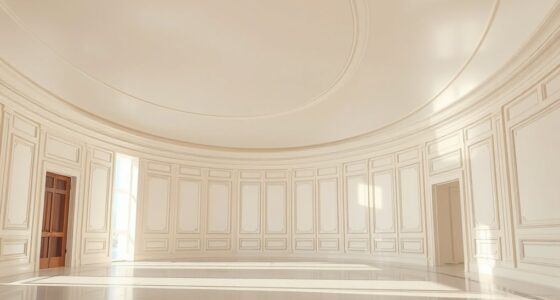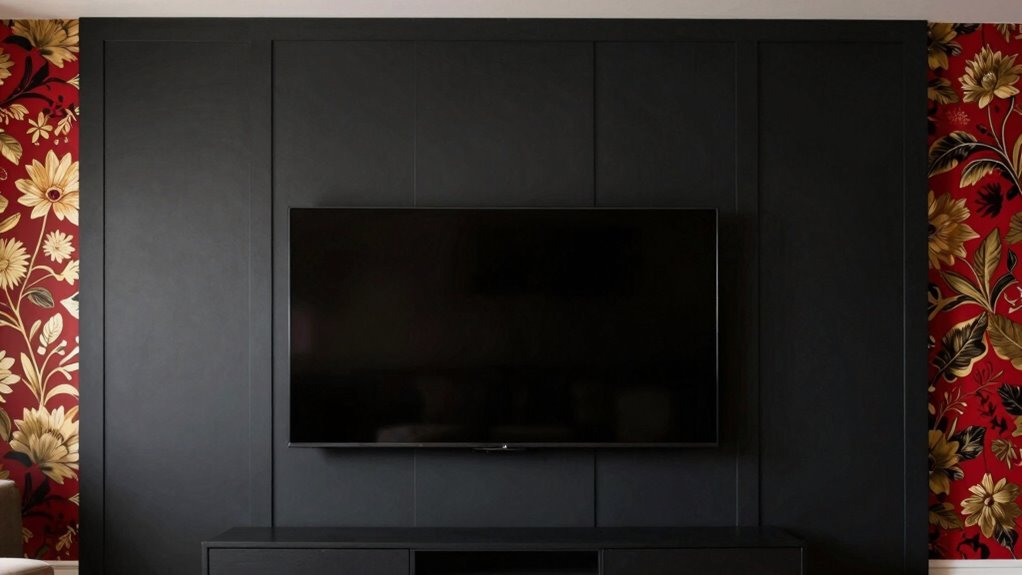

Choosing paneling behind your TV works better than busy wallpaper because it creates a sleek, cohesive look that enhances your space’s aesthetic. Paneling reflects light evenly, improving the room’s ambiance, and is durable enough to withstand daily wear. It’s easy to maintain and adaptable for future updates, offering flexibility in style choices. Unlike wallpaper, paneling stays looking fresh longer and provides a cleaner backdrop. Keep going to discover more on why this simple upgrade can transform your room.

Get furniture and decor delivered free with Prime
- Fast, free delivery on millions of items
- Prime Video, Amazon Music and more included
- Member-only deals all year
Key Takeaways
- Paneling creates a sleek, cohesive backdrop that reduces visual clutter compared to busy wallpaper.
- It reflects light evenly, enhancing room ambiance and avoiding distractions.
- Durable materials ensure longevity, resisting damage better than wallpaper over time.
- Easy to clean and maintain, paneling withstands daily wear in high-traffic areas.
- Offers versatile customization options for future updates, unlike intricate wallpaper patterns.
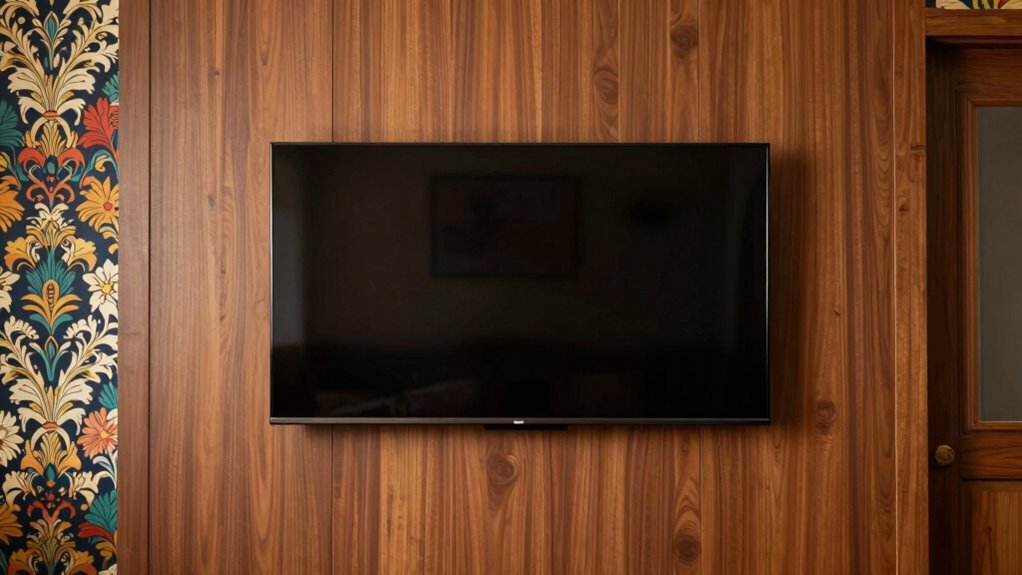
When choosing what to put behind your TV, it’s essential to think about how different wall treatments can influence the room’s overall look and feel. Paneling offers a sleek, cohesive backdrop that enhances your space without overwhelming it. Unlike busy wallpaper, which can distract and create visual clutter, paneling provides a clean, intentional aesthetic that complements modern interiors. It’s a smart choice if you want a space that feels organized and calm, especially since the area behind your TV is often a focal point. Additionally, paneling can be easily integrated with other lighting effects, making it a versatile choice for creating ambiance. Lighting effects are a vital factor to consider, and paneling handles them better than busy wallpaper. With paneling, you can incorporate layered lighting—like sconces, LED strips, or spotlights—that cast even, flattering illumination. Because the surface is typically smooth and uniform, it reflects light in a way that enhances the room’s ambiance without creating harsh shadows or glare. In contrast, busy wallpaper, with its intricate patterns and textures, can distort lighting effects, causing uneven light distribution and visual chaos. This can make the area behind your TV seem cluttered or poorly lit, diminishing the overall aesthetic. Moreover, the material durability of paneling ensures it remains a reliable choice over time, resisting the effects of daily use. A long-term investment in quality paneling can save you money and effort in repairs or replacements later on. The ease of maintenance of paneling makes it a practical option, as it can be cleaned easily and maintained with minimal effort. Paneling, with its sturdy construction, is built to last, often made from materials such as wood, MDF, or laminate. This durability means it withstands everyday wear and tear, which is especially beneficial in high-traffic or active households. It resists scratches, dents, and fading, maintaining its appearance over time. Wallpaper, especially busy patterns, can be more vulnerable. It’s prone to peeling, tearing, or fading, particularly in areas with fluctuating humidity or direct sunlight. Replacing or repairing wallpaper can also be more cumbersome and costly, making paneling a more practical and long-lasting solution. Furthermore, paneling offers versatility in design. You can choose from various styles—shiplap, beadboard, or smooth panels—that suit your taste and the room’s style. You can even paint or stain it to match your décor, creating a customized look that remains timeless. Busy wallpaper, while vibrant, can limit your options for future updates or changes. Its intricate designs might clash with other décor elements, making it harder to update your room without a complete overhaul.
As an affiliate, we earn on qualifying purchases.
Frequently Asked Questions
How Does Paneling Affect Room Acoustics Compared to Wallpaper?
Paneling improves room acoustics by offering better sound absorption compared to wallpaper, reducing echoes and background noise. It helps create clearer audio, especially when watching TV, enhancing your experience. Additionally, paneling adds a sleek, textured visual impact that complements your decor, unlike busy wallpaper which can be distracting. Overall, paneling balances aesthetics with functionality, making your space more comfortable and visually appealing while optimizing sound quality.
Is Paneling More Cost-Effective Than Wallpaper in the Long Run?
Think of paneling as a sturdy oak tree in your yard—more durable and lasting than delicate wallpaper. Over time, decorative accents like paneling save you money because of their material durability, reducing the need for frequent replacements or repairs. While initial costs may be higher, in the long run, paneling’s resilience makes it more cost-effective than wallpaper, which can peel or fade and require ongoing upkeep.
Can Paneling Be Easily Removed or Replaced Later?
Paneling can be removed or replaced, but removability concerns depend on the type of paneling you choose. Some options, like peel-and-stick or lightweight panels, offer greater ease of removal, allowing you to update your space without damage. This flexibility enhances aesthetic versatility, letting you change your decor style as desired. However, more permanent paneling might require professional removal, so consider your long-term plans before installation.
What Maintenance Is Required for Paneling Versus Wallpaper?
You’ll find that paneling requires less maintenance than wallpaper. You should establish regular cleaning schedules, using a damp cloth to wipe down the surface to keep dust and dirt at bay. Paneling made from durable materials can withstand scrubbing and occasional bumps without damage. Unlike wallpaper, which may peel or stain easily, well-maintained paneling stays looking fresh longer with minimal effort, making it a practical choice for busy spaces.
Does Paneling Work Better With All TV Sizes and Room Styles?
You might worry that paneling won’t suit all TV sizes or room styles, but it actually offers versatile decorative accents that blend well with various aesthetics. Whether you have a large or small TV, paneling creates a clean backdrop, emphasizing your screen. Plus, with thoughtful color coordination, it enhances your space’s overall look, making your room feel cohesive and stylish, regardless of your room’s design or TV dimensions.
As an affiliate, we earn on qualifying purchases.
Conclusion
Choosing paneling behind your TV over busy wallpaper is like giving your space a much-needed gust of fresh air—calm, sophisticated, and effortlessly stylish. You’ll avoid visual chaos and create a stunning focal point that feels like a breath of tranquility in your home. With paneling, your wall will shine brighter than a thousand fireworks, making your living room an inviting oasis. Trust me, your eyes—and your sanity—will thank you.
laminate wall paneling for living room
As an affiliate, we earn on qualifying purchases.
As an affiliate, we earn on qualifying purchases.
shiplap wall panels for TV backdrop
As an affiliate, we earn on qualifying purchases.
As an affiliate, we earn on qualifying purchases.
Halloween Picks
halloween
As an affiliate, we earn on qualifying purchases.