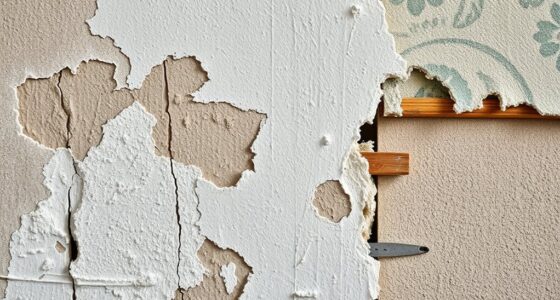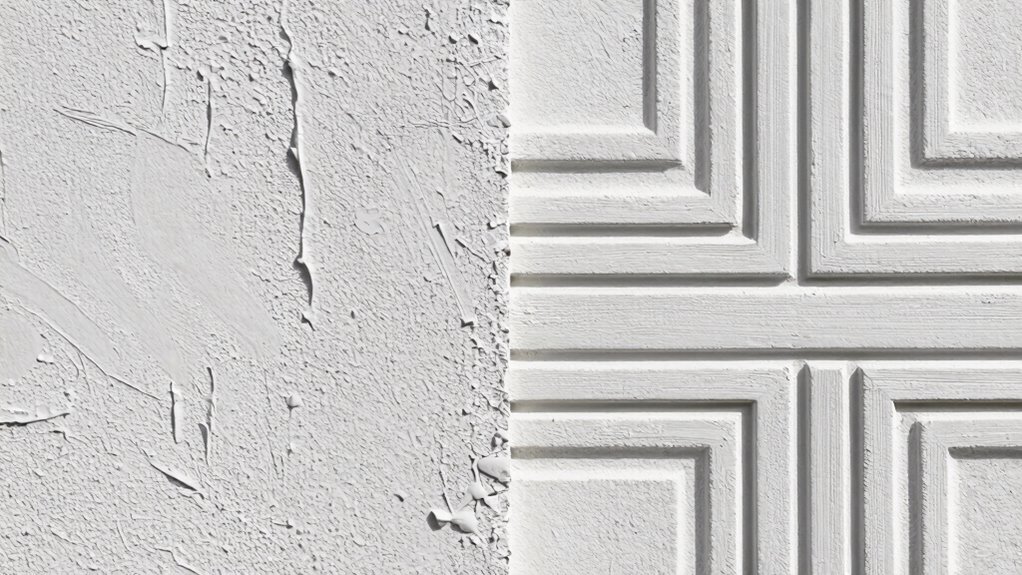
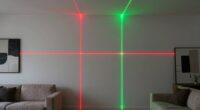
Wall texture refers to the physical surface quality of your wall, like roughness or smoothness, adding depth and tactile interest. Wall pattern, on the other hand, is the visual design, such as motifs, shapes, or motifs, that creates decorative effects and visual rhythm. Textures influence how light plays and how the wall feels, while patterns set the mood through visual cues. To discover how pairing them can transform your space, keep exploring these design elements.

Get furniture and decor delivered free with Prime
- Fast, free delivery on millions of items
- Prime Video, Amazon Music and more included
- Member-only deals all year
Key Takeaways
- Wall texture refers to the surface’s physical feel and appearance, while wall pattern is the visual design or motifs applied on the surface.
- Texture is created through finishes like plaster or stucco; pattern is added via wallpaper, stenciling, or painting techniques.
- Texture impacts light reflection and tactile experience; pattern influences visual style, mood, and decorative appeal.
- Texture adds depth and dimension, whereas pattern introduces visual rhythm and focal points to a room.
- Combining both enhances aesthetics, but they serve distinct roles in shaping a space’s ambiance and design.
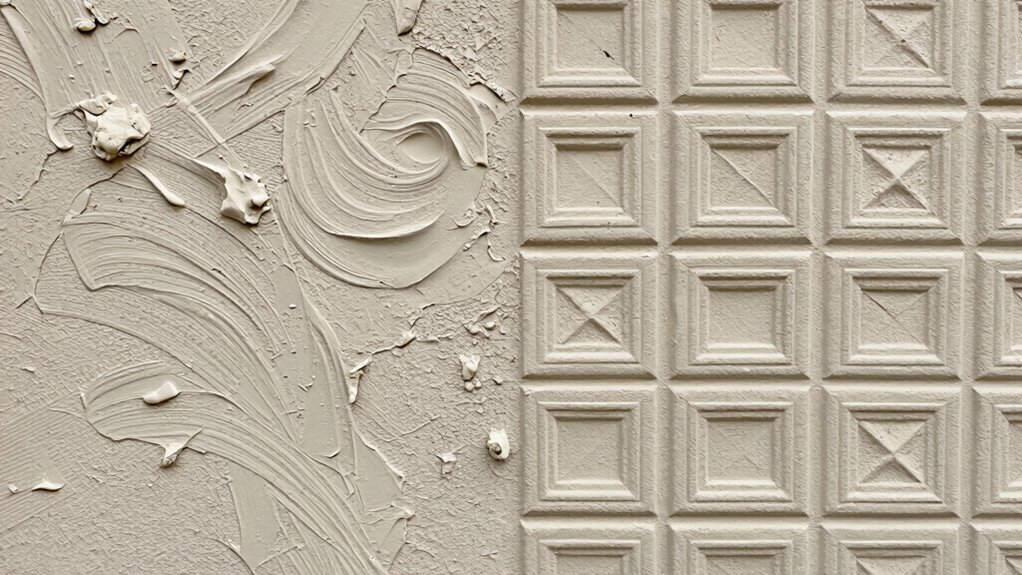
Have you ever wondered what makes a wall stand out—the texture or the pattern? It’s a question that often comes up when you’re thinking about decorating a space, especially if you want to make a statement or create a specific mood. The truth is, both wall texture and wall pattern play vital roles in how a room feels and looks, but they serve different purposes. Understanding their differences can help you choose the right approach for your space.
Wall texture refers to the physical surface quality of the wall. It’s about how the wall feels to the touch and how it visually appears. Textures can be smooth, rough, bumpy, or layered, created through techniques like plastering, stucco, or applying specialized wall finishes. Texture adds depth and dimension, making a plain wall more interesting. It also impacts the way light interacts with the surface, casting shadows that can change throughout the day. If you’re into DIY wall techniques, experimenting with different textures can be a fun way to personalize your space. You might use sponges, trowels, or brushes to create unique finishes that reflect your style. When choosing a texture, consider how it influences the room’s atmosphere. For example, rough textures can give a rustic, cozy feel, while smooth textures often impart a sleek, modern vibe. Incorporating textured wall elements can also enhance the tactile experience and create a more dynamic environment. Recognizing the physical surface quality of a wall can help you better understand its overall impact.
Wall texture adds depth and dimension, creating interest and changing with light throughout the day.
On the other hand, wall pattern is all about the visual design—repeating motifs, shapes, or arrangements that create a decorative effect. Patterns can be geometric, floral, striped, or abstract, and they often involve wallpaper, stenciling, or painterly techniques. Patterns tend to be more about visual rhythm and can direct attention or create focal points in a room. They also tie into color psychology because the colors used in patterns influence mood and perception. When you’re choosing a pattern, think about how it complements your existing decor and the emotional tone you want to set. Patterns can be applied in straightforward ways, like wallpaper, or through more involved DIY projects, such as hand-painted designs or stenciling. Additionally, mixing patterns thoughtfully can add a layer of sophistication and visual interest to your design. Understanding pattern repetition can be particularly helpful in creating a harmonious look when combining multiple designs.
In essence, texture is about how a wall feels and how it plays with light, while pattern is about what the wall looks like and how it influences the room’s visual rhythm. Both can be used to enhance the aesthetic appeal of a space, but they do so in different ways. Knowing the difference allows you to make informed choices—whether you want to add tactile interest, create visual movement, or both. Incorporating an understanding of wall elements into your decorating process can help you achieve a cohesive and personalized look. If you approach your decorating with a clear understanding of these elements, you’ll craft a space that’s not only beautiful but also feels just right for you.
As an affiliate, we earn on qualifying purchases.
Frequently Asked Questions
Which Option Is More Cost-Effective for Remodeling?
Texturing is generally more cost-effective for remodeling because it requires less time and fewer materials compared to creating intricate wall patterns. Aesthetic appeal varies based on your style preferences; textures can add depth and conceal imperfections, while patterns offer a unique, decorative look. For a budget-friendly upgrade with a stylish impact, texturing is often the better choice, providing a good balance of cost comparison and visual enhancement.
How Long Does Each Application Typically Last?
On average, wall textures last 10-15 years, while wall patterns may only last around 5-10 years due to wear. Did you know textured walls can hide imperfections better? Regarding durability comparison, textured finishes usually withstand more damage, requiring less maintenance over time. Patterns often need touch-ups sooner and can fade faster, so consider your long-term needs when choosing between the two.
Can Wall Textures or Patterns Be Removed Easily?
Yes, wall textures and patterns can be removed, but the ease depends on the removal methods you choose. DIY removal involves scraping, sanding, or applying chemical solutions, which can be messy and time-consuming. For smoother results, especially on delicate surfaces, consider professional help. Always test a small area first, wear protective gear, and follow safety instructions to avoid damaging your walls during the removal process.
Are There Specific Wall Types Compatible With Both Options?
Imagine transforming your living room’s look—certain wall types, like drywall, are compatible with both textures and patterns, thanks to their surface durability. For example, drywall’s smooth surface offers aesthetic versatility, allowing you to add textured finishes or intricate patterns easily. This flexibility helps you customize your space without sacrificing durability, making it ideal for various wall types seeking both visual appeal and resilience.
Which Choice Is Better for High-Traffic Areas?
For high-traffic areas, textured walls often win due to their durability comparison, hiding scuffs and imperfections better than patterns. While wall patterns may add aesthetic appeal with intricate designs, textures tend to withstand daily wear and tear more effectively. You should choose textured finishes if longevity matters most, but if you prioritize visual detail, opt for wall patterns, understanding they might need more maintenance over time.
As an affiliate, we earn on qualifying purchases.
Conclusion
Understanding the difference between wall texture and wall pattern is like choosing between a cozy sweater and an eye-catching painting. Texture adds depth and a tactile feel, while patterns bring visual interest with designs and motifs. Think of texture as the warm embrace of a soft blanket, and pattern as the vibrant splash of color on a canvas. By knowing these, you can craft walls that not only look stunning but also invite touch and admiration.
As an affiliate, we earn on qualifying purchases.
As an affiliate, we earn on qualifying purchases.
Halloween Picks
halloween
As an affiliate, we earn on qualifying purchases.