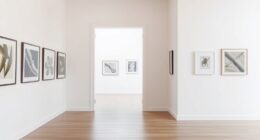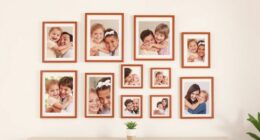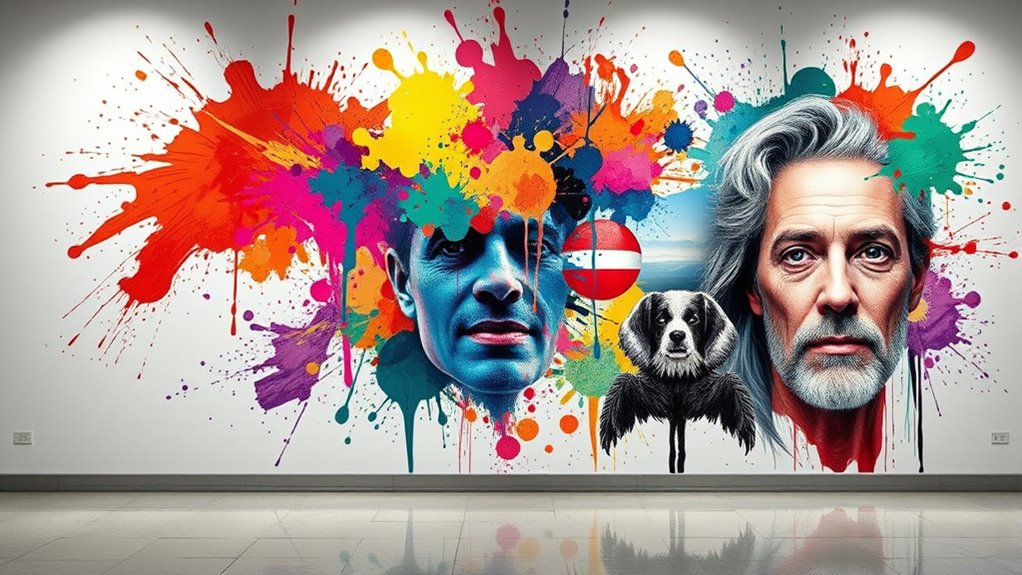
Mixing photography and paintings on one wall creates a vibrant, layered display that combines realism with artistic expression. You can use digital collage techniques to blend photographs with painted textures seamlessly or incorporate traditional mixed media methods for added depth. Pay attention to visual balance, color harmony, and lighting to make each element stand out harmoniously. This approach transforms your space into a dynamic, enthralling gallery—if you want to explore how to perfect this balance, there’s more to discover.
Key Takeaways
- Use digital collage techniques to seamlessly blend photographic images with painted textures for a cohesive wall display.
- Incorporate mixed media methods by printing photos on textured surfaces and adding painted elements for depth.
- Balance visual elements by positioning photographs as focal points and overlaying painted accents for dynamic composition.
- Consider color harmony and lighting to highlight layered textures and ensure visual cohesion on the wall.
- Create a vibrant, multidimensional art piece that combines realism and artistic expression for an impactful wall presentation.
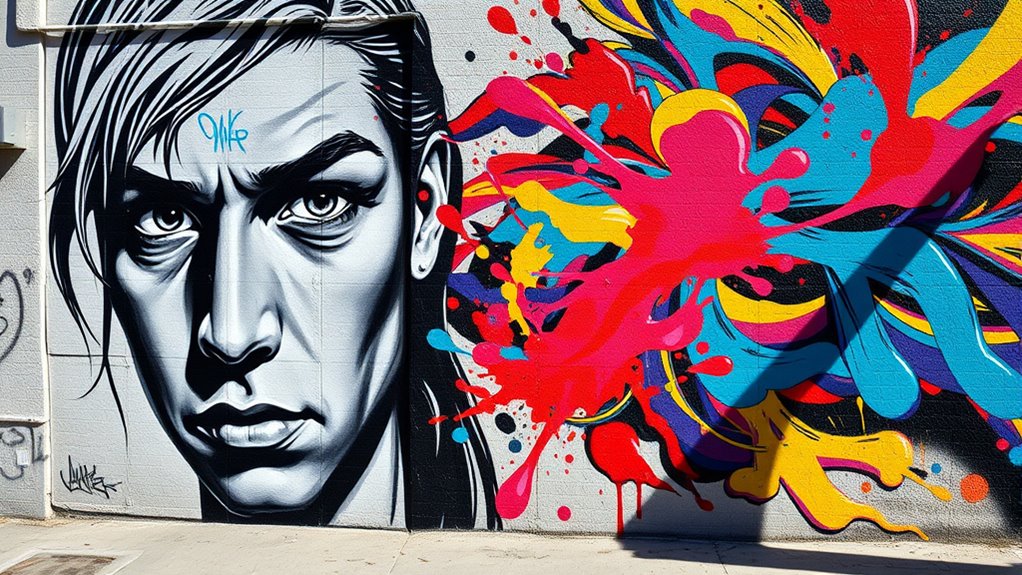
Blending photography and paintings has become an exciting way to push creative boundaries and produce striking visual art. When you decide to mix these mediums on one wall, you’re opening the door to a world of artistic possibilities. One effective approach is using digital collage, where you combine photographs and painted elements digitally before printing or displaying them. This technique allows you to seamlessly integrate photographic images with painted textures, creating a layered, dynamic composition. Digital collage gives you control over every detail, enabling you to manipulate colors, scale, and placement precisely. It’s a versatile method that can help you craft a cohesive visual story, blending realism with artistic interpretation.
Digital collage seamlessly merges photos and painted textures for dynamic, cohesive wall art.
Incorporating mixed media techniques further enhances your wall art. These involve combining traditional painting methods with photographic prints or overlays directly on the wall or on canvas. For instance, you might print a photograph onto a canvas or heavy paper and then add painted elements over or around it. This approach adds depth and tactile richness, inviting viewers to explore the physical layers of your work. You can experiment with textures—using thick acrylics, pastels, or even collage materials—over the photographic base to create a vibrant interplay between the two mediums. The key is to think of your wall as a canvas that can embrace multiple techniques simultaneously, turning a simple display into a complex, engaging artwork.
When planning your mixed media display, consider the visual balance. Photographs tend to be realistic and detailed, while paintings can be abstract or expressive. By thoughtfully combining these, you guide viewers’ eyes across the piece, creating focal points and visual flow. For example, a striking photograph can serve as the centerpiece, surrounded by painted accents that highlight or complement it. You might also overlay painted brushstrokes onto photographic images to add a sense of movement or emotion. The contrast between the two mediums can evoke a richer narrative, making your wall a conversation starter. Additionally, understanding how color accuracy impacts the overall visual harmony can help you select and calibrate your colors for a more cohesive look.
Lighting plays an essential role in showcasing your mixed media art. Proper illumination accentuates textures, highlights contrasts, and brings out the vibrancy of your colors. Use directional lighting or spotlights to emphasize key areas, ensuring that the layered effects don’t get lost in shadows. The goal is to create a unified presentation where the digital collage elements and mixed media techniques work harmoniously, transforming your wall into a captivating visual experience. Whether you’re creating a personal gallery or a statement piece for a space, blending photography and paintings with these methods allows you to craft a vibrant, multidimensional display that truly reflects your artistic vision.
Frequently Asked Questions
How Can Lighting Enhance Mixed Media Wall Art?
Lighting enhances your mixed media wall art by highlighting color contrast and textures. Use ambient lighting to create a soft, even glow that draws attention without overpowering the artwork. Strategically placed spotlights can accentuate specific details, while warm or cool tones can enhance the mood. By balancing these lighting techniques, you make your photography and paintings stand out, creating a dynamic and engaging visual experience.
What Are the Best Tools for Blending Photography and Painting?
Blending photography and painting is like weaving a rich tapestry, and your best tools are digital overlays and mixed media techniques. Use photo editing software like Adobe Photoshop to seamlessly integrate images with painted textures, adding layers and effects. Acrylics or mixed media adhesives help attach physical elements. A good brush or palette knife can blend painted areas smoothly, creating harmony between the photographic and painted components.
How to Choose Color Schemes for Mixed Media Walls?
To choose color schemes for mixed media walls, focus on color coordination that complements both photography and paintings. Pick a dominant color to create a cohesive look, then add accent shades for interest. Consider the mood you want to evoke—calm with neutral tones or energetic with bold hues. Balance warm and cool colors to enhance visual harmony, ensuring your wall feels unified and thoughtfully curated.
Are There Specific Wall Textures Suitable for Mixed Media Art?
You should opt for textured surfaces like stucco, brick, or textured drywall, as they add visual interest and complement mixed media art. Proper wall preparation is essential; clean and prime the surface to guarantee your artwork adheres well and lasts. Avoid overly smooth or glossy walls that may hinder adhesion. By choosing the right textured surfaces and preparing your wall properly, you create an ideal backdrop for dynamic photography and paintings together.
How to Protect Mixed Media Wall Art From Damage?
Imagine your artwork as a delicate butterfly, needing a gentle shield. You should apply protective coatings like varnish or sealant to safeguard against dust and moisture. Framing techniques, such as using acid-free mats or glass, help prevent physical damage. Keep your mixed media wall art away from direct sunlight and humidity, and regularly inspect it. These steps make certain your creative masterpiece stays vibrant and intact for years.
Conclusion
As you step back to admire the wall, you realize the true magic isn’t just in the images or paintings alone, but in how they converge. It’s a daring dance of textures and stories that leaves your mind racing, wondering what’s real and what’s imagined. The blend invites you to look closer, to discover secrets hidden in the shadows and highlights. And just when you think you’ve seen it all, something new quietly whispers, waiting to be uncovered.