Creating a narrative gallery wall allows you to showcase your personal story through carefully selected images, art, and mementos. You can organize your pieces by themes, colors, or chronological order to craft a cohesive visual journey. Focus on balancing your layouts and spacing for a dynamic look that guides viewers through your story. By thoughtfully planning your display, you turn your wall into an engaging storytelling canvas—keep exploring for more tips to perfect your design.

Get furniture and decor delivered free with Prime
- Fast, free delivery on millions of items
- Prime Video, Amazon Music and more included
- Member-only deals all year
Key Takeaways
- Gather meaningful images and objects that reflect personal milestones or themes to create a cohesive story.
- Organize items by themes, color schemes, or chronological order for visual coherence.
- Arrange your gallery on the floor first to visualize the narrative flow and adjust spacing.
- Use varied layouts and balance visual weight to add personality and maintain viewer engagement.
- Incorporate consistent themes and thoughtful spacing to evoke rhythm, emotion, and storytelling impact.
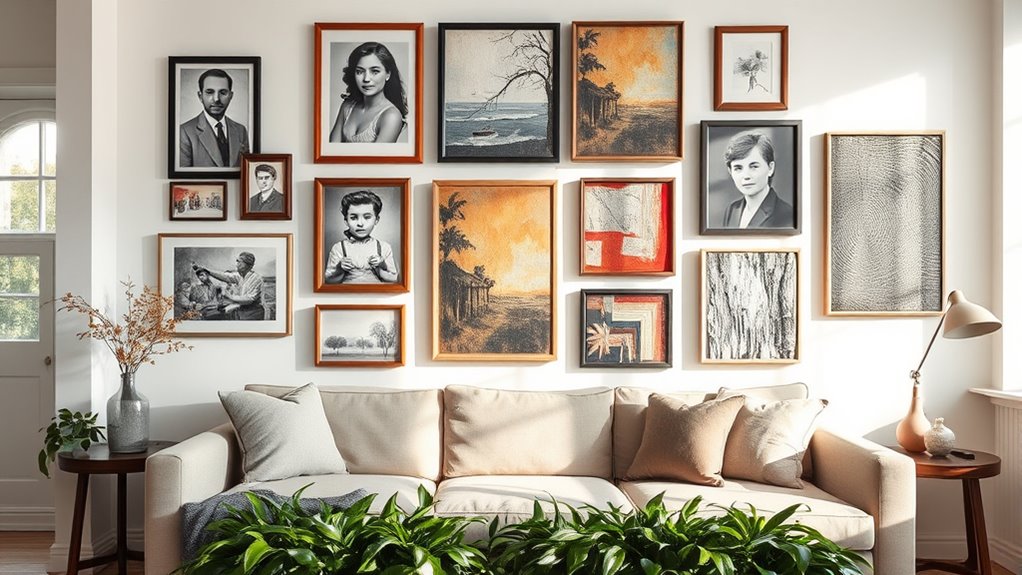
A gallery wall isn’t just about decorating a space; it’s an opportunity to tell your unique story through images, art, and mementos. When you start planning your gallery wall, the key is to focus on how you arrange your photos and pieces to create a cohesive narrative. The way you approach photo arrangement can make all the difference, transforming a random collection into a powerful visual story. Begin by gathering images and items that hold personal significance—whether they’re travel photos, family portraits, or artwork that resonates with you. Once you have your collection, consider how you’ll organize them to achieve thematic cohesion. This means grouping items by common themes, color palettes, or storylines, so each piece complements the others and contributes to a unified look.
A gallery wall tells your story through carefully arranged photos and art that reflect your unique journey.
As you arrange your gallery wall, think of it as creating a visual timeline or a series of chapters. You might start with early memories, then progress through milestones, or focus on a specific theme like adventure or love. This approach guides your photo arrangement, making the story easy to follow and engaging for anyone who views it. Don’t feel constrained by symmetry; sometimes, a more eclectic layout that balances visual weight and theme can add personality and energy. Use frames and matting to highlight specific images or to create visual breaks, helping the eye move smoothly across your collection.
Pay attention to the spacing between your frames. Consistent spacing creates a clean, organized look, but varying distances can add rhythm and interest. Remember, the goal is to create harmony and flow—your gallery wall should feel intentional, not haphazard. You can lay out your arrangement on the floor first, adjusting until it feels right before hanging. This step helps you visualize how the pieces work together and ensures the narrative remains clear and compelling. Incorporating a cohesive theme can also help direct your layout and storytelling approach.
In the end, a well-thought-out photo arrangement with thematic cohesion turns your gallery wall into a storytelling canvas. It invites viewers into your world, allowing them to connect emotionally with your memories and art. With careful planning, thoughtful grouping, and attention to detail, you’ll craft a display that’s not just decorative but also meaningful—a visual journey that captures your story in every frame.
Products Worth Considering

eufy Security SoloCam E42 4-Camera Kit with HomeBase 3, 4K Solar Security Cameras

eufy C28 Robot Vacuum and Mop with HydroJet Roller and 15,000 Pa Suction

Philips Hue White and Color Ambiance Smart Retrofit Recessed LED Downlights, 5/6-Inch, 4-Pack
As an affiliate, we earn on qualifying purchases.
Frequently Asked Questions
How Do I Choose a Theme for My Gallery Wall?
To choose a theme for your gallery wall, start by considering your favorite color schemes and the overall vibe you want. Think about wall placements—whether you prefer a symmetrical or eclectic layout—and select artwork that complements these choices. Focus on a central idea or story that resonates with you, then select pieces that reflect that theme. This approach helps create a cohesive and meaningful gallery wall.
What Are the Best Frame Styles for Storytelling?
You should choose simple, classic frame styles like black, white, or natural wood to keep the focus on your photo arrangement. These colors complement various themes and help tell your story without distraction. For a cohesive look, pick frames that match in style but vary in size. Use consistent frame color to unify your gallery wall, letting your photos and their arrangement do the storytelling.
How Do I Balance Different Sizes and Shapes?
Did you know that photo grouping with shape variation creates visual interest? To balance different sizes and shapes, start with a central piece and arrange smaller or differently shaped frames around it. Mix horizontal, vertical, and square frames intentionally, maintaining consistent spacing. This approach guides the eye smoothly across your gallery wall and keeps the story engaging, making your display feel cohesive yet dynamic.
What Lighting Options Enhance a Narrative Gallery Wall?
To enhance a narrative gallery wall, you should incorporate both ambient and accent lighting. Use soft ambient lighting like ceiling fixtures or wall sconces to create a warm, inviting glow that highlights your overall display. Add accent lighting, such as picture lights or spotlights, to focus attention on specific pieces or stories within your wall. This combination guarantees your gallery wall stands out and tells its story beautifully.
How Often Should I Update or Change My Gallery Story?
You should update your gallery story every 6 to 12 months to keep it fresh and meaningful. Imagine rearranging your photo arrangement like a puzzle, fitting new memories into your story. Use color coordination to tie new pieces seamlessly with existing ones. When your life or interests change, it’s a good cue to refresh the display, ensuring your gallery wall continues telling your evolving story vividly.
Conclusion
As you craft your gallery wall, remember it’s more than decoration—it’s your story. Imagine a family’s wall featuring travel photos, each frame capturing adventures from Paris to Bali, sparking memories and conversations. By thoughtfully arranging your pieces, you turn blank walls into a vibrant narrative that reflects your life’s journey. So, start today, and watch your space become a enthralling storybook, inviting others to explore your unique story one frame at a time.