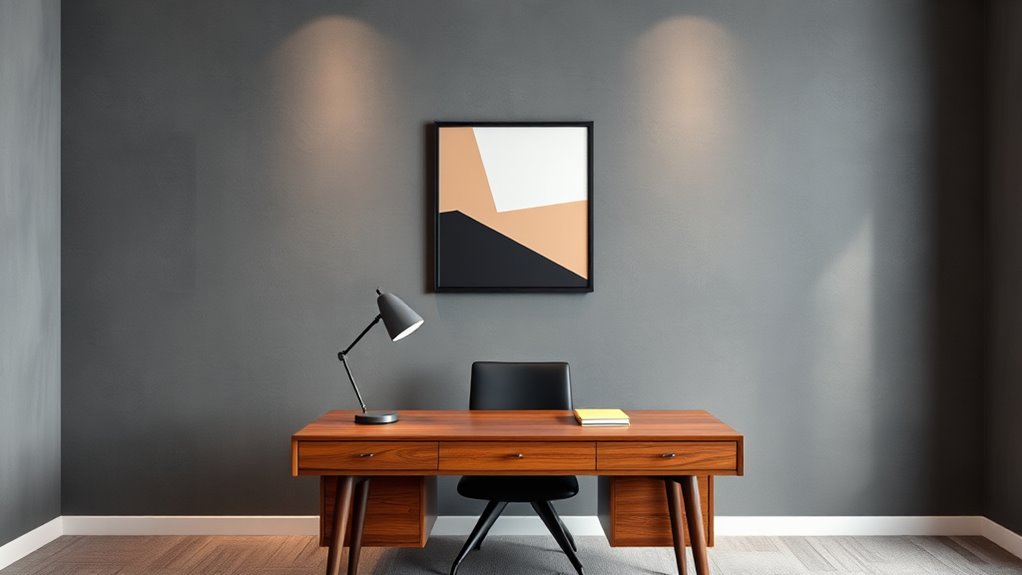

To create a camera-friendly home office backdrop wall, choose neutral colors like beige, gray, or soft whites for a clean, professional look. Add subtle decor like plants or artwork to give depth without clutter. Use soft, diffused lighting or natural light to brighten your space evenly. Keep the setup simple and organized, applying the rule of thirds for visual balance. Keep exploring for tips to make your background shine even more in virtual meetings.
Key Takeaways
- Choose neutral, soft-colored walls like beige or light gray to ensure a professional, non-distracting background.
- Incorporate minimal decor such as artwork or plants to add depth without cluttering the space.
- Use natural or diffused lighting to evenly illuminate the backdrop and avoid harsh shadows.
- Arrange key elements according to the rule of thirds, keeping the face well-lit and clearly visible.
- Maintain a clean, organized space that reflects professionalism and enhances camera focus.
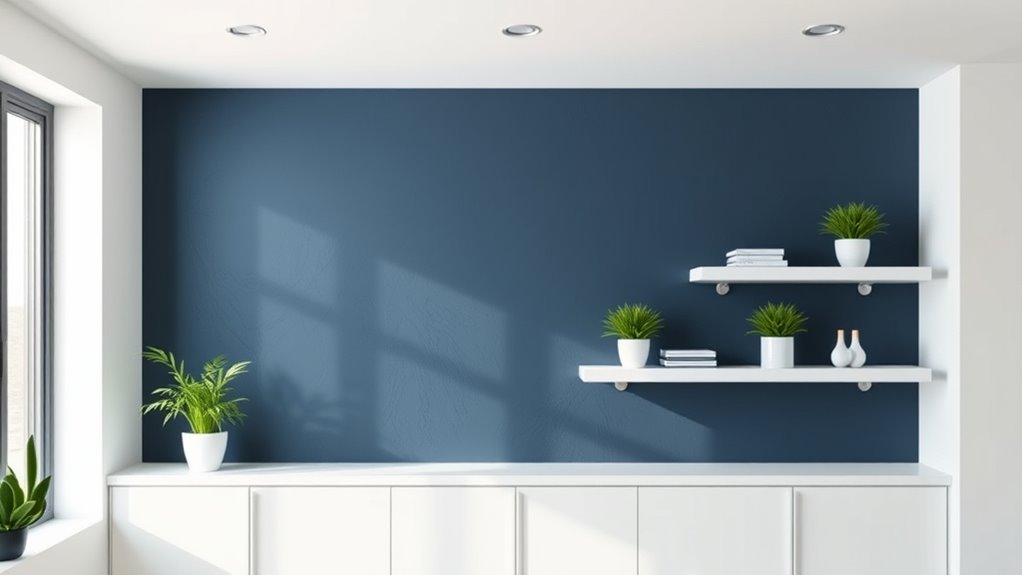
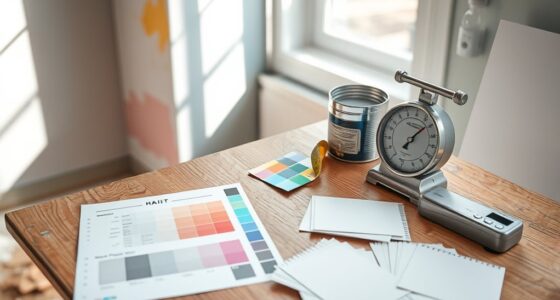
Creating an inspiring and professional atmosphere in your home office starts with choosing the right backdrop wall. When it comes to making your space camera-friendly, your backdrop plays a vital role in how you appear on camera and how viewers perceive your professionalism. To achieve this, you need to focus on lighting ideas and color schemes that enhance your background without overshadowing you. Good lighting is essential; natural light is ideal, but if it’s limited, consider soft, diffused lighting that evenly illuminates your backdrop. Avoid harsh shadows or bright spots, as these can be distracting on camera. Using adjustable lamps or ring lights helps you control lighting angles and brightness, ensuring your backdrop looks clear and inviting. Proper lighting techniques, as outlined in lighting ideas and color schemes, are key to maintaining a professional appearance. Color schemes are equally important in creating an effective home office backdrop wall. Neutrals like beige, gray, or soft whites are popular because they provide a clean, uncluttered appearance that doesn’t compete with your presence. These shades also reflect light well, making your space look brighter and more welcoming. If you prefer a pop of personality, incorporate subtle accent colors that complement your overall palette, such as muted blues, greens, or pastels. Bright, bold colors might be tempting, but they can distract viewers or interfere with your camera’s focus. Instead, aim for a balanced, cohesive look that enhances your professional image without overwhelming the scene. Texture and decor elements can add depth and interest to your backdrop wall. Consider hanging artwork, shelves with minimal decor, or plants to introduce variety while maintaining a tidy appearance. Just guarantee these elements don’t clutter the background; simplicity often works best for camera settings. When arranging your backdrop, keep in mind the rule of thirds—placing key elements slightly off-center creates a more engaging composition and avoids a stiff, overly symmetrical look. Position yourself so that your face is well-lit and clearly visible, with the backdrop providing context without dominating the frame. Ultimately, your goal is to craft a background that is both visually appealing and professional. Thoughtful lighting ideas combined with a carefully chosen color scheme will make your home office backdrop wall camera-friendly. This setup not only boosts your confidence during virtual meetings or recordings but also leaves a positive impression on colleagues, clients, or viewers. When your backdrop looks polished and intentional, you project authority and credibility—key elements for a successful home office environment.
Frequently Asked Questions
How Do I Choose the Best Backdrop Wall for My Home Office?
You should choose a backdrop wall that complements your lighting options and enhances your overall look. Opt for neutral or calming color schemes that aren’t too distracting on camera, like soft blues or grays. Make sure the wall has good lighting and isn’t cluttered. A simple, clean background will keep the focus on you, helping you appear professional and camera-ready during meetings or recordings.
What Materials Are Most Durable for Home Office Backdrop Walls?
If you’re aiming for a backdrop that outlasts your Zoom fatigue, go for materials like painted drywall or vinyl. Durability factors like resistance to scratches and moisture make them top contenders. Compared to fabric or paper, these materials hold up better over time, saving you the hassle of constant replacements. Ultimately, choosing durable materials means fewer interruptions—because in the end, your backdrop should support your professionalism, not your patience.
How Can I Make My Backdrop Wall More Visually Appealing?
To make your backdrop wall more visually appealing, focus on lighting enhancement and color coordination. Use soft, diffused lighting to eliminate shadows and highlight your setup. Incorporate complementary colors or a cohesive palette that matches your branding or personality. Add decorative elements like artwork or plants to create visual interest. Keep it clutter-free and balanced, ensuring your backdrop looks professional and inviting on camera.
Are There Affordable Options for Creating a Professional Backdrop?
Yes, there are affordable solutions and DIY options to create a professional backdrop. You can use inexpensive materials like fabric or painted cardboard to craft a clean, attractive background. Hang a simple curtain or a sheet, and add some stylish decor or plants for visual appeal. With a little creativity, you can transform your space into a camera-friendly setting without breaking the bank.
How Do I Install a Backdrop Wall Without Damaging the Wall?
Did you know that you can install a backdrop wall without damaging your wall? Simply use wall mounting options like command strips, hooks, or adhesive-backed panels designed for damage prevention. These tools hold your backdrop securely without leaving marks or holes. Just guarantee you follow the weight limits and instructions carefully. This way, you get a professional look for your video calls while keeping your wall pristine.
Conclusion
Now that you know the secrets to creating a camera-friendly home office backdrop, imagine the possibilities. With the right walls, your videos could stand out—commanding attention, inspiring confidence, making every meeting memorable. But there’s one last detail you haven’t considered yet. It’s small, subtle, yet powerful. Are you ready to discover it? Stay tuned—your perfect backdrop is closer than you think, and once you reveal this final touch, everything will change.