To control overspray in lived-in rooms, start by covering furniture with drop cloths or sheets and secure them with painter’s tape. Open windows and doors, and use fans or air purifiers with HEPA filters to guarantee good airflow and carry paint particles outside. Set up a designated workspace with masking for edges and vents. After painting, carefully remove coverings and clean your tools. For more tips, you’ll discover how to keep your space protected and tidy throughout the process.
Key Takeaways
- Cover furniture and floors with drop cloths or plastic sheeting secured with painter’s tape.
- Use proper ventilation like fans and open windows to direct overspray outside.
- Maintain a consistent painting distance of 12-16 inches and use smooth, controlled strokes.
- Mask off edges, vents, and outlets to prevent overspray on unwanted surfaces.
- Clean tools thoroughly and wait for fumes to settle before removing protective coverings.
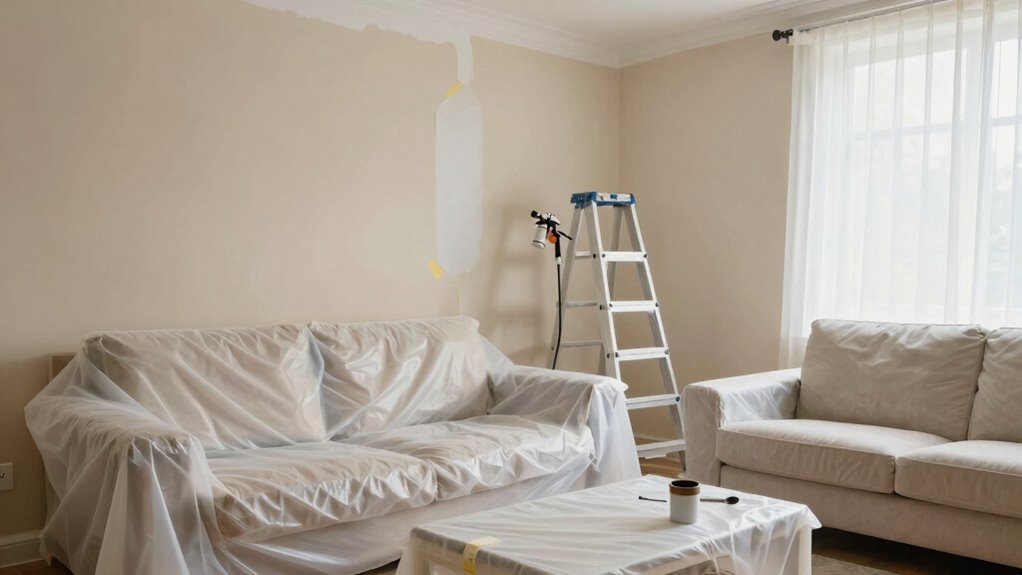
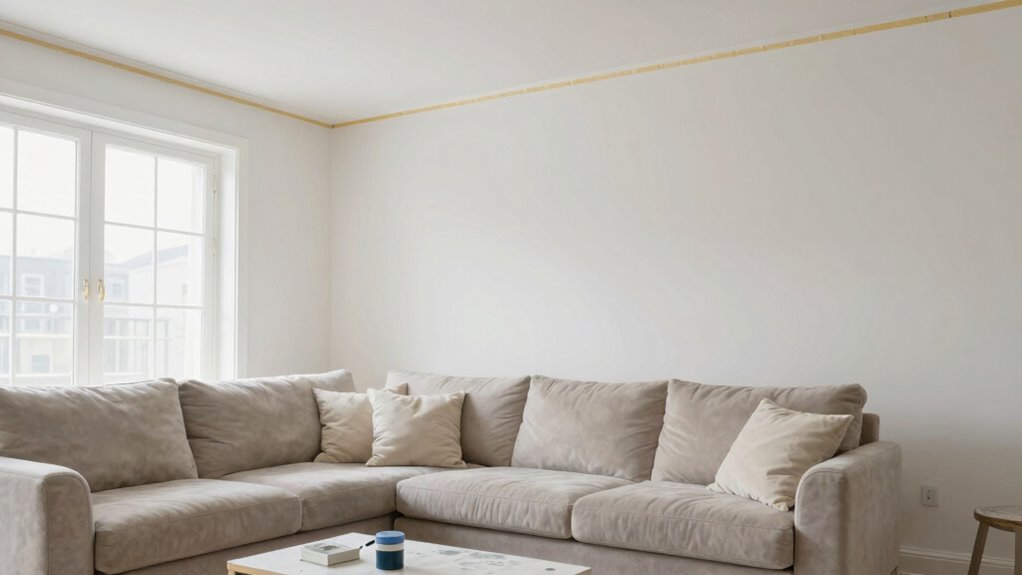
Ever wondered how to keep your lived-in rooms free from paint overspray? It’s a common concern, especially when you’re trying to refresh a space without turning it into a mess. The key is to be proactive with furniture protection and ventilation techniques. Before you start, cover your furniture thoroughly with drop cloths, plastic sheeting, or old sheets. Secure these coverings with painter’s tape to ensure they stay in place, preventing any accidental paint splatters from reaching your sofas, tables, or electronics. This simple step saves you from tedious cleanup later and preserves your furniture’s finish.
Protect your furniture with drop cloths and painter’s tape to prevent paint splatters and simplify cleanup.
Next, focus on improving airflow with effective ventilation techniques. Open windows and doors to create a cross-breeze that pushes airborne paint particles outside. If natural ventilation isn’t enough, consider using fans—placing a box fan near an open window can help direct overspray away from the room, while exhaust fans can actively pull fumes and particles out. Keep in mind, the goal is to keep the paint particles moving away from your living space, reducing the risk of them settling on walls, floors, or furniture. If you’re working in a small or poorly ventilated room, adding a portable air purifier equipped with a HEPA filter can trap airborne overspray, providing an extra layer of protection. Additionally, selecting the right painting equipment can significantly reduce overspray and improve your overall results. Using specialized equipment designed for overspray control can make a noticeable difference in the cleanliness of your project. Understanding how to properly use painting tools is also crucial for minimizing mess and achieving a professional look.
When you’re preparing to paint, it’s also wise to set up a designated workspace. Use painter’s tape along edges and trim to ensure clean lines and minimize drips onto surrounding surfaces. Mask off any areas you don’t want to paint, including vents or electrical outlets, to prevent accidental overspray. During the actual painting process, maintain a consistent distance from the surface—usually about 12 to 16 inches—and use smooth, controlled strokes. This technique reduces the amount of paint that becomes airborne and helps achieve a cleaner finish. Proper technique not only improves the quality of your work but also minimizes the mess created during application.
Finally, once you’ve finished painting, don’t rush to pack everything away. Wait for the fumes and airborne particles to settle or be vented out, then carefully remove your protective coverings. Clean any tools and brushes thoroughly to prevent leftover paint from contaminating other surfaces. Using an airless paint sprayer can also help minimize overspray compared to traditional methods, making your project cleaner and more efficient. With a combination of furniture protection and ventilation techniques, you can enjoy your freshly painted room without sacrificing the comfort of your lived-in space. This way, your home stays both beautiful and functional, free from the chaos of overspray.

12 x 9 Ft Plastic Drop Cloths (6-Pack) – Disposable Painter's Sheeting & Tarps for Painting, Waterproof Furniture/Couch/Floor Protection
1. Versatile Floor and Furniture Protection: More than just for painting, these durable plastic sheet protect floors, furniture,…
As an affiliate, we earn on qualifying purchases.
As an affiliate, we earn on qualifying purchases.
Frequently Asked Questions
Can Overspray Be Completely Eliminated in Busy, Lived-In Spaces?
You can’t completely eliminate overspray in busy, lived-in spaces, but you can minimize paint contamination by using precise brush techniques and careful masking. Focus on controlled brush strokes and taping off areas you want to protect. Using high-quality brushes and steady hands helps reduce stray paint. While complete prevention isn’t possible, these methods considerably cut down overspray, keeping your space cleaner and more professional-looking.
What Are the Long-Term Effects of Overspray on Furniture and Flooring?
Overspray can cause long-term issues like paint absorption into furniture and flooring, leading to staining and discoloration. Over time, surface degradation may occur, weakening finishes and making surfaces more vulnerable to damage. You might notice peeling or chipping as the paint affects the material’s integrity. To protect your space, clean overspray promptly and consider using protective coverings, preventing damage and preserving your furniture and flooring’s appearance.
Are There Eco-Friendly Methods to Reduce Overspray During Painting?
Think of eco-friendly paints as a gentle breeze guiding your paint job, reducing overspray naturally. You can enhance this by opening windows and using natural ventilation, turning your space into a fresh-air corridor. These methods cut down on harmful fumes and overspray, making your painting project safer for the environment and your home. Embrace eco-conscious practices, and your room will breathe easier, both during and after the job.
How Does Overspray Impact Indoor Air Quality Over Time?
Overspray can negatively impact your indoor air quality over time by releasing VOC emissions into the air, which may cause health issues. To minimize this, you should use air filtration systems during painting and guarantee proper ventilation. This helps capture airborne particles and VOCs, reducing exposure. Regularly changing air filters and using eco-friendly paints also keep VOC emissions low, creating a healthier environment in your lived-in rooms.
What Safety Precautions Should Be Taken When Addressing Overspray in Homes?
You should always wear protective gear like masks, goggles, and coveralls to prevent inhaling overspray particles. Use proper ventilation strategies by opening windows and running fans to disperse fumes and overspray. Keep pets and children away from the area during and after spraying. Regularly clean surfaces to prevent buildup, and guarantee your workspace is well-ventilated to minimize health risks and maintain indoor air quality.

Purivortex Air Purifiers for Bedroom, Quiet Air Purifier with HEPA Filter for Pollen, Smoke, Dust, Pet Dander, Odor, Hair, Ozone Free, Covers Up to 880 Sq Ft, PX500 Black
Cleaner Air In Minutes: Purivortex is proven to filter common pollutants from your home’s air. This air purifier…
As an affiliate, we earn on qualifying purchases.
As an affiliate, we earn on qualifying purchases.
Conclusion
To keep your living space pristine, controlling overspray is essential—you don’t want your cozy room turning into a paint splatter disaster! By sealing off areas, using proper tools, and working slowly, you’ll master the art of neat painting even in the busiest rooms. Remember, a little extra effort now saves you from a cleanup nightmare that could rival a tornado’s fury later. Stay vigilant, and your room will stay beautifully fresh and lived-in without the mess!

Scotch Blue Painters Tape Applicator, Applies Painter's Tape in One Continuous Strip, Paint Tape Applicator for Trim, Windows and Door Frames, 1.41 Inches x 20 Yards, 1 Starter Roll (TA3-SB-ESF)
PERFORMANCE: Faster, easier prep with precision vs. applying 3M paper-backed tapes by hand
As an affiliate, we earn on qualifying purchases.
As an affiliate, we earn on qualifying purchases.

Amazon Basics 3-Speed Box Fan for Bedroom, Portable with Carry Handle, Powerful Airflow, 5 Blades, Lightweight Design, 67 Watts, 20-Inch, Black, 6.8"D x 20.86"W x 21.33"H
CUSTOMIZABLE AIRFLOW: Choose from three speed settings (low, medium, high) to tailor the blowing speed to your comfort…
As an affiliate, we earn on qualifying purchases.
As an affiliate, we earn on qualifying purchases.