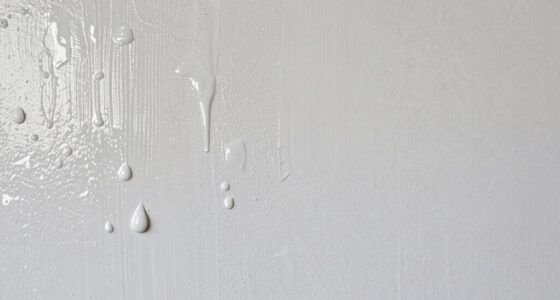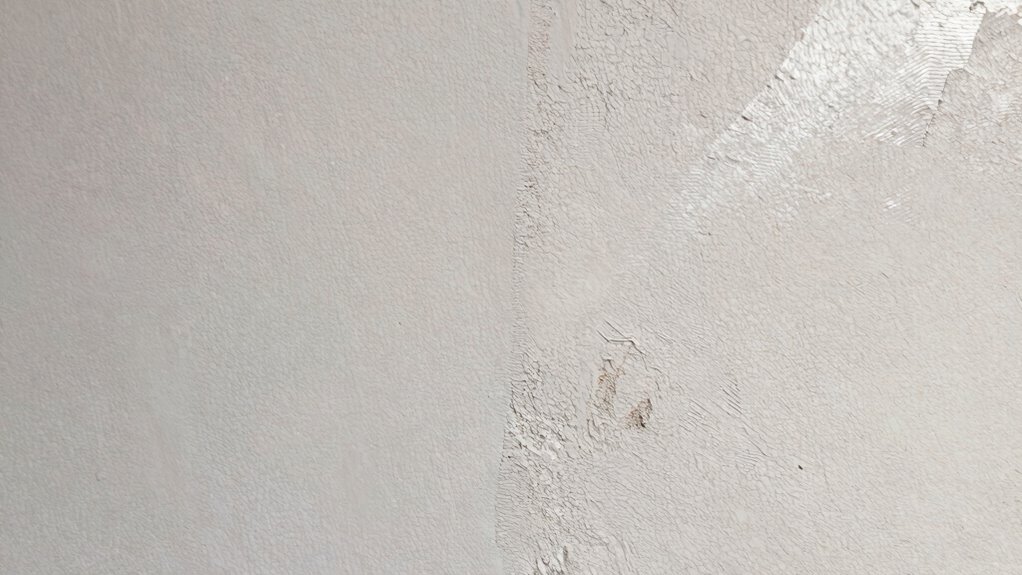

To quickly tell if your wall needs washing or sanding first, look for signs of dirt, grease, or stains—if you see grime or smudges, you should wash it first. Feel the surface for rough patches or peeling paint; if it feels uneven or flaky, sanding is necessary. Sometimes both are needed, so cleaning first and then smoothing rough areas works best. Keep going, and you’ll discover more tips to prepare your wall perfectly.

Get furniture and decor delivered free — and shop member deals
- Fast, free delivery on millions of items
- Access to Prime Big Deal Days deals on October 6–7
- Prime Video, Amazon Music and more included
Key Takeaways
- Check for visible dirt, stains, or grease; if present, wash before any sanding.
- Feel the surface for rough patches or peeling paint; rough areas likely need sanding.
- Clean the wall first; a grime-free surface makes it easier to assess if sanding is needed.
- If stains persist after cleaning, sanding may be required to ensure smoothness.
- Use your hand to detect any uneven textures or imperfections indicating the need for sanding.
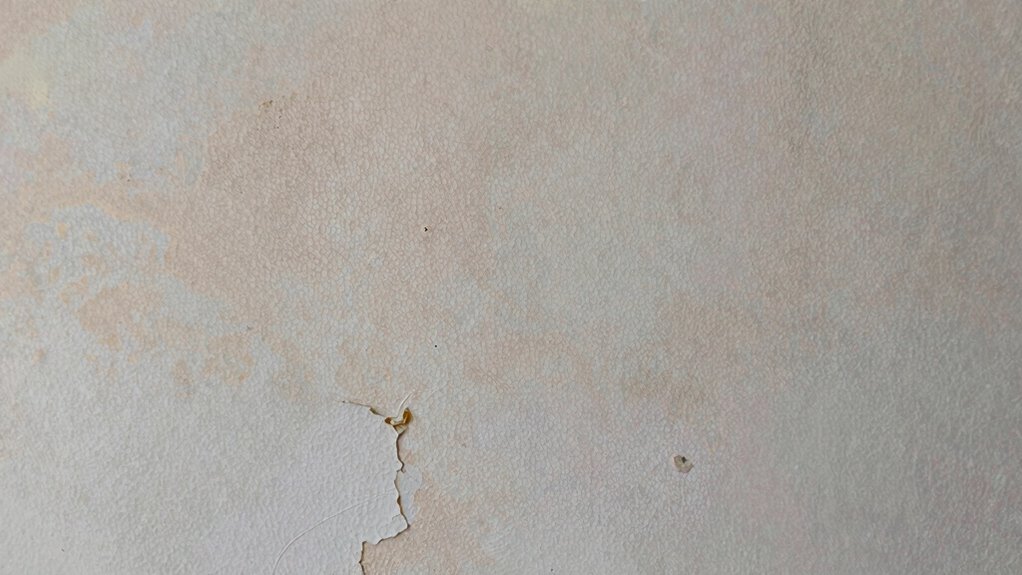
Determining whether your wall needs washing or sanding first can save you time and effort during your project. Before you pick up any tools or paint, it’s essential to do a quick surface assessment. This step helps you identify the most effective way to prepare your wall for painting or wallpapering. Proper paint preparation begins with understanding the current condition of the surface. Look closely at the wall for any signs of dirt, grease, or stains. If you notice grime, dust, or smudges, washing the wall should be your first step. Use a mild detergent or a solution of warm water and dish soap to clean the surface thoroughly. A sponge or soft cloth works best to wipe away dirt and any sticky residues. Allow the wall to dry completely before moving on. If, after cleaning, the surface feels smooth and free of grime, you can move on to other assessments.
Next, consider the texture and integrity of the wall itself. Run your hand over the surface to feel for rough patches, peeling paint, or areas with flaking. These imperfections indicate that sanding might be necessary. Sanding helps smooth out bumps, remove peeling paint, or roughen the surface to improve paint adhesion. If you discover peeling or flaking paint, lightly sanding the entire wall is usually the best choice. Use a fine-grit sandpaper to gently scuff the surface, ensuring you don’t create deep scratches. Be cautious around edges or corners, where paint might be more fragile. If the wall has minor imperfections or previous uneven paint layers, sanding will create a clean, even surface that promotes better paint adherence. Additionally, understanding the surface condition can help you avoid unnecessary work and select the most appropriate preparation method. Recognizing surface imperfections is crucial in deciding whether washing or sanding is needed first. Sometimes, a combination of washing and sanding is needed. For example, if the wall has stains or grease spots but also exhibits rough patches, start with a wash to remove the grime, then lightly sand after it dries. This two-step process ensures that dirt is eliminated and the surface is smooth, giving you a perfect foundation for your paint job. It’s also helpful to know that surface preparation directly impacts the durability and appearance of your finished project. Understanding the overall condition of the wall can help you avoid unnecessary work and select the most appropriate preparation method. Remember, surface assessment is your best guide—don’t skip this crucial step. It helps you avoid unnecessary work and ensures you prepare the wall properly for optimal results. When you correctly identify whether washing or sanding is needed first, your project moves faster, and the final finish looks professional. Taking the time to evaluate your wall initially can make all the difference in achieving a smooth, durable, and attractive painted surface.
mild detergent for wall cleaning
As an affiliate, we earn on qualifying purchases.
As an affiliate, we earn on qualifying purchases.
Frequently Asked Questions
How Often Should I Wash or Sand My Walls?
You should wash your walls every 6 to 12 months and sand them as needed, especially if paint discoloration or rough wall texture develop. Regular cleaning prevents buildup of dirt and grease, ensuring your paint stays fresh longer. Sanding is necessary before repainting if the wall surface becomes uneven or flaky. Keep an eye on discoloration or texture changes, and adjust your cleaning or sanding routine accordingly to maintain a smooth, clean finish.
Can I Skip Sanding if the Wall Looks Smooth?
If your wall looks smooth and has consistent texture, you can skip sanding, but only if the paint you’re using is compatible with the existing wall surface. Sanding helps improve paint adhesion, especially on rough or uneven textures. Even with a smooth appearance, light sanding can ensure better results. Always check your paint’s compatibility and consider light sanding to prevent future peeling or chipping issues.
What Tools Are Best for Washing Walls?
For effective paint preparation, you should use a soft sponge or microfiber cloth to wash your walls. These tools are gentle yet effective for cleaning techniques that remove dust, dirt, and grease without damaging the surface. A bucket of warm water mixed with mild detergent works well. Avoid abrasive tools that could scratch the wall. Regularly rinse and wring out your cloth to make certain a thorough, streak-free clean before painting.
How Do I Prevent Future Wall Stains?
To keep your walls looking fresh, focus on wall stain prevention by wiping down surfaces regularly and addressing spills promptly. Use high-quality paint and consider applying a protective primer or sealant to enhance paint maintenance. Keep kids and pets in check, and avoid cigarette smoke indoors. Maintaining good ventilation also helps prevent moisture buildup, which can cause stains. With these habits, your walls stay cleaner longer, reducing future staining efforts.
Is It Necessary to Wear Protective Gear?
Yes, you should wear protective gear when washing or sanding walls. Safety precautions include gloves, goggles, and a mask to prevent skin irritation, eye injury, or inhaling dust and debris. Protective gear keeps you safe from harmful chemicals and particles, especially if you’re using cleaning solutions or sanding materials. Always prioritize safety to avoid accidents or health issues, making your project safer and more efficient.
As an affiliate, we earn on qualifying purchases.
Conclusion
So, next time you’re faced with a wall’s stubborn stains or rough patches, trust your instincts—and maybe a splash of luck. Sometimes, a quick wash reveals a smooth surface beneath, while other times, that tiny speck of dirt hints at deeper issues. Remember, paying close attention can save you time and effort, turning what seems like a coincidence into a confident decision. After all, your wall’s story might just be waiting for you to listen.
As an affiliate, we earn on qualifying purchases.
As an affiliate, we earn on qualifying purchases.
Fall Picks
fall essentials
As an affiliate, we earn on qualifying purchases.