
If your moisture level exceeds 15% in drywall or wood, it’s a clear sign you should stop your wall project immediately. High moisture indicates lingering dampness that can cause mold, paint failure, or structural issues down the line. Ignoring this can lead to costly repairs and safety hazards. To prevent long-term damage, it’s best to wait until moisture levels drop. Keep reading to discover how to handle high moisture situations effectively and protect your project.
Open a free Amazon Business account
Business pricing, bulk buying and tax-exempt orders.
As an affiliate, we earn on qualifying purchases.
Key Takeaways
- Moisture levels above 15% in drywall or plaster indicate the wall is too damp to proceed safely.
- Wood with moisture content exceeding 20% signals it’s unsafe for framing or finishing work.
- High moisture readings, especially over 15%, should prompt stopping the project and investigating sources of moisture.
- Ignoring elevated moisture levels risks mold growth, structural damage, and long-term deterioration.
- Immediate halting of work is advised if moisture readings surpass safe thresholds to prevent costly repairs.
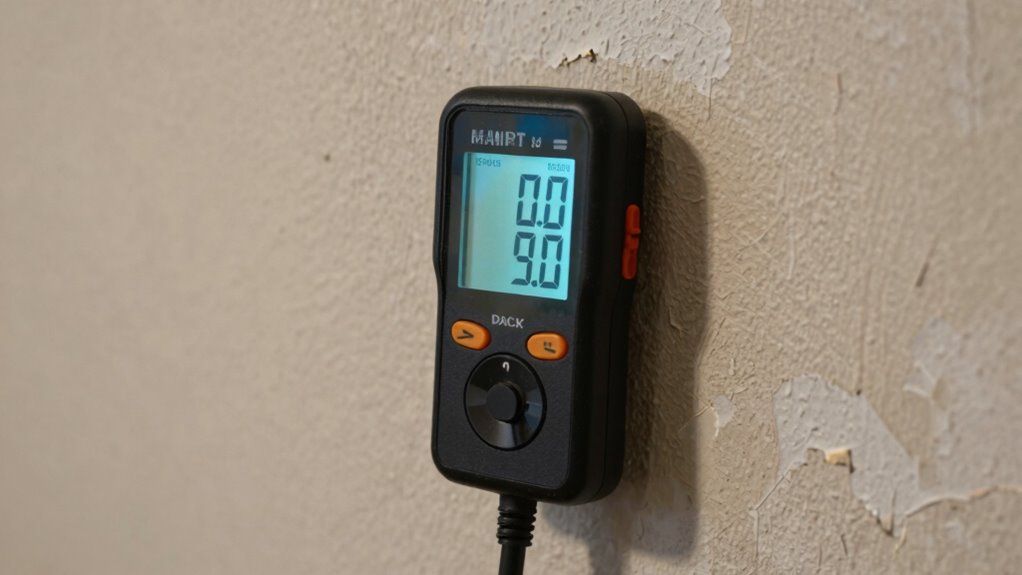
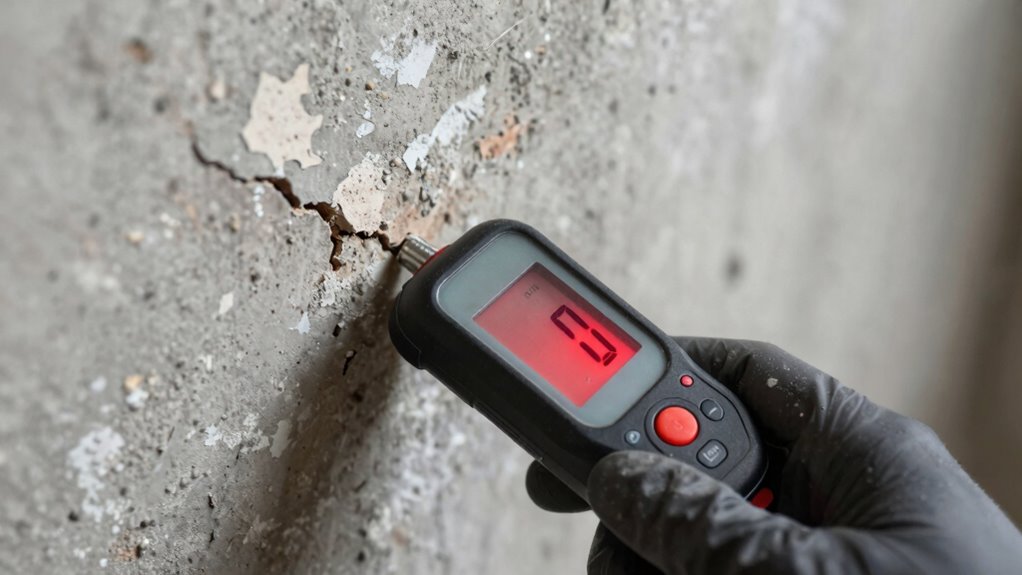
Have you ever wondered why moisture levels matter so much for wall projects? When you’re working on a wall, whether it’s new construction, renovation, or repair, understanding the moisture content is vital. Too much moisture can cause serious issues down the line, such as mold growth, wood rot, paint failure, or structural damage. To prevent these problems, you need accurate wall testing, which often involves using a moisture meter. This small device helps you assess the moisture levels within wall materials, giving you the information needed to decide whether to proceed or hold off.
Monitoring wall moisture is essential to prevent mold, rot, and structural issues in construction and repairs.
A moisture meter works by measuring the amount of water in the wall’s surface or deeper layers. When you perform wall testing, you’re fundamentally taking a moisture reading that indicates whether the wall is dry enough for finishing work or if it still contains excessive moisture. If the moisture level exceeds a certain threshold—often around 12-15% for drywall or wood—it’s a warning sign. Continuing with construction or finishing tasks under these conditions can trap moisture inside, leading to long-term problems that are costly and time-consuming to fix. Proper moisture testing is crucial to avoid these pitfalls.
The vital moisture reading that should stop your wall project cold varies depending on the material you’re working with. For instance, wood with moisture content above 20% is generally too wet for framing or fixtures, as it can warp or decay. For drywall or plaster, moisture levels above 15% are concerning because they suggest lingering dampness that could promote mold growth or compromise adhesion of paint or wallpaper. If your wall testing reveals readings above these levels, it’s best to pause your project and investigate further. This might mean allowing more time for drying, improving ventilation, or addressing leaks or water intrusion sources. Moisture content is a critical factor in determining when the wall is truly ready for finishing. Additionally, understanding the importance of proper drying techniques can significantly reduce the risk of moisture-related issues later on. Monitoring moisture levels regularly during drying can help ensure the wall reaches safe levels before proceeding.
Ignoring high moisture readings can have disastrous consequences. Trapped moisture often results in peeling paint, bubbling wallpaper, or visible mold growth. Over time, it can weaken the wall’s structure, causing safety hazards or expensive repairs. Recognizing the signs of excess moisture early can save both time and money by preventing long-term damage to the wall. Hence, understanding and respecting the moisture readings you get from your moisture meter is essential. It’s not just a number; it’s an indicator of the wall’s health and suitability for finishing. If your wall testing shows moisture levels that are too high, take action—whether that’s drying out the wall, fixing leaks, or delaying the project. Never underestimate the importance of a proper moisture reading; it’s your best safeguard against future headaches and costly repairs.
digital moisture meter for drywall
As an affiliate, we earn on qualifying purchases.
As an affiliate, we earn on qualifying purchases.
Frequently Asked Questions
What Are the Ideal Moisture Levels for Different Wall Materials?
You should aim for specific moisture levels based on wall materials. For drywall, keep moisture absorption below 1.5%, while for wood, it should be around 12-15%. Understanding material permeability helps you gauge how much moisture the material can absorb without damage. If readings are too high, it indicates excessive moisture, risking mold or structural issues, so stop your project until levels normalize.
How Often Should Moisture Readings Be Taken During a Project?
You should take moisture readings regularly, ideally every few days, to guarantee humidity control and prevent moisture damage during your project. Frequent checks help you catch rising moisture levels early, allowing you to address issues before they worsen. Consistent monitoring keeps the environment stable, protects your work, and ensures the materials stay within safe moisture ranges. Adjust your efforts accordingly to avoid costly repairs caused by excess moisture.
Can Moisture Meters Be Used on Painted or Finished Walls?
Think of painted surfaces as a guardian shield, hiding secrets beneath. Yes, you can use moisture meters on painted or finished walls, but be cautious. The paint or wall finishes can interfere with readings, making them less accurate. For best results, use a pin-type moisture meter or test at multiple spots. Remember, these readings reveal hidden moisture, guiding your next move—whether to proceed or pause your project.
What Causes Moisture Levels to Fluctuate Unexpectedly?
Moisture levels can fluctuate unexpectedly due to changes in moisture absorption and evaporation rates. When humidity rises or temperatures drop, walls absorb more moisture, increasing readings. Conversely, warmer, drier conditions speed up evaporation, dropping moisture levels. Sudden weather shifts, leaks, or inadequate ventilation also impact these rates. Keep an eye on environmental conditions, as they directly influence moisture readings and can cause unexpected fluctuations in your wall’s moisture content.
Are There Professional Services for Moisture Testing Before Starting?
Think of moisture testing like a detective uncovering clues before a crime scene. Yes, professional services exist for moisture testing, helping you detect hidden water damage and prevent mold. These experts use specialized tools to assess moisture levels accurately, ensuring your project won’t be compromised. Engaging professionals early allows you to avoid costly repairs later, safeguarding your home from potential water damage and mold growth, and ensuring a solid, healthy build.
As an affiliate, we earn on qualifying purchases.
Conclusion
Think of your wall project like baking a perfect loaf—if the moisture isn’t just right, everything can go south. I once skipped checking moisture levels and ended up with mold and delays. Don’t let that be you. Stick to the recommended moisture reading, and you’ll guarantee your wall stays strong and dry. It’s a small step that makes a big difference—like the oven temperature that guarantees a perfect bake every time.
As an affiliate, we earn on qualifying purchases.
As an affiliate, we earn on qualifying purchases.
NFL season / tailgating Picks
team gear
As an affiliate, we earn on qualifying purchases.