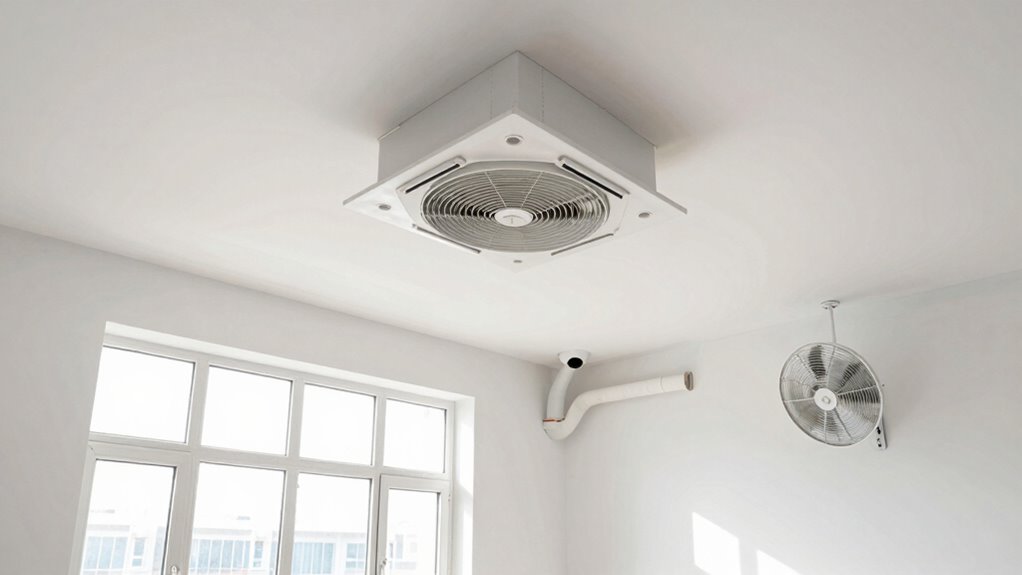

To set up proper ventilation for interior painting, open windows and doors on opposite sides to create a natural cross-breeze, and use fans or exhaust fans to direct fumes outside. Add portable air purifiers with activated carbon filters for extra help. Make sure airflow is continuous and steady to prevent fume buildup. Regularly monitor air quality and adjust your setup as needed for safety and ideal drying. Keep going to discover more tips for a successful project.

Get furniture and decor delivered free with Prime
- Fast, free delivery on millions of items
- Prime Video, Amazon Music and more included
- Member-only deals all year
Key Takeaways
- Use natural cross-ventilation by opening windows and doors on opposite sides to promote airflow.
- Incorporate exhaust fans and portable air purifiers with activated carbon filters to remove fumes effectively.
- Position fans to draw fumes outward, avoiding direct blowing on wet surfaces to ensure even drying.
- Monitor air quality regularly and adjust ventilation setup to maintain safe, consistent airflow.
- Maintain steady ventilation during the project to prevent fume buildup and ensure optimal drying times.

Ever wondered why proper ventilation is vital when painting indoors? The answer lies in your health and the quality of your work. Paint fumes can be harmful if they linger in the air, so ensuring good airflow not only keeps your space safe but also helps paint dry more evenly. When you optimize airflow, you allow fresh air to replace the fumes that rise from the freshly coated surfaces, reducing the risk of inhaling harmful chemicals. This process is essential, especially in enclosed spaces where fumes tend to concentrate quickly. By setting up proper ventilation, you create an environment that’s safer and more comfortable, enabling you to work efficiently without feeling overwhelmed by chemical odors. Understanding ventilation systems can further improve your setup and ensure continuous safety. Achieving good airflow optimization starts with understanding how to move air effectively within the room. You want to encourage a steady flow that pulls fresh air in and pushes stale, paint-laden air out. Opening windows and doors on opposite sides of the room creates a natural cross-breeze, which is one of the simplest ways to ventilate. If natural ventilation isn’t enough, using fans can help. Position a fan near an open window or door to draw fumes outside, but be sure not to blow directly onto wet surfaces, as this can cause uneven drying or dust particles to settle on your freshly painted walls. Placing another fan to exhaust air out of the room helps create a constant airflow, effectively diluting the paint fumes and replacing them with cleaner air. It’s also important to contemplate the type of ventilation equipment you use. Exhaust fans or portable air purifiers fitted with activated carbon filters can further trap paint fumes, making the environment safer. When setting up your ventilation system, ensure that the airflow is directed toward the outside and not back into the room, which could circulate fumes rather than eliminate them. Regularly air quality monitoring can help you assess if your ventilation efforts are effective and adjust accordingly. Additionally, choosing appropriate ventilation equipment can optimize your setup and ensure a safer environment. Incorporating proper maintenance of your ventilation devices can also ensure they operate efficiently throughout your project. To maintain optimal air quality, it’s beneficial to understand the impact of proper ventilation on safety and drying times, which can significantly improve your overall results. Remember, maintaining a consistent airflow throughout your project is key—stopping and starting ventilation can cause fumes to build up again.
portable air purifier with activated carbon filter
As an affiliate, we earn on qualifying purchases.
As an affiliate, we earn on qualifying purchases.
Frequently Asked Questions
How Do I Ventilate Rooms With Limited Windows Effectively?
To ventilate rooms with limited windows effectively, you should prioritize ventilation safety by using fans to circulate air and expel fumes. Consider window modification options like installing vent panels or creating temporary openings to improve airflow. Always wear a mask and guarantee proper exhaust systems are in place. This way, you can maintain a safe, well-ventilated environment, reducing health risks during your interior painting projects.
What Are the Best Types of Fans for Interior Painting Ventilation?
You might think any fan will do, but the best for interior painting are oscillating or box fans, which promote better airflow patterns and avoid stagnant air. Correct fan placement is vital—position fans near windows or doors to direct fumes outside and guarantee fresh air circulates. This setup reduces paint fumes and speeds drying, making your project safer and more efficient. Trust in proper airflow for a flawless finish.
How Long Should I Wait Before Re-Entering a Painted Room?
You should wait at least 24 hours before re-entering a freshly painted room to guarantee proper painting safety. Adequate ventilation tips, such as keeping windows open and using fans, help disperse fumes and speed up drying. Always check the paint label for specific cure times, as some paints may require longer. Prioritizing ventilation not only keeps you safe but also ensures a smooth, durable finish on your walls.
Can I Use Air Purifiers During Painting to Improve Air Quality?
Sure, you can use air purifiers during painting to boost air quality—think of them as your superhero sidekicks fighting off villainous VOCs. They help reduce VOC levels and improve air quality, making your space safer and less toxic. Just remember, they’re not magic wands, so combine their use with proper ventilation for the best results. Your lungs will thank you for the extra shield!
What Precautions Are Needed for Ventilation When Painting With Oil-Based Paints?
When painting with oil-based paints, you need to prioritize ventilation safety to avoid harmful oil-based paint fumes. Always guarantee proper airflow by opening windows and using fans to circulate fresh air. Wear a respirator mask if necessary, and keep doors open to prevent buildup of fumes. Avoid staying in the room for extended periods and guarantee the space is well-ventilated until fumes dissipate completely.
exhaust fan for interior painting ventilation
As an affiliate, we earn on qualifying purchases.
As an affiliate, we earn on qualifying purchases.
Conclusion
Now that you know how essential proper ventilation is, you’ll be able to create a safer, cleaner painting environment. Did you know that poor ventilation can increase your exposure to harmful fumes by up to 60%? By setting up the right ventilation system, you not only protect your health but also guarantee a smoother, more professional finish. So, take the time to plan your setup—you’ll thank yourself when the project is done!
oscillating fan for painting projects
As an affiliate, we earn on qualifying purchases.
As an affiliate, we earn on qualifying purchases.
As an affiliate, we earn on qualifying purchases.
Halloween Picks
halloween
As an affiliate, we earn on qualifying purchases.