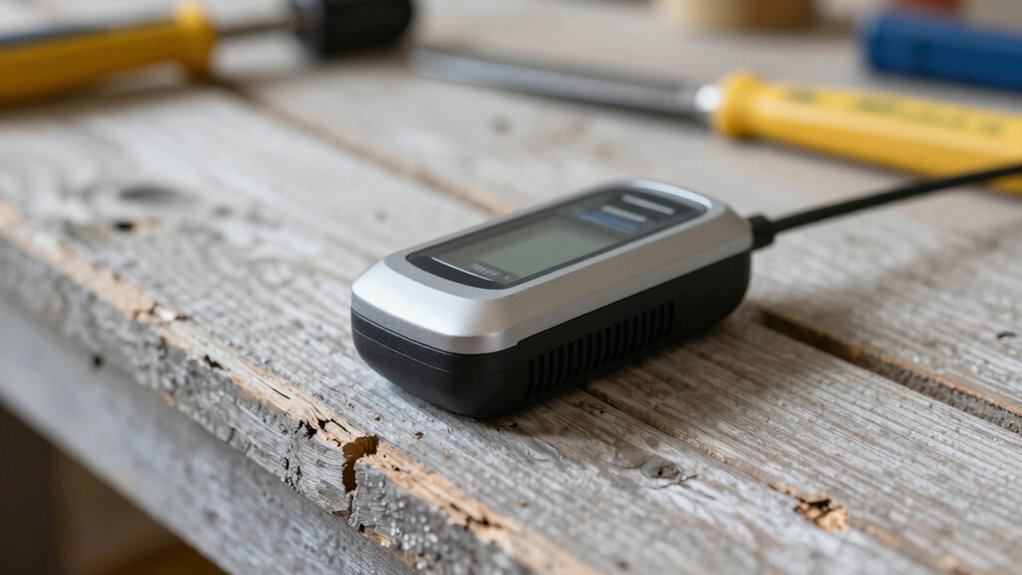

Pinless moisture meters are great because they provide quick, non-invasive measurements without damaging surfaces. They’re convenient for inspecting large areas and reducing downtime. However, surface conditions like paint, varnish, or uneven textures can interfere with accuracy, making results unreliable. Dense or thick materials may also challenge the sensors. If you keep exploring, you’ll discover how to get the most accurate assessments by understanding their limitations and when to use additional methods.

Get furniture and decor delivered free — and shop member deals
- Fast, free delivery on millions of items
- Access to Prime Big Deal Days deals on October 6–7
- Prime Video, Amazon Music and more included
Key Takeaways
- Pinless meters offer quick, non-invasive moisture scans, ideal for initial assessments and fragile surfaces.
- Surface conditions, like paint or uneven textures, can interfere with measurement accuracy.
- Dense or thick materials may prevent sensors from penetrating, leading to unreliable results.
- They should be complemented with invasive testing for precise moisture content, especially in critical areas.
- Overreliance on pinless meters can cause missed hidden moisture issues or false readings.
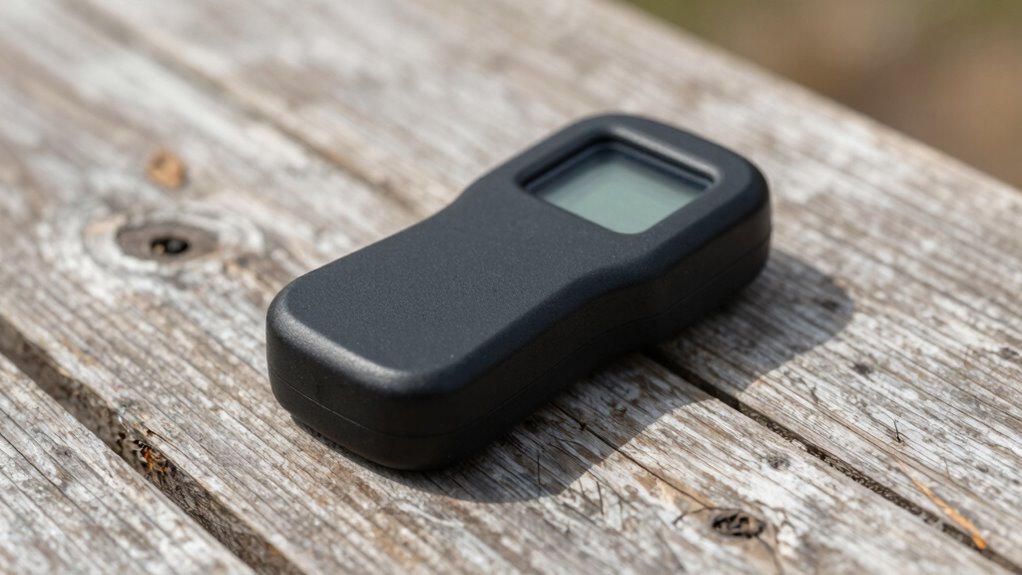
Battery life is another factor that makes pinless moisture meters practical. Since these devices are portable, you want a model that can last through multiple jobs without constantly needing a recharge or new batteries. Fortunately, many of these meters are designed with energy efficiency in mind, offering extended battery life that keeps you working longer without interruptions. Some even include low-battery indicators, so you’re never caught off guard during a vital measurement. This reliability means you can trust your readings, knowing your device won’t die unexpectedly mid-test. Additionally, energy efficiency helps reduce the overall cost of ownership and environmental impact. Proper device maintenance can further prolong the lifespan and performance of your moisture meter. Regular calibration and careful handling are essential for maintaining accuracy over time. The use of non-invasive testing methods further enhances the convenience and safety of moisture detection, especially in delicate or finished surfaces.
However, even with these advantages, pinless moisture meters have their limitations. Their accuracy can sometimes be compromised by surface conditions, such as paint, varnish, or uneven textures, which may interfere with the electromagnetic signals used to detect moisture. This can lead to false readings or missed moisture pockets. While digital calibration helps maintain accuracy, it doesn’t eliminate the issue entirely. Additionally, the sensors in some models might struggle to penetrate thick or dense materials, making them less reliable for certain applications. Moreover, surface conditions can significantly affect measurement quality, emphasizing the importance of understanding the environment you’re testing in.
Another concern is that the convenience of pinless meters might tempt you to skip more invasive testing methods when needed. Although they’re great for quick scans, they shouldn’t replace more thorough techniques if you’re dealing with critical moisture issues. Sometimes, you need to use pin-type meters or additional testing methods to confirm moisture content, especially in hidden or hard-to-reach areas. Incorporating complementary testing methods can provide a more comprehensive understanding of the moisture levels.
As an affiliate, we earn on qualifying purchases.
Frequently Asked Questions
Can Pinless Moisture Meters Measure Moisture Through Thick or Dense Materials?
Pinless moisture meters struggle to measure moisture through thick or dense materials because of their material thickness and density limitations. When the material is too thick, the electromagnetic signals can’t penetrate deeply enough to get an accurate reading. Dense materials also hinder the meter’s ability to detect moisture effectively. For precise measurements, especially in such cases, using pin-type meters or alternative methods might be your best option.
Are Pinless Moisture Meters Suitable for All Types of Building Materials?
Pinless moisture meters aren’t suitable for all building materials because of material compatibility issues. Some dense or thick materials may hinder accurate readings, and calibration challenges can arise, especially with non-wood surfaces. You need to check if your meter is compatible with your specific material type and regularly calibrate it for precise results. Otherwise, you risk inaccurate readings, leading to poor decisions in your project.
How Do Environmental Conditions Affect Pinless Moisture Meter Readings?
Environmental conditions can greatly influence your pinless moisture meter readings. High temperatures, humidity, or electromagnetic interference can cause calibration accuracy issues, leading to inaccurate results. You should always calibrate your device regularly and avoid using it near sources of environmental interference. By understanding these factors, you can guarantee more reliable readings and better assess moisture levels in your materials, preventing costly mistakes or misdiagnoses.
What Maintenance Is Required to Keep Pinless Moisture Meters Accurate?
To keep your pinless moisture meter accurate, you should regularly perform calibration procedures as recommended by the manufacturer. Check and replace the batteries to guarantee consistent readings, as low batteries can cause inaccuracies. Clean the sensor surface with a soft cloth to prevent debris buildup that might interfere with measurements. Storing the device in a dry, protected environment also helps maintain its precision over time.
Can Pinless Moisture Meters Determine Moisture Content Depth?
Pinless moisture meters primarily detect surface moisture, so they don’t measure moisture content depth directly. Their surface detection relies on electromagnetic signals, which can be influenced by calibration accuracy. If the calibration isn’t precise, your readings might be off, especially at different depths. To improve accuracy, regularly calibrate your device and be aware that pinless meters excel at quick surface assessments but aren’t designed for in-depth moisture content analysis.
moisture meter for wood and drywall
As an affiliate, we earn on qualifying purchases.
As an affiliate, we earn on qualifying purchases.
Conclusion
While pinless moisture meters offer a quick and non-invasive way to gauge moisture levels, they’re not always the perfect solution. Sometimes, they might miss the deeper issues lurking beneath the surface, like a subtle hint that’s easy to overlook. To truly get to the heart of the matter, combining tools and techniques can help you uncover what’s hidden, ensuring your project stays on the right track. After all, a little extra insight can make all the difference.
As an affiliate, we earn on qualifying purchases.
moisture meter with long battery life
As an affiliate, we earn on qualifying purchases.
As an affiliate, we earn on qualifying purchases.
Fall Picks
fall essentials
As an affiliate, we earn on qualifying purchases.