
Ceiling paint often looks wrong on walls because it’s formulated differently, usually with a flatter finish that absorbs more light, making walls appear dull or uneven. Lighting conditions can also distort how the paint looks, highlighting flaws or causing color mismatches. Using the wrong paint type or applying it with unsuitable techniques can lead to streaks or patchy results. If you want to understand how to avoid these issues and get better results, there’s more to learn.

Get furniture and decor delivered free with Prime
- Fast, free delivery on millions of items
- Prime Video, Amazon Music and more included
- Member-only deals all year
Key Takeaways
- Ceiling paint’s flat finish and formulation are designed for ceilings, not walls, causing uneven appearance and coverage issues.
- Different lighting conditions highlight surface differences, making ceiling paint look mismatched or dull on walls.
- Sheen and color differences between ceiling and wall paints create visual mismatch and reduce vibrancy.
- Applying ceiling paint with tools or techniques meant for walls can result in streaks and uneven texture.
- Proper surface preparation and using appropriate wall paint improve adhesion, finish, and overall appearance.

Ever wondered why ceiling paint often looks odd when applied to walls? It’s a question many people ask, and the answer lies in a few key factors that can make a simple paint job look off. One of the main reasons is lighting discrepancies. When you paint a ceiling, you’re usually working under different lighting conditions than you have on your walls. Overhead lighting tends to cast shadows and highlights that can make the paint appear uneven or dull. When you switch to wall lighting, the color and finish may seem inconsistent because the way light hits the surface differs. This difference can make the wall paint seem darker, lighter, or even patchy, especially if you didn’t account for how light interacts with the paint color and sheen. Proper lighting conditions and understanding lighting effects can significantly improve the appearance of painted surfaces.
Lighting differences can cause ceiling paint to look uneven or dull on walls.
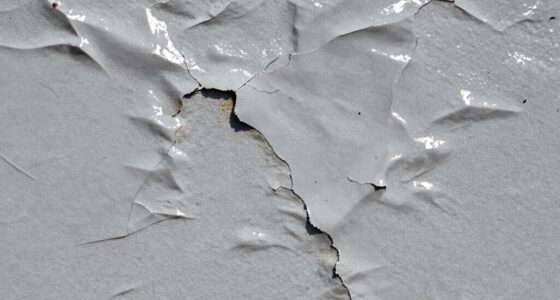
Another common culprit is paint adhesion issues. Ceiling paint is often formulated differently than wall paint. Ceiling paints are designed to hide imperfections and are typically flatter to reduce glare. When you try to use ceiling paint on walls, you might notice it doesn’t stick or spread as smoothly as regular wall paint. This can lead to uneven coverage, streaks, or visible brush marks. If the paint doesn’t adhere well, it’s more prone to peeling or bubbling over time, making the wall look uneven or poorly finished. Proper surface preparation helps, but even then, the difference in paint formulations can cause adhesion problems, especially if you don’t prime the surface first.
Color and sheen differences also play a role. Ceiling paints often have a matte or flat finish, which absorbs more light and can make walls appear dull or lifeless when used on them. Conversely, wall paints usually have a slight sheen that reflects light differently, giving the surface a more vibrant or smooth appearance. When you apply ceiling paint to walls, this mismatch in finish can make your walls look flat or muted compared to the ceiling, which was originally painted with a different sheen in mind.
In addition, the application technique matters. Applying ceiling paint with a roller or brush designed for flat surfaces might not give you the same smoothness or coverage as a wall-specific paint. If you don’t adjust your technique, you might end up with uneven patches or streaks, further emphasizing the mismatch. So, to avoid these issues, it’s best to use the right type of paint for the surface and finish it with proper lighting conditions in mind. Pay attention to surface prep and application methods, and you’ll find that your walls look much better and more consistent, no matter what paint you choose.
As an affiliate, we earn on qualifying purchases.
Frequently Asked Questions
Can Ceiling Paint Be Used on Walls Safely?
Yes, ceiling paint can be used on walls safely, but it may not provide ideal results. Ceiling paint is formulated for good paint adhesion and a matte finish, which might not match wall paint’s color consistency or durability. If you choose to use it, prepare the surface well and test a small area first, ensuring the paint adheres properly and matches your expectations for color and finish on the walls.
What Are Common Ceiling Paint Colors for Walls?
Common ceiling paint colors for walls include soft whites, warm beiges, and light grays, which create a neutral backdrop. When choosing, consider ceiling paint finishes like matte or eggshell for a smooth look. Top ceiling paint brands like Benjamin Moore and Sherwin-Williams offer quality options, ensuring your wall color complements the finish. Select a color and finish that enhances your space’s brightness and cohesion for a balanced feel.
How Does Lighting Affect Ceiling Paint Appearance?
Did you know lighting can change ceiling paint’s appearance by up to 30%? Ambient lighting, especially, impacts how the paint sheen looks—glossy finishes reflect more light, making ceilings appear brighter, while matte finishes absorb light, giving a softer look. If your room has uneven or poor lighting, it can make the ceiling paint seem off or inconsistent. Proper lighting highlights your ceiling’s true color and finish, creating a cohesive, appealing space.
Is It Necessary to Prime Walls Before Applying Ceiling Paint?
Priming your walls before applying ceiling paint is essential for good paint adhesion and a smooth finish. Primer necessity depends on the wall surface—if it’s new, stained, or previously painted with glossy paint, priming helps prevent uneven absorption. It creates a uniform base, reduces the risk of peeling, and enhances paint durability. Skipping primer can lead to uneven color, poor adhesion, and a finish that looks less professional over time.
How Long Does Ceiling Paint Typically Last on Walls?
Ceiling paint typically lasts about 5 to 10 years on walls, depending on conditions. Did you know that poor wall paint compatibility can cause peeling or uneven wear? For maximum ceiling paint durability, make sure your wall paint is compatible, and use high-quality products. Proper preparation and application also extend lifespan. With the right care, you can enjoy fresh-looking walls for many years, saving you time and money.
As an affiliate, we earn on qualifying purchases.
Conclusion
Remember, Rome wasn’t built in a day, and mastering wall and ceiling paint takes patience. When your ceiling paint looks off on your walls, it’s often due to differences in sheen, color, or application technique. Take the time to test samples, adjust your tools, and learn from each project. With patience and practice, you’ll turn your space into a beautiful, cohesive haven. Keep at it—perfection is a journey, not a destination.
As an affiliate, we earn on qualifying purchases.
As an affiliate, we earn on qualifying purchases.
Halloween Picks
halloween
As an affiliate, we earn on qualifying purchases.