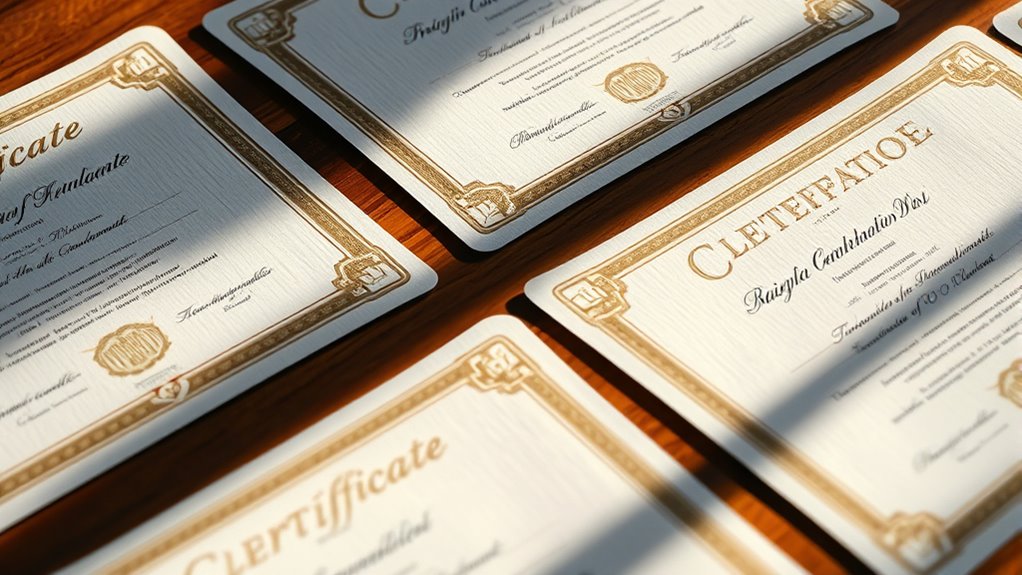

You should keep the original certificates of authenticity issued by reputable sources, along with digital copies for backup. Store these documents securely in a designated place to protect your investment. Keep records of appraisals, receipts, and correspondence related to the item. Verifying the authenticity of certificates is essential, so always check for official seals or signatures. If you’re interested in ensuring your item’s value and security, there’s more to learn about proper management.
Key Takeaways
- Keep the original certificate issued by reputable sources for authenticity verification.
- Store physical certificates in a secure, accessible location to prevent loss or damage.
- Maintain digital copies and backups for easy retrieval and added security.
- Preserve related documentation such as appraisals, receipts, and correspondence.
- Verify the authenticity of certificates regularly to ensure continued credibility and value.

Have you ever wondered how collectors and buyers verify the authenticity of valuable items? It’s a vital part of ensuring you’re making a wise investment and not falling for a forgery. One of the key tools in this process is the certificate of authenticity, which acts as official proof that an item is genuine. When you’re considering purchasing or valuing a collectible, artwork, or rare item, the first step is often to review the collector’s documentation included with it. This documentation, especially the certificate of authenticity, provides essential details like the item’s origin, provenance, and the authority that verified its authenticity. It’s your assurance that what you’re buying isn’t a counterfeit.
Authenticity verification primarily relies on these certificates because they are issued by reputable sources—such as manufacturers, authentication experts, or recognized organizations—that have the expertise and authority to confirm an item’s genuineness. The certification process involves thorough examination, often including scientific tests, comparison with known authentic examples, and detailed documentation to prevent fraud. When you hold a certificate of authenticity, it becomes your primary piece of evidence that the item is legitimate. Without it, your ability to prove authenticity can become considerably more complicated, especially if you decide to sell or insure the item later.
Keeping the collector’s documentation safe is just as important as the item itself. You should store these certificates in a secure, easily accessible place, preferably with digital copies as backups. This way, if you ever need to verify the item’s authenticity or prove ownership, you’ll have the necessary documentation at hand. It’s also wise to keep records of any appraisals, receipts, or correspondence related to the item, as these can further support its provenance. When you’re dealing with high-value collectibles, the certificate of authenticity can dramatically influence the item’s value and marketability, so don’t underestimate its importance.
In addition to safeguarding the collector’s documentation, it’s essential to verify that the certificate is authentic and issued by a reputable source. Fake certificates are a common problem, and counterfeit documentation can lead to serious financial and legal issues. Always check the issuing authority’s credentials, look for official seals or signatures, and verify the certificate’s details against known standards or databases. By doing this, you guarantee your collection remains genuine, protected, and valuable. Ultimately, understanding the significance of authenticity verification and diligently maintaining your collector’s documentation will help you preserve the integrity and worth of your treasured items.
Top picks for "certificat authenticity keep"
Open Amazon search results for this keyword.
As an affiliate, we earn on qualifying purchases.
Frequently Asked Questions
How Do I Verify a Certificate’s Authenticity Online?
To verify a certificate’s authenticity online, start by using the digital verification tools provided by the issuer, such as a secure online authentication portal. Enter the certificate’s unique serial number or code on their website. Look for a verification status or digital badge confirming authenticity. Always guarantee you’re visiting the official site to avoid scams, and double-check details against the certificate’s information to confirm it’s genuine.
Are Digital Certificates as Reliable as Paper Versions?
Like the digital shield of a knight, digital certificates are quite reliable, but their security depends on proper digital security measures. They’re designed for counterfeit prevention and often include encryption to protect their authenticity. While paper versions can be forged, digital certificates, when issued through trusted platforms, offer strong verification. Just confirm you verify digital certificates through official sources to avoid counterfeit issues, making them as dependable as traditional paper ones.
What Should I Do if My Certificate Is Lost or Damaged?
If your certificate is lost or damaged, act quickly to safeguard your document preservation efforts. Contact the issuer to request a replacement or duplicate certificate. Keep digital copies to help with insurance claims or proof of authenticity. Store the original in a safe, secure place, and consider getting insurance coverage for valuable items. Taking these steps ensures you’re prepared and protected, even if the original certificate is no longer available.
Can Certificates of Authenticity Be Forged or Counterfeit?
Yes, certificates of authenticity can be forged or counterfeit. Think of the certificate as a key to the treasure chest of genuine items. To spot fakes, you need to look for authenticity markers—special seals, holograms, or unique serial numbers—that act as visual clues. Counterfeit detection skills help you verify whether the certificate truly unlocks the item’s authenticity or if it’s a cleverly crafted imitation.
How Long Is a Typical Certificate of Authenticity Valid?
A typical certificate of authenticity is valid as long as the item’s authenticity can be verified, which varies by issuer. You should regularly check the authenticity verification details and any updates from the issuer to guarantee the certificate’s validity. While there’s no set expiration, maintaining the certificate’s condition and staying informed about the issuer’s guidelines help preserve its value and trustworthiness over time, supporting your certificate longevity.
Conclusion
Remember, your certificates of authenticity are the golden tickets that prove your treasures’ true worth. Keep them safe, like a lighthouse guiding you through the fog of uncertainty. Whether it’s jewelry, art, or collectibles, these documents are your proof of value and provenance. Treat them like priceless gems—they’re the key to preserving your investments and peace of mind. Protect them well, and they’ll shine brightly for years to come.