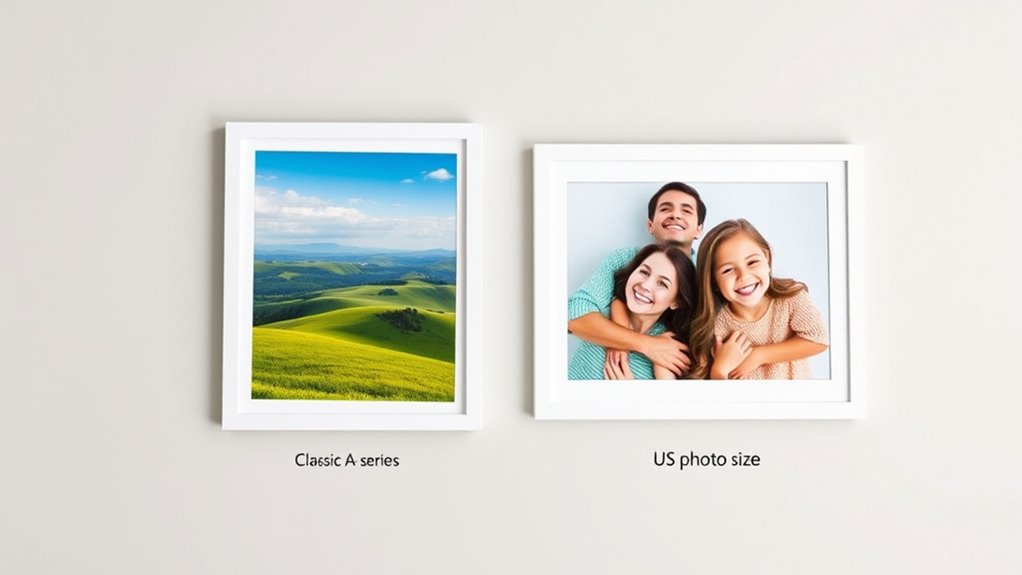

A-series sizes offer a consistent aspect ratio of about 1:1.41, making it easier to frame without cropping since the proportions stay the same across all sizes. In contrast, US photo sizes like 4×6, 5×7, and 8×10 have varying ratios, often requiring cropping or borders for a perfect fit. Knowing these differences can help you choose the best option for seamless framing—if you keep going, you’ll learn more about how to make it work for your photos.
Key Takeaways
- A-series sizes have a consistent 1:1.41 aspect ratio, reducing cropping needs when resizing or framing.
- US photo sizes like 4×6, 5×7, and 8×10 have varying aspect ratios, often requiring cropping or borders.
- Choosing A-series sizes ensures easier matching with standard frames without cropping.
- US sizes may need cropping or custom framing due to aspect ratio differences.
- Standardized A-series dimensions facilitate seamless framing and professional presentation without cropping.
When it comes to printing and framing photos, understanding the differences between A-series and US photo sizes is essential. These size standards influence not only how your photos look but also how they fit into frames without cropping. The key factors here are frame dimensions and aspect ratio differences. The aspect ratio refers to the proportional relationship between the width and height of a photo or print, which directly impacts how well a picture fits into a frame without losing important details or requiring cropping.
A-series sizes, commonly used worldwide, especially in Europe, follow a consistent aspect ratio of approximately 1:1.41. This uniform aspect ratio means that if you resize or scale an A-series sheet, the proportions stay consistent, making it easier to print and frame without cropping. For example, A4, one of the most popular sizes, measures 210 mm by 297 mm. Its aspect ratio is close to 1:1.41, which aligns well with many standard frames designed for similar proportions. Because of this consistency, you can often find frames that match your print size directly, reducing the need for cropping or resizing.
In contrast, US photo sizes vary considerably in their aspect ratios, which can create challenges when framing photos. Standard US sizes like 4×6, 5×7, and 8×10 have aspect ratios of approximately 1:1.5, 1:1.4, and 1:1.25 respectively. These ratios are less uniform than those of the A-series, meaning that a 4×6 print, for example, has a different aspect ratio than an 8×10. If you try to put a 4×6 photo into an 8×10 frame, you’ll likely need to crop parts of the image or add borders to fill the space. This inconsistency in aspect ratios among US sizes often leads to cropping or the need for custom framing to preserve the entire image.
Understanding these aspect ratio differences helps you choose the right size for your photos and frames. If you want to avoid cropping, opting for A-series sizes or selecting US sizes that match your image’s proportions is important. When you know the frame dimensions and how they relate to the aspect ratio of your prints, you can select sizes that fit perfectly, ensuring your photos are displayed as intended without losing important details or needing extensive framing adjustments.
Additionally, standardized sizing plays a crucial role in streamlining the framing process and ensuring consistency across different regions. This knowledge streamlines the framing process and helps create a polished, professional look for your photographs.
Frequently Asked Questions
How Do I Convert A-Series Sizes to US Photo Dimensions Accurately?
To convert A-series sizes to US photo dimensions accurately, start by understanding their aspect ratios—A-series sizes have an aspect ratio of 1:√2, while US photo sizes typically follow 4×6 or 5×7. Use conversion formulas that account for these ratios, such as multiplying the width or height by the ratio difference. This way, you can frame your photos without cropping, maintaining the original proportions.
Are There Standard Framing Options for Non-Standard Photo Sizes?
Yes, there are standard framing options for non-standard photo sizes. You can opt for custom framing, which allows you to choose specific dimensions to fit your unique photo. Alternatively, consider alternative mounting methods like float mounting or matting, which help showcase your photo without cropping. These options guarantee your non-standard size looks polished and finished, giving you a professional display regardless of the photo’s dimensions.
Can I Resize Photos to Fit Both A-Series and US Dimensions Without Cropping?
Yes, you can resize photos to fit both A-series and US dimensions without cropping by adjusting the aspect ratio. Use cropping techniques that preserve the main subject, like letterboxing or pillarboxing, to maintain the original composition. Focus on resizing while keeping the aspect ratio consistent, so your photo fits frames seamlessly. This approach guarantees no important details are cut out, giving you a versatile, well-framed image across different sizes.
What Tools Are Recommended for Resizing Without Losing Image Quality?
You should use image quality tools and resizing software like Adobe Photoshop, GIMP, or Lightroom to resize your photos without losing quality. These tools employ advanced algorithms to preserve detail and sharpness during resizing. Always choose the “bicubic smoother” or similar options for enlargements, and avoid excessive scaling. By carefully selecting your software and settings, you can maintain your image quality while adjusting your photos to fit both A-series and US dimensions seamlessly.
How Do Different Aspect Ratios Affect Framing and Display Options?
Imagine your photo as a canvas, where aspect ratio impact shapes the scene’s balance and harmony. Different ratios influence framing versatility—wider ratios offer expansive views perfect for landscapes, while taller ones focus on vertical details. This directly affects display options, as selecting the right aspect ratio guarantees your image fits well without cropping, enhancing visual storytelling and making your photos adaptable across various frames and formats.
Conclusion
So, next time you’re about to frame that perfect shot, remember—whether you choose the A-series or US sizes, you’re still risking that pesky crop. Irony’s on your side, right? You’ll spend all this time matching sizes, only to realize your masterpiece might just need a little extra patience or a dash of luck. After all, framing without cropping is an art in itself—so enjoy the challenge, and keep those photos alive!