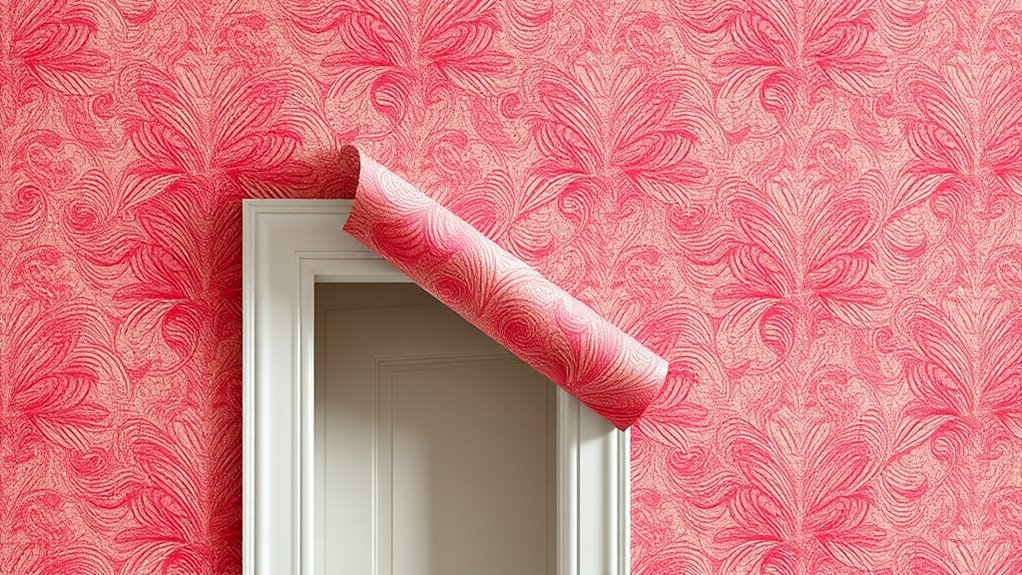

To hang wallpaper around corners and doors, start by measuring carefully and adding extra inches for trimming. Cut patterns precisely and match them before application. Use a smoothing tool and sharp blades for clean edges and seamless progressions. Wrap excess around corners and door frames, pressing the wallpaper firmly into edges. Handle obstacles thoughtfully and smooth out air pockets for a professional look. Keep practicing these steps to perfect your technique and achieve flawless results.
Key Takeaways
- Measure and mark precise wallpaper lengths, including openings, to ensure a proper fit around corners and doors.
- Use a sharp utility knife for clean cuts, matching patterns carefully at edges and around obstacles.
- Apply wallpaper adhesive evenly, smoothing air pockets and ensuring a snug fit along edges and corners.
- Fold excess wallpaper at corners and trim carefully for smooth transitions and neat finishes.
- Use smoothing tools and decorative trims to hide imperfections and create seamless, professional-looking edges.
Preparing Your Walls and Wallpaper for Corner and Door Areas
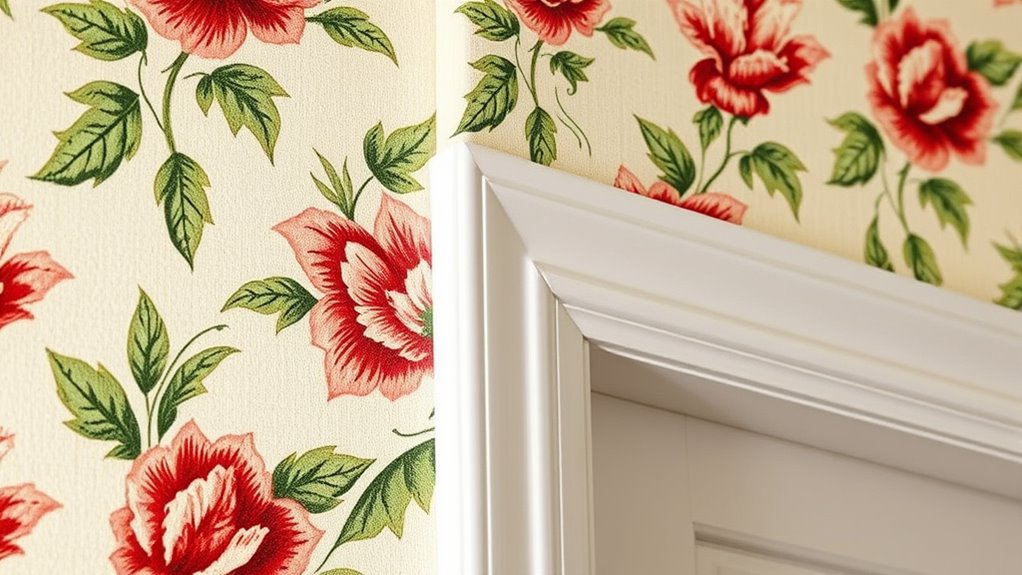
Before you begin hanging wallpaper around corners and doors, it’s important to prepare your walls properly. Start by cleaning the surface thoroughly to remove dust, grease, and any old adhesive residues, ensuring ideal wall preparation. Smooth out any imperfections like holes or bumps with spackle or filler, then sand the area until it’s even. A clean, smooth wall allows wallpaper adhesive to bond securely. When applying wallpaper, use the right wallpaper adhesive recommended for your wallpaper type. Spread the adhesive evenly with a brush or roller, avoiding excess that could cause drips or bubbles. Proper wall preparation guarantees better adhesion and easier handling around corners and door frames, resulting in a professional-looking finish that lasts longer. Additionally, understanding wall surfaces and materials can help you choose the most effective wallpaper and adhesive for a durable, high-quality result. Using proper surface preparation techniques can also minimize the risk of future peeling or damage, saving you time and effort in the long run. Being aware of adhesive types can further enhance the longevity of your wallpaper installation. When working around corners and door frames, taking extra care to measure and cut accurately will ensure a seamless appearance.
Measuring and Cutting Wallpaper for Precise Fitting
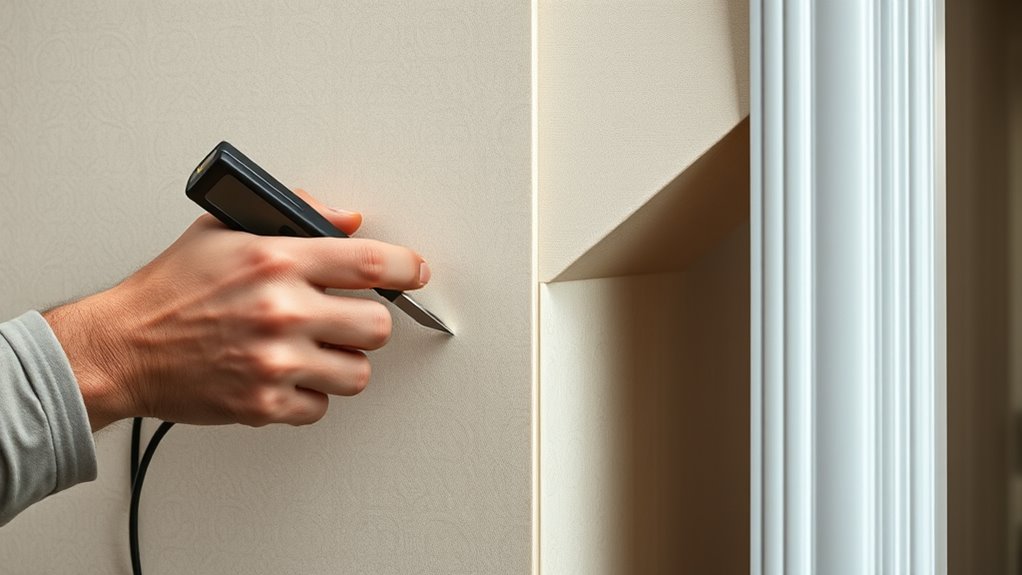
To get a perfect fit, you need to measure your walls carefully, paying attention to corners and door frames. Use a level or plumb line to guarantee your measurements are accurate before cutting. When cutting the wallpaper, follow precise methods to match patterns and avoid mistakes. Additionally, understanding the types of gold products eligible for investment can help you select the best options for your project. Ensuring your measurements are precise is especially important when working with industrial manufacturing processes, as consistent quality control is vital for a professional finish. Proper measurement techniques are also crucial for juice extraction, as accurate ingredient quantities impact the final product quality.
Accurate Measurement Techniques
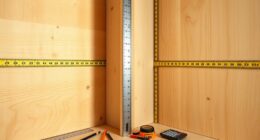
Accurate measurement is essential for achieving a seamless wallpaper installation around corners and doors. You’ll want to measure carefully to guarantee pattern continuity and avoid mismatches that stand out. Use a tape measure to determine the height and width of the wall, accounting for any door or window openings. When planning your wallpaper strips, add a few extra inches for trimming and adjustments. Mark your measurements clearly and double-check them to prevent mistakes. Proper measurement helps you apply wallpaper adhesives evenly, preventing bubbles or sagging that could disrupt the pattern flow. Taking precise measurements ensures your wallpaper fits perfectly, especially when wrapping around corners or covering door frames. Incorporating measurement techniques into your planning process guarantees a high-quality finished result. Paying attention to measurement precision can significantly reduce waste and the need for rework, making your project more efficient. Additionally, understanding the importance of pattern matching can help achieve a professional look with seamless transitions. Practicing mindfulness during the measuring process can also help maintain focus and accuracy, reducing the likelihood of errors.
Precise Cutting Methods
Precise cutting is essential for ensuring your wallpaper fits seamlessly around corners and door frames. To achieve this, measure carefully and mark your wallpaper with a pencil, accounting for pattern matching if needed. When cutting, use a sharp utility knife or scissors for clean edges. If you’re removing wallpaper first, ensure the surface is smooth and free of old adhesive types that may cause uneven cuts. For best results, cut your wallpaper slightly longer than measurements to allow for adjustments. When trimming around corners and doors, make small, precise cuts rather than large snips. This careful approach minimizes gaps and overlaps, ensuring a professional finish. Remember, accurate measurements and neat cuts make wallpaper installation look flawless, especially when working around tricky areas like corners and door frames. Additionally, understanding the precision required for cutting wallpaper helps achieve a more seamless appearance. Using proper tuning techniques can further improve the overall fit and finish of your wallpaper project. Paying close attention to the importance of proper measuring ensures that your wallpaper aligns perfectly and maintains its pattern continuity throughout the space. Being mindful of material properties can also help in selecting the right cutting tools and techniques for different wallpaper types.
Techniques for Seamlessly Wrapping Corners and Door Frames
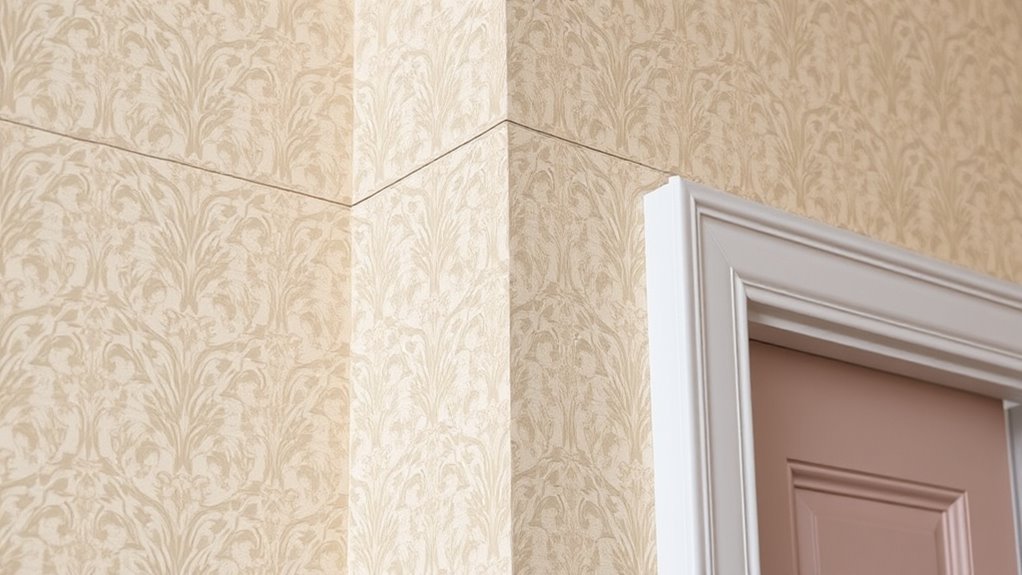
Wrapping wallpaper seamlessly around corners and door frames can be challenging, but with the right techniques, you can achieve a professional look. Focus on maintaining pattern continuity by aligning the design carefully as you wrap. Use precise adhesive application to guarantee the wallpaper sticks smoothly without bubbles or wrinkles. When approaching corners, cut the wallpaper slightly longer to fold around the edge, then trim excess for a clean finish. For door frames, press the wallpaper into the corner, smoothing out air pockets with a plastic smoothing tool. This table illustrates the process:
| Step | Technique | Key Point |
|---|---|---|
| Pattern Alignment | Match patterns before cutting | Ensures seamless look |
| Adhesive Application | Apply evenly with a brush or roller | Prevents bubbles and wrinkles |
| Corner Wrapping | Fold and trim excess wallpaper | Achieves clean edges |
| Door Frame Wrapping | Press into corners, smooth out | Maintains pattern flow |
| Final Touches | Use a smoothing tool to secure edges | Ensures neat finish |
Using Tools to Achieve Sharp Edges and Clean Lines
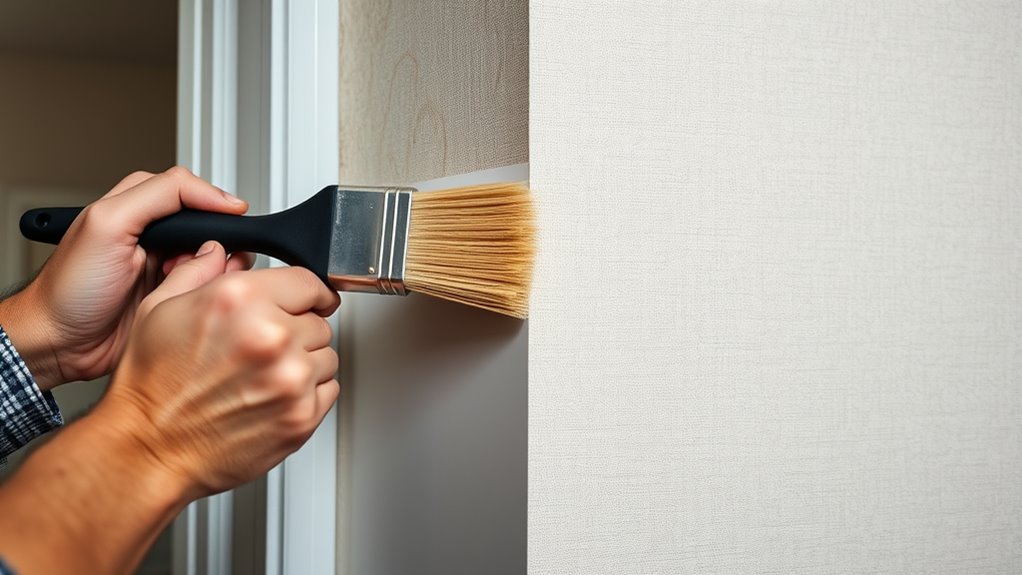
Using tools to achieve sharp edges and clean lines makes a significant difference when aiming for precise details in wallpaper installation. Carefully selecting tools like a straight edge, a sharp utility knife, and a smoothing tool helps you achieve accurate cuts and flawless pattern alignment. A straight edge guides your knife for crisp, straight lines, especially around corners and edges. When trimming excess wallpaper, a sharp knife ensures clean cuts without tearing. A smoothing tool helps eliminate air bubbles and excess adhesive, giving your lines a polished look. Proper tools also enable better pattern matching, preventing misalignment that can ruin the overall appearance. Additionally, understanding sound vibrations and their effects can aid in creating a calm workspace during your project. Using a consistent technique enhances your precision and efficiency throughout the process. Employing the right hand tools can further improve accuracy and make the task easier. With the right tools, you can confidently create sharp, clean edges that enhance your wallpaper’s professional finish, even in tricky areas around corners and doors. Incorporating exfoliation techniques can also help prepare the surface for a smoother application by removing existing irregularities, similar to how glycolic acid improves skin texture.
Handling Obstacles and Irregularities at Corners and Doors

When wallpapering around corners and doors, precise measurement techniques are essential to guarantee a perfect fit. You’ll need to match patterns seamlessly and use smart edging and finishing tips to hide irregularities. Mastering these points helps create a professional, clean look despite obstacles. Additionally, understanding market research methods can inform you about the latest trends and techniques in wallpaper installation, helping you stay updated with industry standards.
Precise Measurement Techniques
Accurately measuring around corners and doors is vital to guarantee your wallpaper fits seamlessly and looks professional. Begin by taking precise measurements of each section, noting the width and height, and include extra margin for adjustments. When measuring, keep your tape straight and steady, especially around irregular shapes or obstacles. To ensure pattern alignment, mark key points where patterns should match, and use a level or plumb line to keep your measurements consistent. Applying wallpaper adhesive correctly is essential; it helps prevent slipping and allows for fine-tuning during installation. Double-check your measurements before cutting, and account for any irregularities or obstacles. Using modern installation methods can make the process more efficient and ensure a professional-looking outcome. Additionally, understanding how to handle irregular shapes and obstacles can significantly improve the overall quality of your wallpaper installation. Incorporating proper measurement techniques is crucial for achieving a flawless finish and avoiding costly mistakes. Proper preparation and precise measurement can also help prevent material waste and ensure your project stays within budget.
Seamless Pattern Matching
Handling obstacles and irregularities at corners and doors requires careful attention to pattern matching to guarantee a seamless look. To achieve this, focus on precise pattern alignment as you work around these features. Before cutting or fitting, examine the wallpaper’s pattern to identify key matching points. When matching patterns, ensure the design aligns smoothly across edges, avoiding gaps or overlaps that disturb the flow. Color matching is equally important; pick wallpaper sections that maintain consistent hues to prevent noticeable differences. Use a sharp blade for clean cuts, and take your time repositioning pieces for perfect alignment. By paying close attention to pattern alignment and color matching, you’ll create a cohesive, professional finish, even around challenging obstacles.
Edging and Finishing Tips
To achieve a clean, professional finish around corners and doors, it’s essential to focus on precise edging and finishing techniques. Start by carefully smoothing the wallpaper edges with an edge smoothing tool or a damp cloth to prevent lifting. When handling irregularities, trim excess wallpaper neatly with a sharp blade, ensuring clean, straight cuts. For added detail, consider applying decorative trims along edges or around door frames to hide imperfections and create a polished look. Always press the edges firmly to secure them, avoiding bubbles and wrinkles. Take your time to smooth out any air pockets or creases before trimming. Proper edging and finishing not only improve the wallpaper’s appearance but also enhance its durability around obstacles and irregular surfaces.
Tips for Finishing and Touching Up Around Challenging Areas
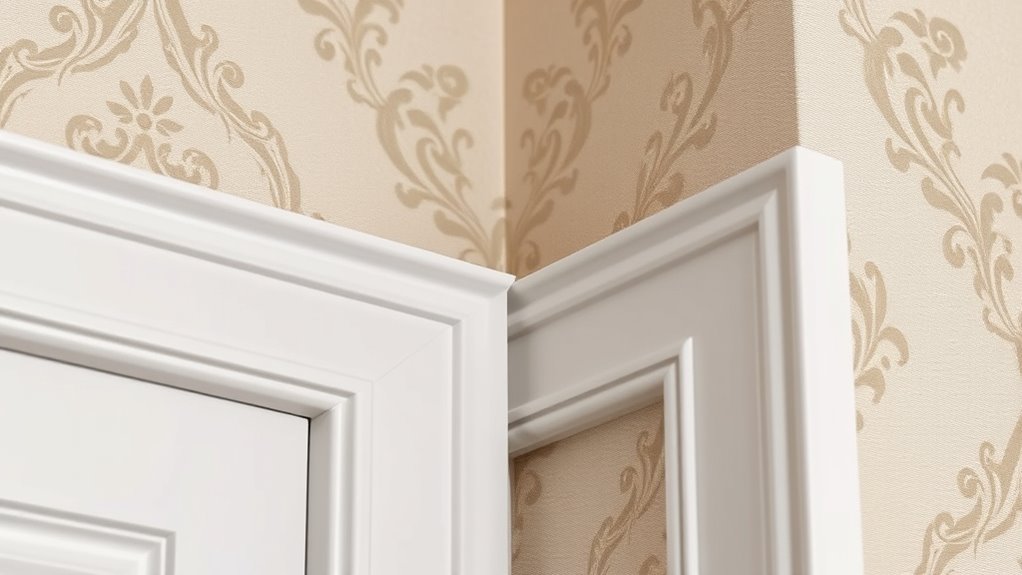
Finishing and touching up around challenging areas like corners and doorframes can be tricky, but with the right techniques, you can achieve a seamless look. Start by carefully trimming excess wallpaper with a sharp blade, ensuring clean edges. If you need to remove any bubbles or wrinkles, gently lift the wallpaper and reapply adhesive where needed, using a small brush for precise adhesive application. When wallpaper removal becomes necessary, do it gradually to avoid tearing the material. Use a smoothing tool to press the wallpaper firmly into corners and around doorframes, ensuring a tight seal. For tight spots, a putty knife can help tuck edges neatly. Patience and precision are key to creating a professional finish around these challenging areas.
Frequently Asked Questions
How Do I Choose the Best Wallpaper for High-Traffic Door Areas?
You should choose a durable wallpaper with high-traffic resistance, like vinyl or coated options, to withstand frequent use around door areas. Consider durability considerations to prevent tears and fading. Additionally, pick a pattern or color that complements your existing decor for aesthetic coordination. Opt for wallpapers with easy maintenance features to keep the space looking fresh and stylish despite constant activity, ensuring longevity and visual harmony.
Can Wallpaper Be Applied Over Textured or Uneven Surfaces Near Corners?
A smooth surface is the foundation of good wallpaper, but even textured surfaces or uneven walls near corners can be tricky. You can apply wallpaper over textured or uneven surfaces if you prep properly—clean, sand, and use a high-quality primer. Remember, a stitch in time saves nine; addressing surface imperfections first guarantees your wallpaper sticks well and looks flawless, transforming your space beautifully despite the challenges of textured or uneven walls.
What Are the Best Adhesives for Wallpaper Around Damp or Humid Doorways?
For damp or humid doorways, you should choose moisture resistant or waterproof adhesives. These adhesives are specifically formulated to withstand high humidity and prevent peeling or mold growth. Make sure to thoroughly clean the surface before applying the wallpaper, and use a high-quality adhesive designed for moisture-prone areas. This guarantees your wallpaper stays secure and looks great despite the challenging conditions around damp or humid doorways.
How Do I Prevent Bubbling or Peeling at Door Frame Edges?
To prevent bubbling or peeling at door frame edges, guarantee proper edge sealing by pressing the wallpaper firmly into the frame and smoothing out air bubbles. Apply adhesive generously along the edges to secure a strong bond, and use a damp cloth to wipe away excess glue. Proper adhesive application along the edges creates a tight seal, reducing the risk of peeling and ensuring your wallpaper stays smooth and durable around door frames.
Are There Special Wallpapers Designed for Easy Removal Around Corners?
Like a chameleon blending seamlessly, removal-friendly wallpapers are perfect for corners. These wallpapers often feature corner-specific designs that align effortlessly, making installation and removal smoother. They’re crafted to peel away cleanly without damaging your wall or leaving residue. When choosing wallpaper, look for labels that specify “easy removal” or “removable wallpaper,” ensuring you can update your space effortlessly, especially around tricky corners and door frames.
Conclusion
With patience and the right techniques, hanging wallpaper around corners and doors becomes a manageable task, even if it feels like traversing a labyrinth. Remember to measure carefully, use your tools wisely, and don’t rush the finishing touches. Like a skilled artisan of yore, your attention to detail will result in sharp, clean lines that transform your space. Stick with it, and soon you’ll have a beautifully wallpapered room that’s truly a work of art.