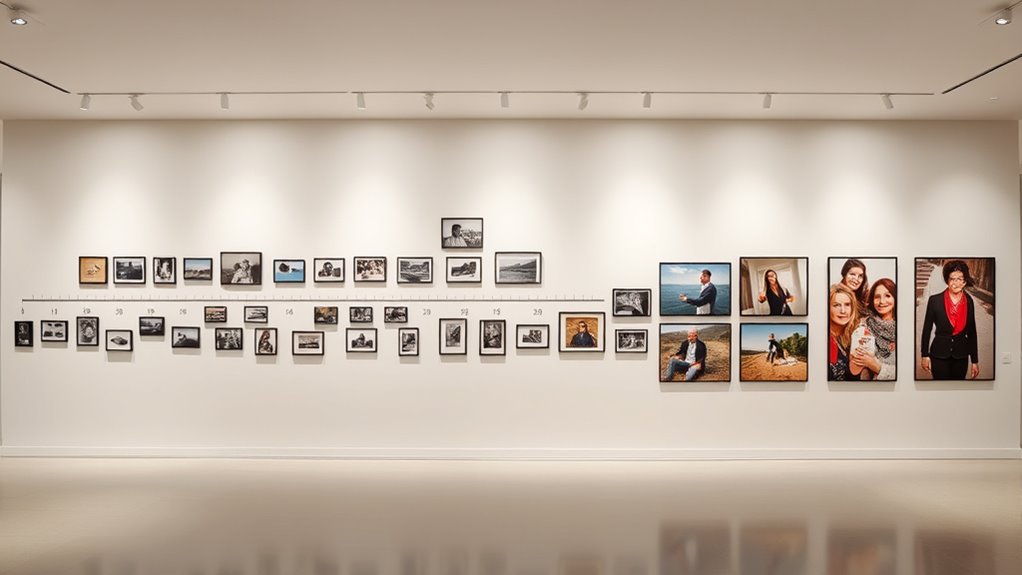

A timeline gallery wall transforms your space into a visual story by arranging photos, memorabilia, and artifacts in chronological order. It helps you showcase family history, significant moments, or cultural events, creating a compelling and easy-to-follow narrative. You can choose from various layouts like linear, zigzag, or flowing curves to suit your style. Keep exploring to discover tips on designing an engaging, meaningful timeline wall that truly reflects your story.
Key Takeaways
- Organize photos and memorabilia in chronological order to tell a clear visual story.
- Choose layout styles such as linear, zigzag, or flowing curves for engaging design.
- Use frames, spacing, and labels to enhance readability and sequence clarity.
- Incorporate personal and historical items to create meaningful, educational displays.
- Balance aesthetics with storytelling to craft an impactful, memorable timeline gallery wall.
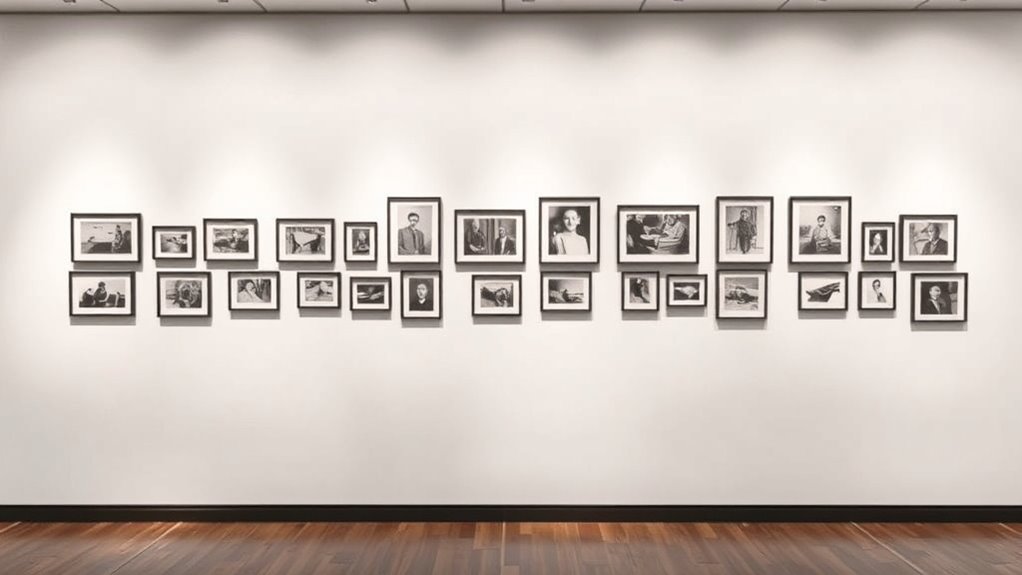
Have you ever thought about transforming your blank wall into a mesmerizing story? A timeline gallery wall can do just that, turning an empty space into a visual journey through time. When you arrange photos, artifacts, and memorabilia chronologically, you create a compelling narrative that captures your family’s history or significant moments in history. This approach isn’t just about decoration; it’s about storytelling that connects generations and preserves memories. By designing a timeline, you give your space a sense of continuity, making it a focal point that invites conversation and reflection. Incorporating visual storytelling techniques can enhance the impact and engagement of your timeline. Family storytelling becomes more vibrant when you use a timeline gallery wall. Imagine walking past pictures of your grandparents’ wedding day, childhood snapshots of your parents, and recent family gatherings, all arranged in chronological order. Each piece becomes a chapter in your family’s story, fostering a deeper connection to your roots. It’s a way to honor your ancestors and keep their memories alive, especially when you include personal items like heirlooms, handwritten notes, or vintage photos. This method transforms your wall into a visual family tree, allowing you and visitors to see the progression of your family’s journey over generations.
Historical preservation is another key benefit of timeline gallery walls. If you’re passionate about history, you can curate a display that highlights local events, societal changes, or cultural milestones. By carefully selecting artifacts and images that mark significant moments, you create an educational and meaningful display. A chronological layout emphasizes the flow of history, making it easier to understand how different events connect and influence each other. This can be a powerful tool for schools, museums, or even your own living space, as it encourages viewers to appreciate the importance of preserving history and passing down stories that might otherwise be forgotten.
Designing a timeline gallery wall requires deliberate planning. You’ll want to determine the chronological span you wish to cover and gather your items accordingly. Use a mix of frames, spacing, and labels to guide viewers through the sequence smoothly. Keep in mind that a linear arrangement isn’t the only option; you can create a dynamic, zigzag pattern or a flowing curve that guides the eye naturally across the wall. The goal is to craft a visual narrative that is engaging and easy to follow, whether it’s about your family’s history or broader historical events.
Ultimately, a timeline gallery wall is a powerful way to turn your space into a storytelling canvas. It celebrates family heritage, preserves history, and sparks curiosity for those who see it. By thoughtfully arranging your items in chronological order, you craft a visual story that’s both personal and educational—making your wall more than just decor, but a meaningful reminder of where you come from and what has shaped your world.
Frequently Asked Questions
How Do I Choose the Right Timeline for My Space?
To choose the right timeline for your space, consider your room’s size and existing decor to guarantee visual balance. Opt for a layout that complements your wall’s dimensions and maintains color harmony with your other art or furnishings. A well-thought-out timeline will create a focal point without overwhelming the room. Keep proportions in mind, and select a style that enhances your space’s overall aesthetic and storytelling.
What Are the Best Tools for Creating a Timeline Layout?
You should use digital tools and layout software to create your timeline layout easily. Programs like Canva, Adobe InDesign, and Microsoft PowerPoint offer user-friendly features for designing precise, visually appealing timelines. These tools let you customize spacing, add images, and organize your content efficiently. By leveraging these digital solutions, you can craft a professional-looking timeline that fits your space perfectly and clearly tells your story.
How Can I Incorporate Mixed Media Into a Timeline Gallery?
Think of your timeline as a vibrant tapestry, woven with stories and memories. To incorporate mixed media, blend photographs, paintings, and textured materials alongside your timeline’s dates. Use artistic elements like fabric, paper, or even small sculptures to add depth and texture. This approach transforms your timeline into a dynamic visual journey, inviting viewers to explore not just the events, but the rich, layered stories behind them through diverse media.
What Are Common Mistakes to Avoid With Chronological Displays?
To avoid common mistakes in chronological displays, pay attention to alignment issues and prevent overcrowding. You might misalign frames or objects, disrupting the flow, so double-check spacing and positioning. Overcrowding can make it hard to follow the timeline, so leave enough space between items. Keep your layout clean and organized, ensuring each piece has room to breathe. This approach will create a clear, engaging, and easy-to-follow timeline.
How Do I Update or Change a Timeline Gallery Over Time?
To update or change your timeline gallery over time, you should regularly refresh displays by adding new items and removing outdated ones. Updating timeline galleries keeps your collection relevant and engaging. You can rearrange or expand your display to reflect recent events or milestones. Use flexible mounting options to make changes easy, and consider digital updates for a seamless way to keep your timeline current and visually appealing.
Conclusion
So, you’ve mastered the art of chronological gallery walls—because nothing screams chaos like perfectly ordered memories. With a timeline, you might just find yourself obsessively adjusting frames, chasing that elusive sense of flow. Who knew that organizing decades of photos could become your new life’s work? But hey, at least you’ll have a stunning display, even if you lose track of what year it is. Ironically, order out of chaos has never looked so beautifully calculated.