When placing sconces around artwork, keep them about 6 to 12 inches from the edges of the piece to guarantee even lighting without glare or shadows. Mount the sconces roughly 60 to 70 inches from the floor for ideal height, and position them so their beams focus on the center of the art. Proper clearances create balanced illumination and highlight your artwork beautifully. If you keep these guidelines in mind, you’ll achieve a perfect display—more tips await to help you master your space.
Key Takeaways
- Mount sconces approximately 6 to 12 inches from the edges of the artwork for optimal lighting.
- Position sconces about 60 to 70 inches from the floor for balanced illumination.
- Ensure the light beams focus on the center of the artwork to highlight details evenly.
- Maintain proper clearance to avoid shadows and glare, adjusting for larger pieces as needed.
- Place sconces at a distance that prevents uneven lighting or overshadowing of the art.
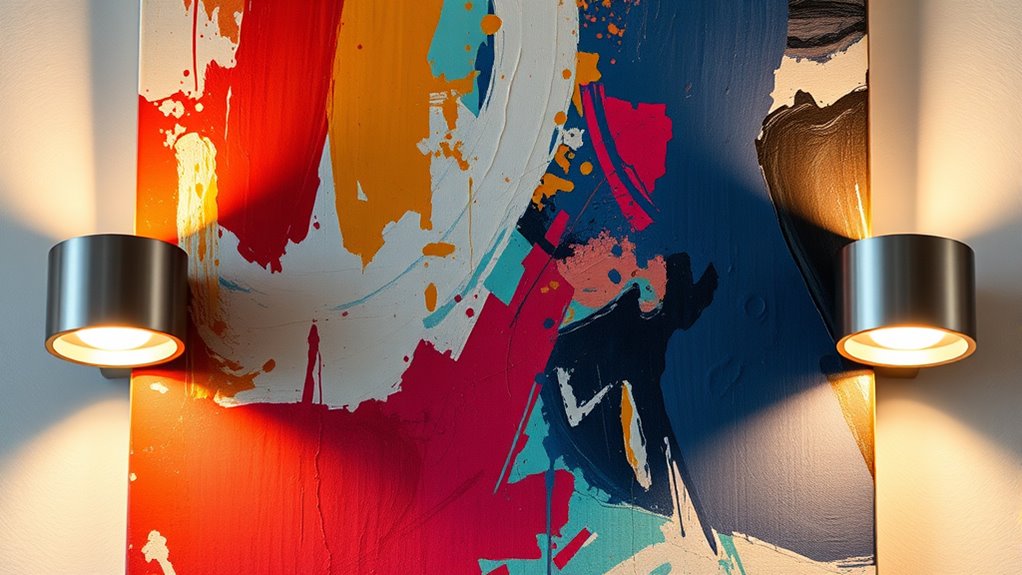
Proper sconce placement around artwork can dramatically enhance its visual impact and create a balanced, inviting atmosphere. When you’re contemplating how to illuminate your art, understanding effective lighting techniques is essential. The right placement of wall sconces not only highlights the piece but also ensures the light complements the artwork without causing glare or shadows. To achieve this, you should think about the wall sconce styles that best suit your space and the artwork itself. Whether you prefer sleek modern designs or more ornate vintage styles, choosing sconces that harmonize with your decor helps create a cohesive look.
Proper placement of wall sconces enhances art and creates inviting, balanced atmospheres.
The key to successful sconce placement lies in maintaining appropriate clearances. Placing sconces too close to the artwork can result in uneven lighting or overshadowing, while positioning them too far away diminishes their effect. Typically, you want the sconces to be mounted approximately 60 to 70 inches from the floor, which is a standard height for general lighting. But for artwork, you’ll want to position the sconces so that their light directs downward or upward onto the piece, avoiding direct glare. An effective technique is to align the sconces so that their beams focus on the center of the artwork, creating an even wash of light. This approach ensures the viewer’s eye is naturally drawn to the piece without distraction.
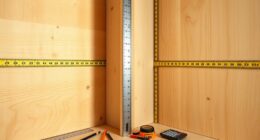
Another aspect to consider is the distance between the sconces and the art. For a balanced look, sconces should be placed roughly 6 to 12 inches away from the edges of the artwork. This spacing allows light to spread evenly over the piece, emphasizing its details and colors. If the artwork is particularly large, you might need to adjust the distance accordingly to avoid uneven lighting. When choosing wall sconce styles, consider options with adjustable arms or dimmable features. These features give you more control over the lighting effect and help you fine-tune the ambiance. Dimmable sconces, in particular, allow you to modify brightness based on the time of day or mood, enhancing the overall display. Additionally, understanding lighting techniques can help you optimize how your sconces illuminate your artwork effectively.
Finally, keep in mind that the lighting technique you employ should aim for balance and harmony. Proper sconce placement around artwork isn’t just about visibility; it’s about creating a visual narrative that enhances the piece’s beauty while complementing the surrounding space. By carefully selecting wall sconce styles and maintaining proper clearances, you can craft a stunning display that highlights your art and elevates your interior design.
Frequently Asked Questions
How Do I Choose the Right Wattage for Sconce Lighting?
You should choose a wattage that’s compatible with your sconce’s bulb compatibility and fits your desired brightness. Usually, check the fixture’s maximum wattage rating to prevent overheating. Using dimmer switches can help you adjust the light level, so pick bulbs that are compatible with dimmers. This way, you get versatile lighting that enhances your space without risking damage or inefficiency.
Can Sconces Be Installed on Textured or Uneven Walls?
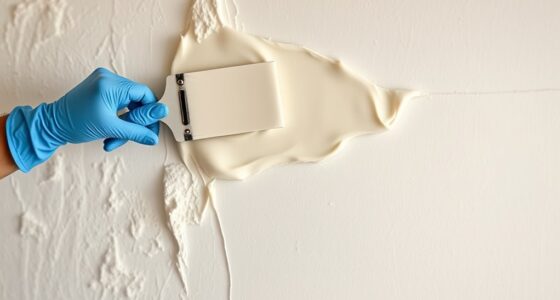
Yes, you can install sconces on textured or uneven walls. To do so, guarantee you use proper installation techniques, like anchoring into studs or using wall anchors designed for textured surfaces. Measure carefully to maintain level placement, and consider using a laser level for accuracy. If needed, smooth out small irregularities with joint compound to create a more even surface, making your sconce installation secure and visually appealing.
What Are the Best Placement Heights for Different Art Sizes?
Did you know that properly placed art enhances a room’s ambiance by up to 50%? For best art spacing and lighting symmetry, hang small pieces about 57-60 inches from the floor, while larger works should be centered at eye level, around 60-65 inches. Adjust sconce height accordingly—aim for about 6-12 inches above the art—to create balanced illumination and a cohesive display.
Are There Specific Styles of Sconces That Complement Certain Art Genres?
You can enhance your art lighting by choosing sconce styles that match your art genres. For example, modern or minimalist sconces work well with contemporary pieces, while ornate or vintage styles complement classic or traditional art. Consider how the sconce design reflects the mood and era of your artwork. Selecting the right sconce styles not only illuminates your art effectively but also adds to the overall aesthetic of your space.
How Do I Ensure Even Lighting Without Glare or Shadows?
You want to hit the nail on the head by avoiding glare and shadows, so guarantee your sconces provide diffuse lighting that spreads evenly. Position them slightly above or to the sides of your artwork to minimize shadows and reflections. Use adjustable fixtures or add dimmers to fine-tune the light. This way, you create a balanced glow that highlights your art without causing eye strain or uneven illumination.
Conclusion
So, now you’re practically an expert in sconce placement—congratulations! Just remember, if your art ever looks a little dim or your sconces start to resemble UFO landing pads, it’s probably time to reconsider those clearances. Who knew that something as simple as lighting could turn your gallery into a game of architectural Twister? Happy decorating—may your art always shine bright, and your sconces stay exactly where you want them, not where your walls have other plans.