
To rotate your art smartly, organize your collection with labeled boxes for easy storage and retrieval. Keep detailed records of each piece, including dates and condition, to track your collection over time. Use labels on stored items to quickly identify what’s inside, making your rotation seamless. Schedule regular updates to display new artwork and protect your pieces during handling. Continue exploring these strategies to make your art rotation efficient and enjoyable.
Key Takeaways
- Use labeled boxes to organize stored artwork by date, theme, or artist for easy retrieval during rotation.
- Maintain detailed records of each piece’s location, condition, and display history to streamline the rotation process.
- Schedule regular rotation intervals and update records accordingly to keep displays fresh and organized.
- Incorporate labels on displayed art to provide context and prevent misplacement during changes.
- Store non-displayed art in systematic containers, noting their details in records for efficient management and preservation.
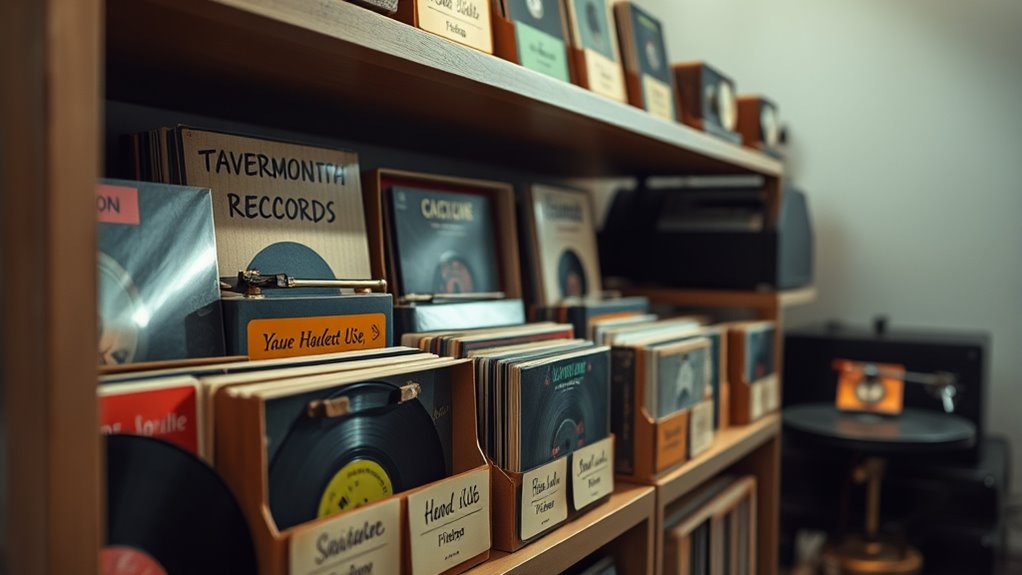
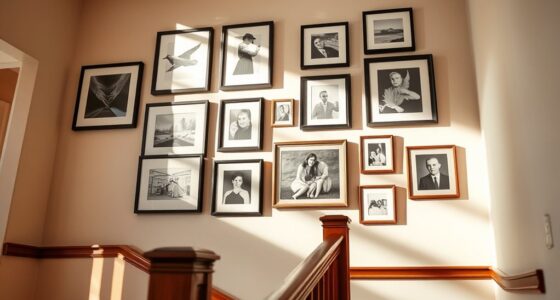
Have you ever wondered how to keep your art display fresh and engaging without overwhelming your space? The secret lies in smart rotation—using thoughtful display techniques combined with effective art preservation strategies. When you rotate artwork regularly, you prevent your space from feeling cluttered and ensure each piece gets its moment in the spotlight. This practice also encourages you to organize your collection systematically, making it easier to manage which pieces are on display and which are stored away. This approach not only keeps your environment dynamic but also helps protect your art over time, maintaining its quality and vibrancy.
Frequently Asked Questions
How Can I Prevent Labels From Peeling Over Time?
To prevent labels from peeling over time, you should use label adhesives suited for your storage conditions and make certain your storage area has low humidity. High humidity can weaken adhesives, causing labels to peel. Apply labels smoothly, avoiding air bubbles, and consider using waterproof or laminate labels for extra durability. Regularly check and reapply labels as needed, especially if your storage environment experiences fluctuations in humidity.
What Are the Best Storage Conditions for Rotating Art?
Imagine you’re storing your favorite artwork and want it to last. You should keep your art in a cool, climate-controlled environment, avoiding extreme temperatures and humidity. Use archival-quality storage containers to prevent deterioration. For example, a collector maintained her pieces in a room with stable temperature and humidity, ensuring her art stayed vibrant over years. Proper climate control and archival-quality materials are key to preserving your rotating art.
How Often Should I Update or Rotate Artwork?
You should update or rotate artwork every 3 to 6 months to guarantee proper art preservation. Regularly changing displays keeps your collection fresh and prevents damage from prolonged exposure to light and air. Use display techniques like framing with UV-protective glass or shadow boxes to safeguard your art. Rotating pieces frequently also helps you appreciate different works and maintain the quality of your collection over time.
Are There Eco-Friendly Materials for Art Storage Boxes?
Did you know that over 300 million tons of plastic are produced annually, highlighting the need for eco-friendly options? You can choose sustainable packaging or biodegradable containers for art storage, reducing environmental impact. These materials are made from natural, renewable resources and break down more quickly than traditional plastic, helping you protect your artwork and the planet at the same time. Switching to eco-friendly storage shows your commitment to sustainability.
Can Digital Records Replace Physical Art Rotation?
Digital records can definitely replace physical art rotation by offering a convenient way to preserve and showcase your artwork. You can use digital archiving to organize high-quality images and create virtual galleries, making it easy to enjoy and share your art without clutter. While physical rotation adds tangible value, embracing digital solutions helps you save space, protect delicate pieces, and keep your collection accessible in a modern, eco-friendly way.
Conclusion
Imagine your space as a gallery where each box, label, and record takes its turn in the spotlight. By rotating your art smartly, you create a vibrant tapestry that constantly refreshes and surprises you. Picture the colorful labels flipping like pages in a storybook, while records spin stories of their own. With each rotation, your collection breathes new life, transforming your home into a dynamic, ever-changing masterpiece you proudly showcase.