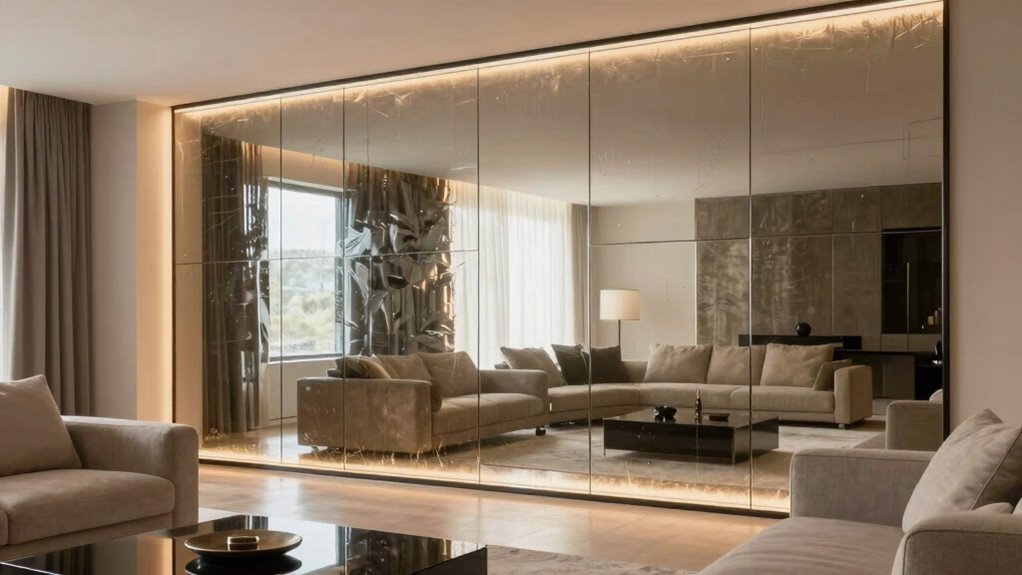

To add depth with reflective wall treatments, strategically choose mirrors or glossy surfaces that bounce light and create the illusion of space. Place them where natural or artificial light can hit, brightening dark corners and expanding your room’s feel. Use lighting effects like sconces or track lighting to enhance reflections and add dimension. Proper placement and material selection are key to avoiding glare while maximizing depth. Keep exploring to discover more tips for transforming your space with reflective design.

Get furniture and decor delivered free — and shop member deals
- Fast, free delivery on millions of items
- Access to Prime Big Deal Days deals on October 6–7
- Prime Video, Amazon Music and more included
Key Takeaways
- Use large mirrors strategically placed to reflect natural light and create a sense of expanded space.
- Incorporate glossy or reflective wall panels to enhance light bouncing and add visual depth.
- Position lighting to highlight reflective surfaces, emphasizing their depth and creating dynamic visual effects.
- Combine different reflective materials to add layers and dimension to the wall treatments.
- Balance reflective elements with other design features to prevent glare and maintain a spacious, comfortable environment.
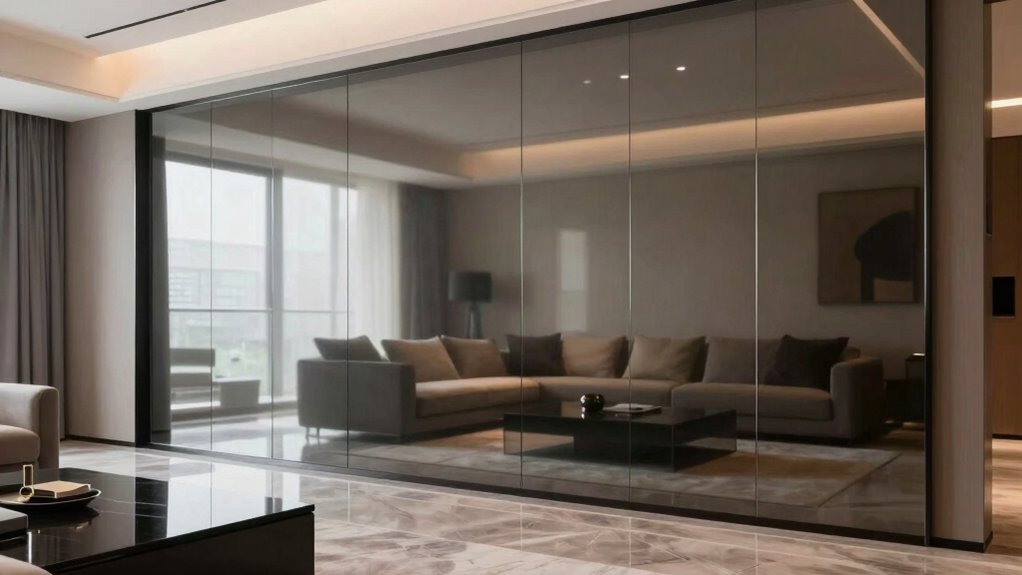
Have you ever wondered how to make a room feel brighter and more spacious? Reflective wall treatments are a powerful way to achieve that. They harness lighting effects and visual illusions to transform your space without adding clutter. When you incorporate reflective surfaces, you create an environment that appears larger and more open, even in smaller rooms. The key is understanding how these treatments interact with light and space to produce the desired effect.
Reflective wall treatments enhance space and light, making rooms feel larger and more open without adding clutter.
Lighting effects play an essential role in maximizing the impact of reflective wall treatments. By strategically placing mirrors or glossy panels, you bounce existing light around the room, making it feel more luminous. Natural light, in particular, benefits from these surfaces — sunlight entering through windows reflects off the walls, brightening every corner. In rooms with limited natural light, artificial lighting can be used to enhance the reflective qualities. Wall-mounted sconces or track lights directed toward shiny surfaces create highlights that add depth and dimension. This interplay of light and reflection amplifies the sense of space, making even modest rooms feel expansive and airy. Understanding lighting effects is crucial for optimizing these treatments. Additionally, selecting the right reflective materials can further enhance the overall aesthetic and functional benefits of your wall treatments. Using appropriate reflective surfaces can also help control unwanted glare and reflections, ensuring the space remains comfortable and visually appealing.
As an affiliate, we earn on qualifying purchases.
Frequently Asked Questions
How Do Reflective Treatments Impact Room Lighting Throughout the Day?
Reflective treatments impact your room lighting by amplifying natural light, making the space feel brighter and more open. They enhance light diffusion, spreading light evenly across the room, but can also cause glare if not managed properly. Throughout the day, these treatments reflect varying sunlight levels, so you’ll notice changes in brightness. Proper placement and glare management techniques help you enjoy the benefits without discomfort, creating a balanced, inviting atmosphere.
Are Reflective Wall Treatments Suitable for Small or Dark Rooms?
Reflective wall treatments can work well in small or dark rooms, but you should consider surface durability and cost. They reflect light, making the space appear larger and brighter, but some materials may scratch or dent easily, affecting longevity. Opt for durable, cost-effective options like high-quality mirrors or polished finishes to guarantee the treatment lasts without breaking the bank. Proper maintenance will keep your space looking stylish and open.
What Maintenance Is Required for Reflective Wall Finishes?
To maintain reflective wall finishes, you should follow regular cleaning routines using a soft, damp cloth to avoid scratches. Avoid harsh chemicals that can damage the surface’s durability. Wipe spills immediately to prevent staining, and steer clear of abrasive scrubbers. Proper upkeep keeps the surface shiny and durable over time, ensuring your reflective walls continue to add depth and elegance to your space without losing their luster.
Can Reflective Treatments Be Combined With Other Wall Textures?
Yes, you can combine reflective treatments with other wall textures. For example, imagine a living room where you add textured patterns like stucco or fabric alongside a reflective wall panel. To guarantee harmony, focus on color coordination—matching the hues of both textures to create a cohesive look. This blending adds visual interest and depth, making your space feel dynamic without overwhelming the room’s overall aesthetic.
How Do Reflective Surfaces Affect Privacy in Shared Spaces?
Reflective surfaces can raise privacy concerns in shared spaces because they often create visual transparency, making it easier for others to see inside. They also reflect sound, which can lead to increased noise levels and disrupt privacy. To manage these effects, you might consider using strategic placement or combining reflective treatments with opaque or textured panels, helping to balance aesthetic appeal with privacy and sound control.
As an affiliate, we earn on qualifying purchases.
Conclusion
Reflective wall treatments are like mirrors that bounce light and add a sense of depth, turning your space into an enchanting retreat. By choosing the right finishes and placements, you can create an environment that feels both expansive and inviting. Think of it as adding a splash of sunlight to a cloudy day—it instantly brightens and transforms the room. Embrace reflective walls, and watch your space come alive with depth and dimension.
wall-mounted sconces for accent lighting
As an affiliate, we earn on qualifying purchases.
As an affiliate, we earn on qualifying purchases.
track lighting for reflective surfaces
As an affiliate, we earn on qualifying purchases.
As an affiliate, we earn on qualifying purchases.
Fall Picks
fall essentials
As an affiliate, we earn on qualifying purchases.