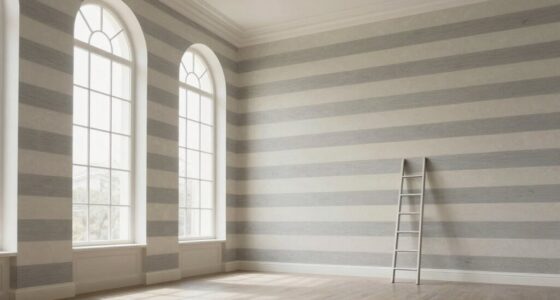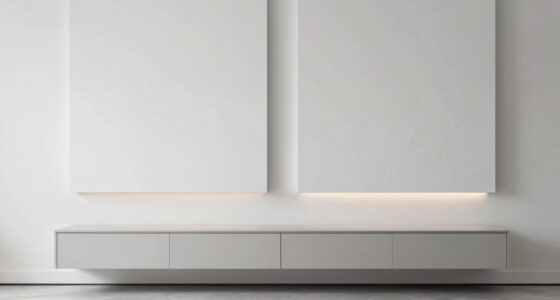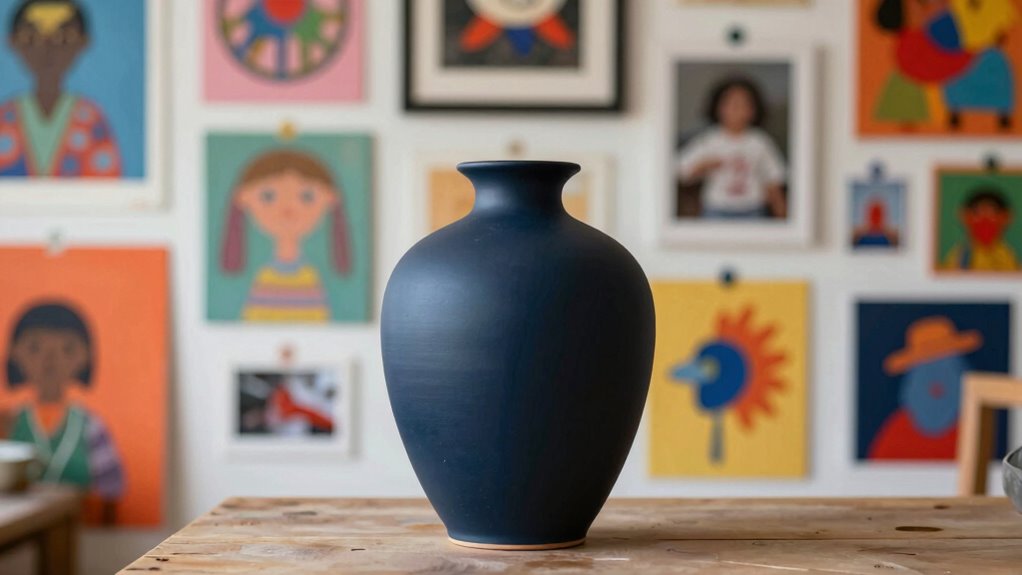
To create a quiet focal point on a busy wall, choose a bold, contrasting color for one standout piece, like artwork or a sculpture, and keep the surrounding decor minimal. Use strategic spacing to give the focal item room to breathe and incorporate lighting to subtly highlight it. Keep the other wall areas neutral to avoid clutter and promote harmony. If you want to learn more about balancing color, decor, and layout, keep exploring these helpful strategies.

Get furniture and decor delivered free with Prime
- Fast, free delivery on millions of items
- Prime Video, Amazon Music and more included
- Member-only deals all year
Key Takeaways
- Choose a bold, contrasting focal color to draw attention without overwhelming the wall.
- Limit decor to one or two large, simple pieces to reduce visual clutter.
- Use ample negative space around the focal point for breathing room and emphasis.
- Incorporate strategic lighting to subtly highlight the focal area.
- Maintain neutral or subdued surrounding tones to enhance contrast and create calm.
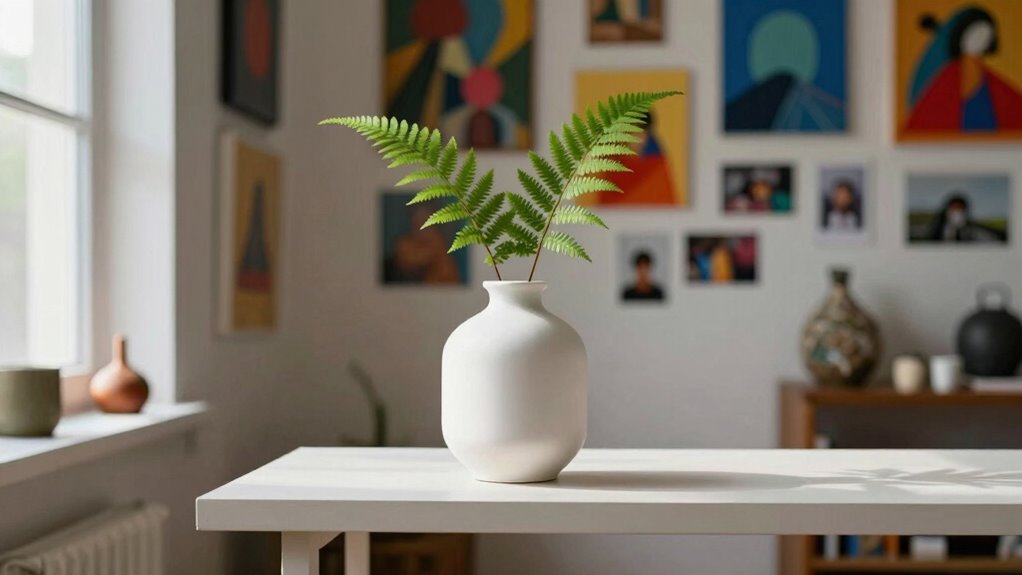
When dealing with a busy wall full of clutter and competing elements, creating a quiet focal point can bring harmony and focus to your space. The key lies in using color contrast and minimal decor to guide the eye and establish a calming centerpiece. First, select a single, striking color that contrasts sharply with the surrounding hues. If your wall is filled with various colors and patterns, opt for a bold, solid hue for your focal point—think deep navy, crisp white, or a vibrant accent color—that immediately draws attention without overwhelming the room. This contrast helps create visual interest while maintaining a sense of simplicity.
Create a calm focal point with bold color contrast and minimal decor for a harmonious, clutter-free space.
Next, keep your decor minimal. Instead of filling the space with numerous frames, art pieces, or decorative objects, choose just one or two carefully curated items. For example, a large, single piece of artwork with clean lines or an understated sculpture can serve as the anchor. Avoid cluttering the area with smaller, competing objects that dilute the focal point’s impact. Minimal decor not only emphasizes the chosen feature but also makes the space feel more open and less chaotic. Remember, less is often more when establishing a quiet focal point on a busy wall.
Furthermore, consider the framing and spacing around your focal feature. Use negative space intentionally; leave plenty of room around your artwork or decorative piece to let it breathe. This technique enhances the sense of calm and prevents the wall from feeling overcrowded. If you’re hanging art, ensure it’s positioned at eye level for maximum impact and ease of viewing. The surrounding wall area should be kept simple—perhaps painted in a neutral tone or a subtle hue—so the contrast with your focal point truly stands out. Additionally, incorporating visual balance can help further enhance the overall harmony of the space, creating a more cohesive and balanced visual aesthetic. Incorporating color contrast effectively directs attention and establishes a focal point that is both eye-catching and serene.
Adding subtle touches like lighting techniques can also significantly impact how your focal point is perceived, highlighting it without competing for attention. Paying attention to design principles, such as symmetry and proportion, can make your focal point even more effective. For example, installing a spotlight or using wall washers can draw attention subtly and elegantly to your chosen feature without overwhelming the space. In essence, creating a quiet focal point on a busy wall involves balancing stark color contrast with minimal decor and strategic spacing. By doing so, you transform a cluttered, overwhelming space into a calming visual anchor that grounds your room and enhances its overall harmony. This approach guarantees your eye is naturally drawn to a single, peaceful spot, making your space feel more balanced and inviting.
As an affiliate, we earn on qualifying purchases.
Frequently Asked Questions
What Are the Best Colors for a Calming Focal Point?
Soft, muted colors like pale blues, gentle greens, or warm neutrals work best for a calming focal point. According to color psychology, these hues promote relaxation and tranquility. Use them to create visual balance, preventing the wall from feeling overwhelming. By choosing calming colors, you guide the eye naturally, establishing a peaceful focus amid busyness, and transforming your space into a serene retreat.
How Do I Choose the Right Size for the Focal Piece?
You should choose a focal piece that’s proportionate to your wall, typically about one-third to two-thirds of the wall’s width. Use color coordination to guarantee it complements surrounding elements, and select a piece with interesting texture contrast to draw attention without overwhelming the space. Avoid overly small or large pieces; instead, aim for a balanced size that stands out but still harmonizes with the busy wall background.
Can Plants Be Used as Focal Points on Busy Walls?
Yes, plants can be stunning focal points on busy walls, transforming chaos into calm like a refreshing change. Indoor greenery adds life and texture, making wall art arrangements feel more natural and inviting. Use large, bold plants or a cluster of smaller ones to draw attention and create visual interest. Position them thoughtfully, letting their vibrant leaves serve as a peaceful oasis amid busy decor.
How Do Lighting Options Affect the Focal Point?
Lighting options greatly influence your focal point by using lighting techniques to highlight specific areas. You can use spotlights or accent lighting to draw attention and create focal point accentuations, making your chosen element stand out against a busy wall. Proper lighting not only enhances visual interest but also guides the eye naturally, transforming a cluttered background into a calm, focused area that captures attention effortlessly.
Is It Better to Use Symmetry or Asymmetry in Design?
You should lean towards symmetry for a calming, balanced look, as studies show balanced designs can increase feelings of stability. Symmetry creates visual harmony, making your focal point stand out without overwhelming the space. However, if you want visual interest and energy, asymmetry works well. Use balance techniques to carefully craft your design, ensuring your focal point remains clear and soothing amidst busy surroundings.
As an affiliate, we earn on qualifying purchases.
Conclusion
By choosing a calm color, selecting a simple piece of art, and maintaining clean lines, you create a quiet focal point that stands out amidst busy walls. These elements work together, balancing boldness with serenity, drawing the eye without overwhelming the space. With a little thought and effort, you’ll craft a focal point that invites calm, provides contrast, and transforms your wall into a peaceful retreat amid the chaos.
As an affiliate, we earn on qualifying purchases.
picture lighting for focal point
As an affiliate, we earn on qualifying purchases.
As an affiliate, we earn on qualifying purchases.
Halloween Picks
halloween
As an affiliate, we earn on qualifying purchases.