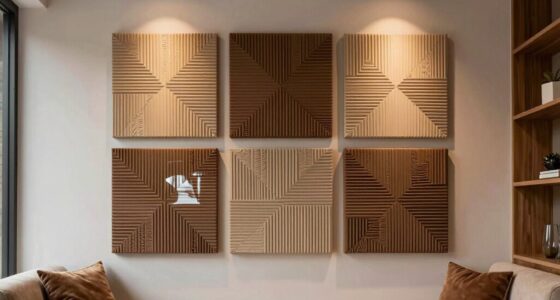
To mix paneling and paint gracefully, choose a cohesive color scheme that complements your room’s palette and use subtle contrast for depth. Balance textures by pairing smooth finishes with textured paneling, and define boundaries with trim or molding for a polished look. Use lighting to highlight the design details and create harmony. By thoughtfully combining these elements, you can achieve a refined and inviting space—explore more tips to perfect your style.

Get furniture and decor delivered free with Prime
- Fast, free delivery on millions of items
- Prime Video, Amazon Music and more included
- Member-only deals all year
Key Takeaways
- Choose a harmonious color scheme with subtle contrast between paneling and walls for a seamless look.
- Match textures and finishes of paint to the paneling’s surface for visual cohesion.
- Use trim or molding to clearly define boundaries and create intentional transitions.
- Incorporate darker shades for paneling with lighter wall colors to maintain balance and openness.
- Enhance the interplay of finishes with strategic lighting to highlight textures and colors.

Ever wondered how to combine paneling and paint in a room without it feeling cluttered or disjointed? The key lies in understanding how to balance the visual elements so they work harmoniously instead of competing for attention. When you’re mixing these two finishes, pay close attention to color contrast and texture balance. These elements will help create a cohesive look that feels intentional and polished.
Start by choosing a dominant color scheme. Typically, you want the paneling to serve as a feature or focal point, so pick a color that complements the overall room palette. For instance, if your walls are painted a soft, neutral tone, consider painting the paneling a richer or darker shade within the same color family. This creates subtle color contrast, giving depth without overwhelming the space. Avoid stark contrasts unless you’re aiming for a bold, modern vibe—more often, gentle contrast makes the shift between painted walls and paneling seamless.
Texture balance is equally important. Paneling naturally introduces texture, so you want your paint finish to either enhance or complement this. If your paneling has a smooth, glossy finish, opt for a matte or satin paint on the walls to avoid visual competition. Conversely, if the paneling has a rougher or more textured surface, a semi-gloss or gloss paint can add a sleek contrast that highlights the difference in textures. The goal is to prevent the room from feeling too busy or overly uniform—by alternating textures, you add visual interest without clutter.
When it comes to placement, think about how the paneling shift into painted walls. You might paint the upper portion of the walls in one color, with paneling below in another, or vice versa. To keep the design cohesive, use trim or molding to create a clear boundary, which also helps to define the space and prevent the shift from feeling abrupt. If you prefer a more integrated look, paint the paneling in a darker shade than the walls but keep the wall color light and airy. This approach maintains balance and prevents the room from feeling heavy or closed in. Additionally, paying attention to color contrast and how it influences the overall ambiance can help you achieve a more harmonious design. Incorporating visual harmony by thoughtfully balancing these elements ensures a cohesive, stylish space.
Finally, don’t forget about lighting. Proper illumination can enhance the contrast and textures you’ve chosen, making the interplay between paneling and paint more dynamic. Use both natural and artificial light sources to highlight the different finishes and colors, ensuring the room feels balanced and inviting. When you pay attention to color contrast, texture balance, and lighting, you’ll find that mixing paneling and paint not only becomes easier but also results in a thoughtfully designed space that looks effortlessly stylish.
paneling and paint color coordination
As an affiliate, we earn on qualifying purchases.
As an affiliate, we earn on qualifying purchases.
Frequently Asked Questions
Can I Use Different Paint Finishes on Paneling and Walls?
Yes, you can use different paint finishes on paneling and walls. Opt for textured finishes on paneling to add depth and contrast, while choosing a matte or eggshell finish for the walls to keep the look subtle. Focus on color coordination to make sure the finishes complement each other, creating a cohesive and stylish space. Mixing finishes adds visual interest without overwhelming the room.
How Do I Prevent Paneling From Looking Outdated?
Think of your room as a timeless garden—vintage charm blooms when you update paneling with fresh paint and modern contrast. To prevent it from looking outdated, choose neutral or trendy colors that highlight the panel’s details rather than overshadow them. Add contemporary accents, like sleek hardware or modern artwork, to keep the space lively. Regularly refresh the paint, and your paneling stays stylish, bridging classic appeal with current design trends.
What Are the Best Color Combinations for Paneling and Walls?
Choose color combinations that create striking yet harmonious contrasts, like soft neutrals with bold accent colors. Incorporate decorative accents to add visual interest, and use texture contrast—pairing smooth painted walls with textured paneling—to enhance depth. Light-colored walls with darker paneling work well, while accentuating architectural features. These choices balance traditional and modern styles, helping your room feel cohesive, stylish, and inviting.
Should I Prime the Paneling Before Painting?
Think of your paneling as a blank canvas waiting to embrace color. Yes, you should prime the paneling before painting—it’s like giving it a fresh coat of armor. Proper panel prep guarantees paint adhesion, making your finish smooth and long-lasting. Without primer, the paint might slip and peel, ruining your masterpiece. So, take the time to prime — it’s the secret to a flawless, durable finish.
How Do I Maintain the Look Over Time?
To maintain your room’s look over time, regularly clean the walls with gentle wall cleaning to prevent dust and grime buildup. For paint touch-ups, keep leftover paint on hand, and carefully match the color to seamlessly blend any repairs. Avoid harsh scrubbing on the paneling, and touch up paint as needed to keep the shift between painted walls and paneling looking fresh and cohesive.
molding and trim for wall transitions
As an affiliate, we earn on qualifying purchases.
As an affiliate, we earn on qualifying purchases.
Conclusion
By blending paneling and paint thoughtfully, you can create a stylish and cohesive space that feels both classic and fresh. Remember to balance the two elements so they complement rather than compete with each other. Are you ready to experiment with different textures and colors to find your perfect harmony? With a little creativity and confidence, you’ll turn your room into a stunning showcase of design. So, why not start today and make your vision come to life?
As an affiliate, we earn on qualifying purchases.
paint for textured wall paneling
As an affiliate, we earn on qualifying purchases.
As an affiliate, we earn on qualifying purchases.
Halloween Picks
halloween
As an affiliate, we earn on qualifying purchases.