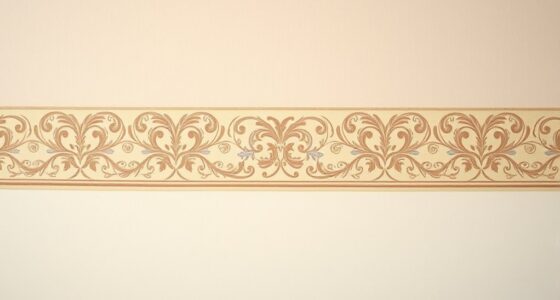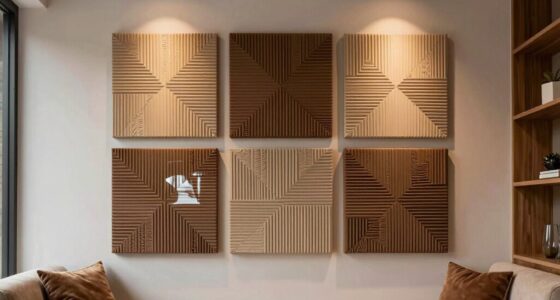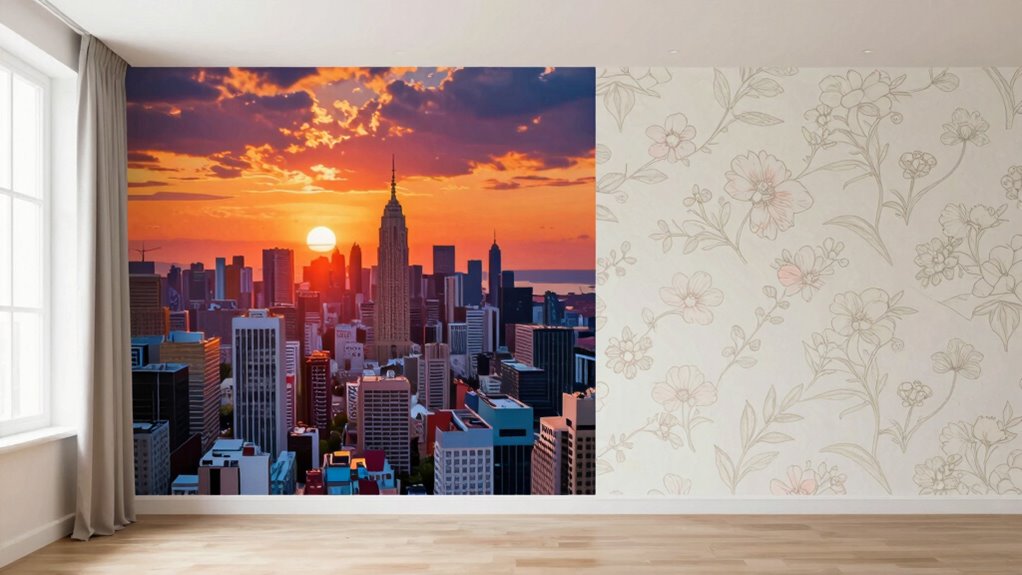

When choosing between a wall mural and repeating wallpaper, consider the impact you want: murals create bold, immersive focal points perfect for making a statement, while wallpaper adds subtle texture and pattern for elegance and versatility. Murals are ideal for a dramatic look and temporary updates, whereas wallpaper works well for covering entire walls with durable, textured designs. Think about your style, room function, and how permanent you want the look to be—more details ahead can help you decide.

Get furniture and decor delivered free — and shop member deals
- Fast, free delivery on millions of items
- Access to Prime Big Deal Days deals on October 6–7
- Prime Video, Amazon Music and more included
Key Takeaways
- Consider the desired visual impact: murals create bold focal points, while wallpaper offers subtle texture and pattern.
- Assess the room’s style and mood: murals suit dramatic, immersive spaces; wallpaper complements elegant, understated decor.
- Evaluate installation and maintenance: murals are easier to replace; wallpaper can cover entire walls with durable, removable options.
- Think about surface texture and finish: textured wallpaper adds depth, while murals typically provide a smooth, crisp visual.
- Determine the longevity and flexibility needed: murals are more temporary; wallpaper allows for long-term, versatile decor.
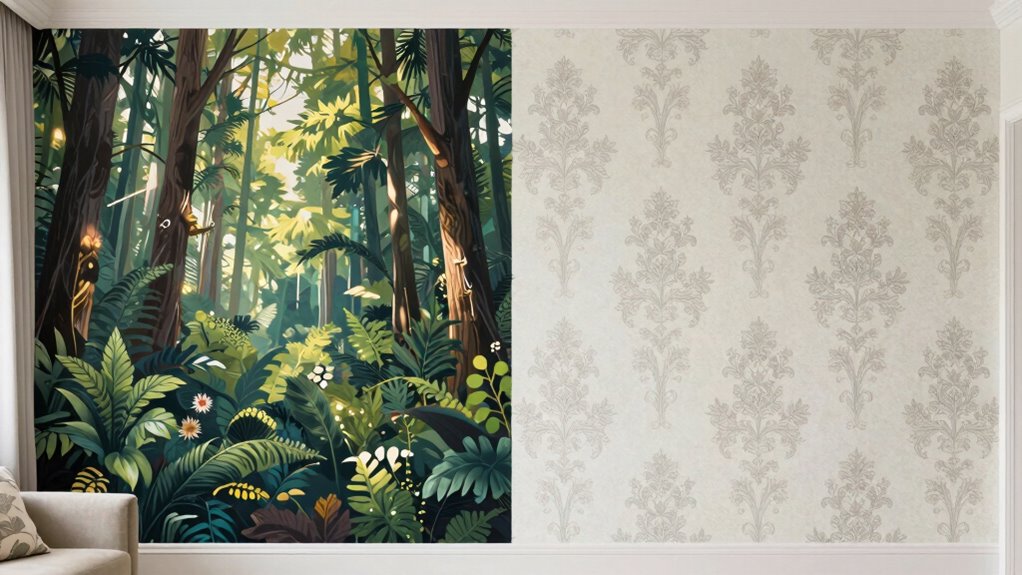
Are you trying to decide whether a wall mural or wallpaper is the right choice for your space? The decision largely depends on the effect you want to achieve and how much personality you want your walls to express. Wall murals offer a bold, eye-catching statement, often featuring large-scale artwork or panoramic scenes. They’re perfect if you’re aiming to create a focal point or showcase a specific decorative style, whether it’s modern, rustic, or eclectic. On the other hand, wallpaper provides a more subtle, repetitive pattern that can add texture and depth without overwhelming the room. It’s a versatile option that works well with many decorative styles and allows for more understated sophistication.
Choose a mural for bold focal points or wallpaper for subtle, textured elegance.
When choosing between the two, consider the surface textures each option can bring to your space. Wall murals typically have a smooth, seamless finish, which makes them ideal for high-impact visuals that need to look crisp and clear. They’re usually printed on materials that can handle detailed imagery, making them stand out in any room. Wallpaper, however, comes in a variety of surface textures—some have a matte or silk finish, while others feature textured patterns like grasscloth, embossed designs, or even fabric-backed options. These textures can add depth and tactile interest, giving your walls a layered, dynamic appearance that enhances your overall decorative style. Additionally, the surface texture of your chosen wall covering can influence how light interacts with your walls, further affecting the room’s ambiance. For example, textured wallpaper can soften the light and create a cozy atmosphere. Moreover, considering the installation process can help you determine which option is more practical for your space and DIY comfort level. An understanding of the durability of each type can also guide you toward a long-lasting choice that suits your lifestyle.
Your decision should also reflect how much visual change you want and how permanent you’re willing to be. Wall murals are often more temporary and easier to replace if you want a fresh look later. They’re also more suited for feature walls or specific areas where you want to make a statement. Wallpaper can cover entire rooms, and with modern adhesives and removals, it’s designed to be durable yet removable, especially if you pick peel-and-stick options. Think about the atmosphere you want to create—if your goal is a dramatic, immersive environment, a mural might be the answer. But if you prefer a subtle, repeated pattern that adds texture to the space without dominating it, wallpaper is a better fit.
Ultimately, your choice hinges on your decorative style, the surface textures you prefer, and the mood you want your room to convey. Whether you opt for a striking mural or textured wallpaper, both can transform your space beautifully when aligned with your personal taste and interior goals. Considering the visual impact of each option can help you make a more informed decision that complements your overall interior design.
large wall mural for living room
As an affiliate, we earn on qualifying purchases.
As an affiliate, we earn on qualifying purchases.
Frequently Asked Questions
Which Option Is More Cost-Effective Overall?
A repeating wallpaper is generally more cost-effective overall because it offers greater design versatility and pattern variety at a lower price point. You can easily refresh your space by swapping out patterns or updating sections, making it a budget-friendly choice. Wall murals tend to be pricier due to custom printing and installation, but they create a bold statement. If budget matters most, a repeating wallpaper provides more options for your money.
How Durable Is Each Choice Over Time?
The proof is in the pudding—both options can last if you choose wisely. Wall murals with textured finishes offer durability with added artistic customization, resisting wear better over time. Repeating wallpaper, especially with high-quality materials, also holds up well, but may need more upkeep. Your choice depends on your style and maintenance willingness, but either can stand the test of time if properly cared for.
Can I Install Either Myself?
You can install both a wall mural and repeating wallpaper yourself, but your choice depends on your skill level and desired design flexibility. Wall murals often require careful alignment and more precise installation, making them more complex. Repeating wallpaper tends to be easier, especially with peel-and-stick options, offering greater design flexibility for DIY projects. If you’re comfortable with basic tools and patience, you can successfully install either, but expect more complexity with murals.
Which Is Easier to Remove or Replace?
If you want easier removal or replacement, a repeating wallpaper is generally simpler. For example, a homeowner replaced their wallpaper easily because it was less adhesive-intensive than a wall mural, which often involves more complex installation and removal due to its size and adhesive strength. Repeating wallpaper offers more design flexibility, and its thinner wall texture makes it quicker to peel off. Murals may require careful removal to avoid wall damage.
Do They Affect Room Acoustics?
Wall murals and repeating wallpaper can somewhat influence room acoustics, but their impact is minimal. If you want better sound absorption and noise reduction, opt for textured or fabric-backed options, as they help dampen sound waves. Smooth finishes, like many murals and wallpapers, reflect sound rather than absorb it, so they won’t considerably improve acoustics. To enhance sound quality, consider adding soft furnishings or acoustic panels instead.
As an affiliate, we earn on qualifying purchases.
Conclusion
Ultimately, choosing between a wall mural and wallpaper is like selecting your own adventure—each offers a unique story. Think of a mural as capturing a grand masterpiece, while wallpaper whispers subtle elegance. Your space, like a blank canvas, awaits your personal touch. Trust your instincts, and remember, as with any great art, it’s about what resonates with your soul. So, go ahead—make your walls a reflection of your inner masterpiece.
As an affiliate, we earn on qualifying purchases.
As an affiliate, we earn on qualifying purchases.
Fall Picks
fall essentials
As an affiliate, we earn on qualifying purchases.