
Leaning art on shelves is a stylish and flexible way to display your favorites without the commitment of hanging or drilling. To keep it safe, make certain the shelves are sturdy, add non-slip pads, and use small ledges or objects to secure your artwork. Play with sizes and angles for visual interest while maintaining balance. Want to learn how to perfect your setup and keep it secure? Keep exploring for helpful tips to enhance your shelf display.
Key Takeaways
- Use sturdy shelves and secure artwork with non-slip pads or small ledges to prevent slipping and falling.
- Lean artwork at varying angles for depth while maintaining enough space to avoid clutter.
- Balance visual weight by mixing large and small pieces for an aesthetically pleasing display.
- Regularly check and adjust arrangements to ensure stability and safety over time.
- Incorporate decorative objects like plants or sculptures to add interest without compromising safety.
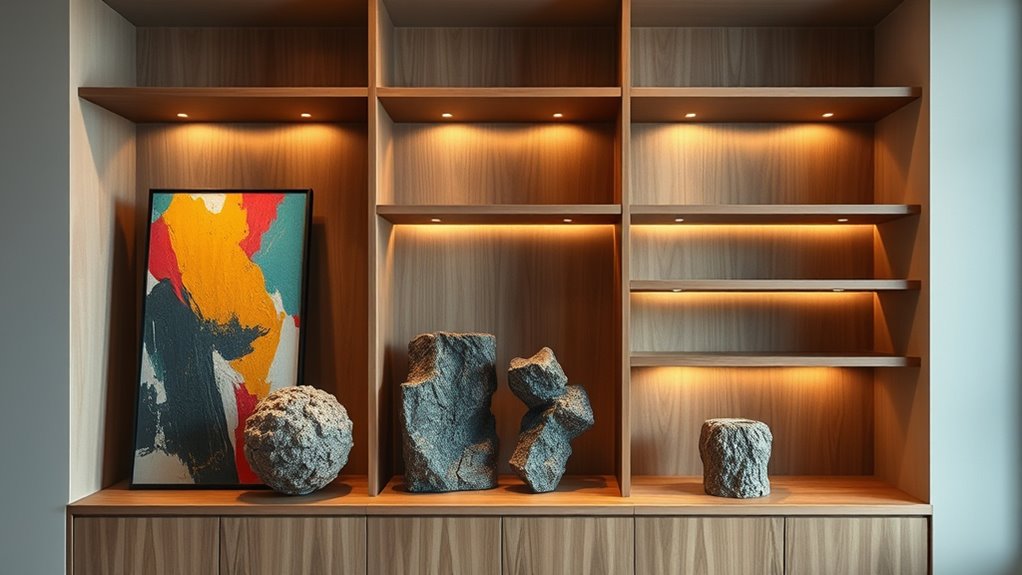
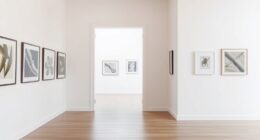
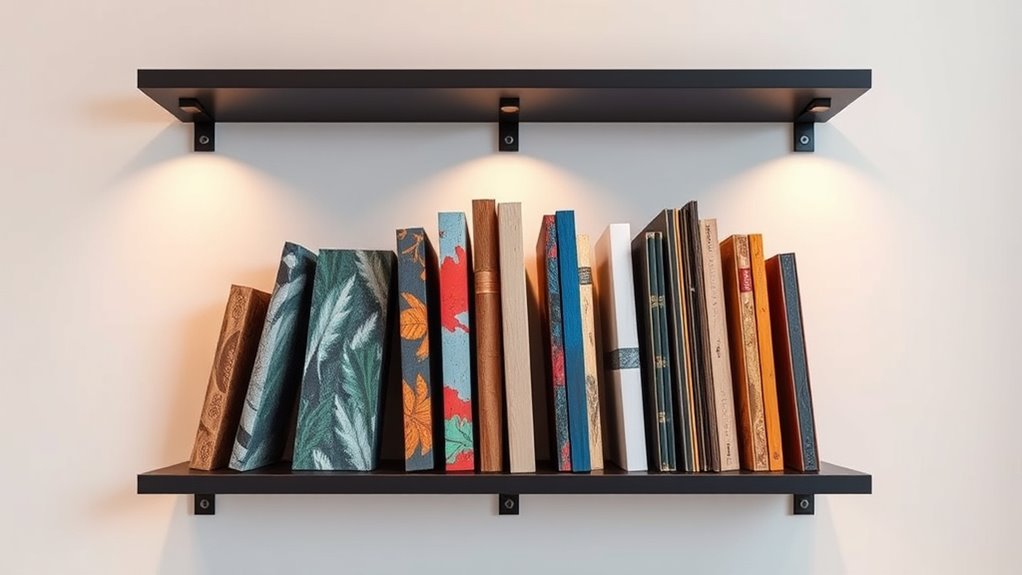
Leaning art on shelves offers a simple yet stylish way to display your favorite pieces without the commitment of hanging them. This method allows you to create dynamic gallery arrangements that can easily be swapped out or repositioned as your tastes evolve. Instead of drilling holes or dealing with hooks, you simply lean your artwork against the wall, which adds a relaxed, curated feel to your space. This approach works particularly well in living rooms, bedrooms, or even offices, where you want to showcase a collection without making permanent changes. When it comes to shelf aesthetics, leaning art contributes a layered, textured look that enhances your overall decor. It allows you to play with different sizes, frames, and orientations, giving your shelves a lively and inviting vibe. Incorporating shelf stability considerations ensures your display remains safe and secure over time. To make the most of leaning art on shelves, consider the arrangement carefully. You want your gallery arrangements to feel intentional rather than cluttered. Start by selecting a few key pieces that resonate with your style, then arrange them in a way that balances visual weight. For example, pair larger, bold artwork with smaller, more delicate pieces. Lean them at varying angles to create depth, but avoid overcrowding. Keep enough space between each piece so that they stand out individually, yet feel cohesive as a group. To enhance shelf aesthetics, incorporate decorative objects like plants, books, or sculptures among your art. This mix adds contrast and prevents the display from looking too uniform or staged. Stability is vital when leaning art on shelves. Make sure your shelves are sturdy enough to support the weight of frames, especially if you plan on using larger or heavier pieces. You might also want to add non-slip pads or felt protectors on the bottom of the frames to prevent slipping or scratching the shelf surface. If you’re worried about accidental knocks or falls, consider leaning your artwork against a small ledge or using a few strategically placed books or decorative objects to keep everything securely in place. Remember, leaning art isn’t just about aesthetics; it’s about safety too. Be mindful of how the arrangement might shift over time, especially in high-traffic areas, and adjust accordingly to maintain both style and security. Ultimately, leaning art on shelves offers a flexible, low-commitment way to personalize your space. It invites you to experiment with gallery arrangements and shelf aesthetics without the permanence of hanging. With a little planning, your shelves can become a curated showcase that reflects your unique style—easy to update, visually appealing, and perfectly suited to your lifestyle.
Frequently Asked Questions
How Do I Prevent My Art From Slipping off the Shelves?
To prevent your art from slipping off shelves, you should focus on shelf stability and proper art display techniques. Use non-slip pads or rubber bumpers behind your artwork to increase grip and reduce movement. Secure larger pieces with adhesive museum putty or picture-hanging strips designed for shelves. Make sure your shelves are sturdy and properly anchored. Regularly check the stability of your display to keep your art safe and stylish.
What Types of Shelving Are Best for Leaning Art?
A picture is worth a thousand words, so choose the right shelves. Opt for sturdy, floating or ledge shelves designed for art display, and guarantee they’re well-secured with wall anchors. Incorporate gallery lighting to highlight your pieces and prevent slipping. These shelves provide a stable surface for leaning art, helping you showcase your collection safely and stylishly. Remember, a solid foundation makes all the difference.
Can Leaning Art Damage the Wall or Shelf Surface?
Leaning art can cause wall damage or scuff your shelf surface if not done carefully. You might leave marks or scratches, especially if the art shifts or is made of heavy materials. To prevent this, use non-slip pads or framer’s tape to keep pieces stable. Regularly check the art’s position, and avoid leaning heavy pieces on delicate or poorly supported shelves to protect both your wall and shelf surface.
How Often Should I Reposition My Leaning Artwork?
You should reposition your leaning artwork every few months to keep your display fresh and maintain shelf organization. Regularly changing art helps prevent damage to walls or shelves from prolonged pressure or shifting. Use art display tips like adjusting angles or adding non-slip pads to keep pieces secure. Repositioning not only refreshes your space but also guarantees your art remains safe and visually appealing, enhancing your overall decor.
What Safety Measures Are Recommended for Heavy or Large Pieces?
Think of your heavy or large artwork as a mighty ship that needs a sturdy anchor. To guarantee art stability, use wall anchors and anti-slip pads to prevent slipping or falling. Distribute weight evenly across the shelf and avoid leaning it at dangerous angles. Securing the piece with picture-hanging strips or brackets adds extra safety. These measures keep your art steady, protecting both your space and your cherished pieces.
Conclusion
So, go ahead and lean that art with reckless abandon—because nothing says “safety first” like a towering masterpiece teetering on the edge of chaos. Just picture it: a delicate sculpture balancing on a shelf, ready to release its fury at the slightest tremor. After all, who needs stability when you can enjoy the thrill of imminent disaster? Embrace the risk, and let your shelves be the stage for your daring, if slightly dangerous, decorating adventures.