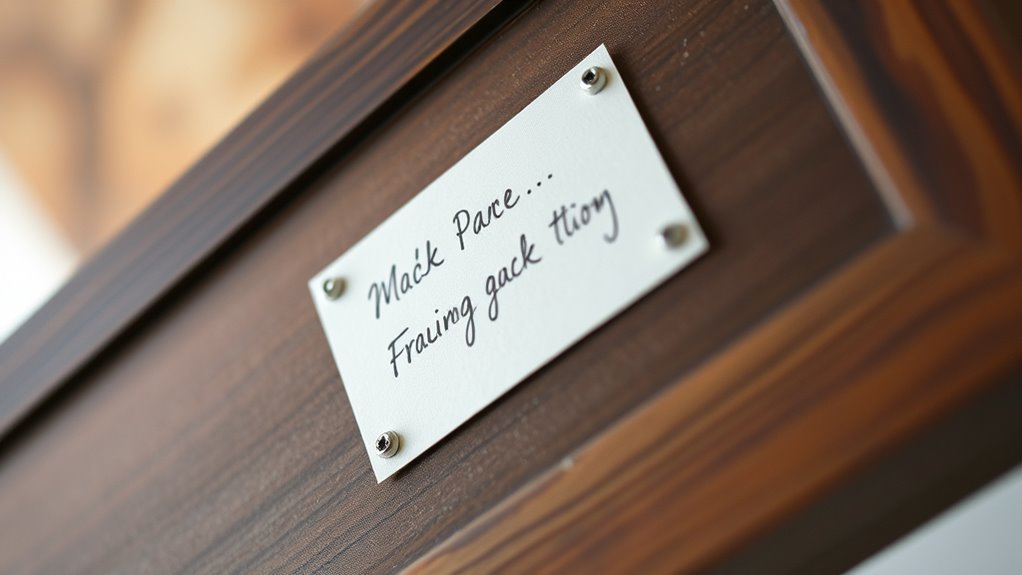
To guarantee effective labeling of the back of frames, use acid-free labels and archival pens for durability. Place labels on flat, clean areas away from joints, positioning them for easy visibility while avoiding handling zones. Consistently use clear, legible fonts or handwriting, and consider digital IDs for large collections. Proper labeling helps with organization and preservation; keep exploring for more tips to make your process even smoother.
Key Takeaways
- Use acid-free labels and archival pens for long-lasting, non-damaging identification.
- Place labels on flat, clean areas away from joints to prevent peeling or damage.
- Include essential info like artist, title, date, and framing details for easy reference.
- Consider digital identifiers such as barcodes for efficient cataloging of large collections.
- Maintain a consistent labeling format to ensure organized, professional management of artwork.
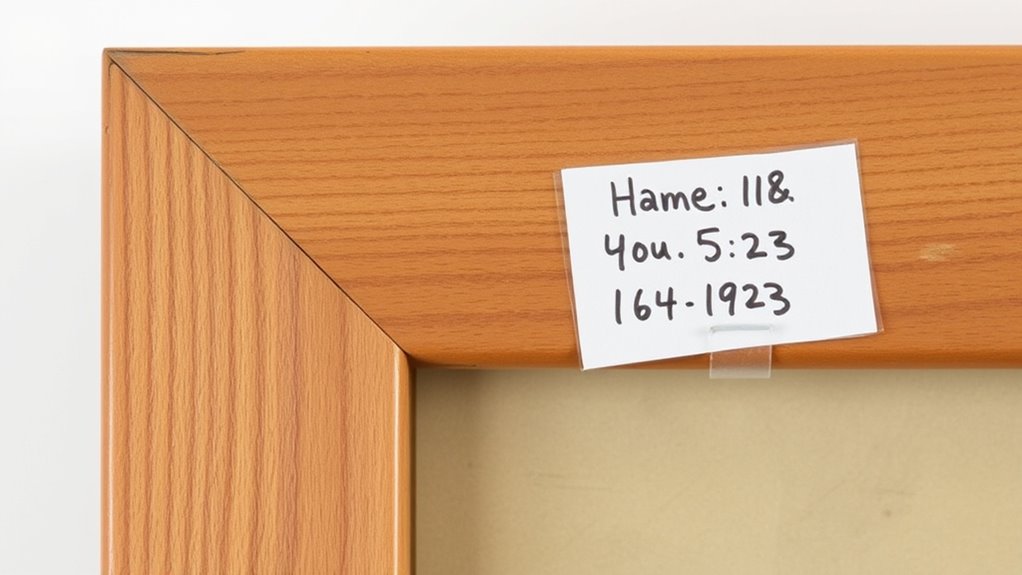
Labeling the back of frames might seem like a small detail, but it’s essential for organizing and identifying your artwork quickly and easily. Proper frame identification helps you keep track of each piece, especially when managing multiple artworks or maintaining a collection. When you label the back of a frame correctly, you streamline the process of cataloging, appraising, or restoring pieces. It also aids future preservation techniques by providing vital information about the artwork’s origin, framing date, or previous treatments, which can influence how you care for it over time.
To guarantee your labels serve their purpose effectively, choose materials that won’t damage the artwork or compromise the frame’s integrity. Acid-free labels, archival pens, or pencil marks are best because they won’t degrade or bleed over time. Avoid adhesives that could seep into the frame or cause deterioration of the backing material. When applying labels, affix them to a clean, flat surface on the back of the frame, ideally away from any joints or areas that might be disturbed during handling. Consistency is key—use the same type of label and format for each piece to maintain a professional and organized system.
In terms of preservation techniques, the way you label can substantially impact long-term care. For example, including information such as the artist’s name, creation date, title, and framing details helps future conservators understand the artwork’s history and any specific needs. Clear, legible handwriting or printed labels ensure information remains accessible over decades. You may also consider adding a barcode or unique identification number if you’re managing a large collection, which can be linked to a digital catalog for easy reference. Moreover, using labeling best practices from reputable sources can help you avoid common mistakes and ensure your system remains reliable over time.
Labeling also assists in safeguarding your artwork. If a piece needs restoration or appraisal, having detailed, accurate information readily available reduces the risk of misidentification. It’s a simple yet fundamental step that complements other preservation techniques, such as climate control and proper handling. By establishing a consistent labeling system, you create an organized, professional approach to artwork management, making future care and identification straightforward.
Ultimately, labeling the back of your frames isn’t just about organization; it’s about protecting your investment and ensuring that each piece can be properly cared for as part of a broader preservation strategy. When done thoughtfully, this small step can save you time, effort, and potential damage down the line.
Affrolling 2 Pack Acid Free Film Protector Storage Box 3 Ring Negative Binder Preservers Portfolio Folder for Artwork Folder for 120 Film and 135 35 mm Negative
Product Packaging: the film negative binder package includes 2 sets of negative protection boxes, providing precise space for…
As an affiliate, we earn on qualifying purchases.
As an affiliate, we earn on qualifying purchases.
Frequently Asked Questions
What Materials Are Best for Durable Frame Back Labels?
For durable frame back labels, you should choose materials with strong adhesive strength, like polypropylene or polyester, to guarantee they stay put over time. These materials resist moisture and peeling, boosting label longevity. Avoid flimsy options like paper, which can tear or peel off easily. By selecting high-quality plastics and adhesives, you’ll ensure your labels remain securely attached and legible, even in challenging environments.
How Do I Remove Labels Without Damaging the Frame?
To remove labels without damaging the frame, start by applying a heat source like a hairdryer to loosen the removable adhesives. Gently peel the label, using your fingers or a plastic scraper, avoiding sharp tools. For stubborn residue, use a mild adhesive remover or rubbing alcohol, and gently rub until it lifts. Always test a small area first to prevent any damage, and work slowly for the best results.
Can Labeling Damage Vintage or Delicate Frames?
Imagine your vintage frame as a delicate, aging tapestry; labeling can indeed cause harm if not done carefully. Strong label adhesives or improper removal during frame restoration might leave sticky residues or peel fragile paint. To protect your treasure, choose gentle adhesives designed for delicate surfaces, and avoid harsh scraping. Proper labeling and removal techniques guarantee your vintage frame stays pristine, preserving its history and beauty for generations to come.
What Is the Ideal Placement for Labels on the Back?
You should place labels on the back of frames near the bottom corner for ideal label placement. This guarantees label visibility without obstructing the artwork or distracting viewers. Keep the label flat to avoid damage and use acid-free adhesives. Positioning it neatly and securely allows easy identification while maintaining the frame’s integrity. This approach balances label visibility with preservation, making it practical and unobtrusive for your framed pieces.
Are There Environmentally Friendly Labeling Options?
Yes, you can choose environmentally friendly labeling options by using recyclable adhesives and biodegradable inks. These options help reduce your environmental impact while ensuring your labels stay in place. Look for adhesives that are easily removable and recyclable, and opt for biodegradable inks that break down naturally. By choosing these eco-friendly materials, you support sustainability and make your framing practices more environmentally responsible.

ARTISTRO Set of 2 Fineliner Pens, Black Micro Pens for Drawing, Waterproof Archival Ink, Ultra Fine Tip Pen for Illustration, Technical Pen, Sketching, Writing, Drawing, Journaling, Pair of Fine Tip
Versatile Micro Pens: The set includes 2 black drawing pens. Each art pen has a nib size of…
As an affiliate, we earn on qualifying purchases.
As an affiliate, we earn on qualifying purchases.
Conclusion
By labeling the back of your frames, you organize with clarity, prevent confusion, and preserve your artwork’s integrity. You streamline your process, simplify future handling, and safeguard your collection. You make your workspace efficient, your memories secure, and your display pristine. Embrace these best practices, and you’ll create a system that’s consistent, clear, and confident—making every frame a reflection of your care, precision, and passion. Your organized future starts with a simple label today.

Custom Barcode Labels – Sequential or Identical Barcode Stickers – 250-100,000 Labels (1.2 x 0.75)
CUSTOM BARCODE LABELS – Select your desired barcode format (CODE 128, CODE 39, EAN-13, EAN-8). Enter your desired…
As an affiliate, we earn on qualifying purchases.
As an affiliate, we earn on qualifying purchases.

DREMISI 2 Pack PET Decorative Stickers Assorted Frame Stickers Self-Adhesive Photo Frame Sticker Vintage Scrapbook Supplies Film Strip Music Player Stickers for Scrapbook Album Journal Planner Diary
Multiple patterns to choose from — These retro frame sticker packs contains totally 30 Pcs stickers, including 2…
As an affiliate, we earn on qualifying purchases.
As an affiliate, we earn on qualifying purchases.