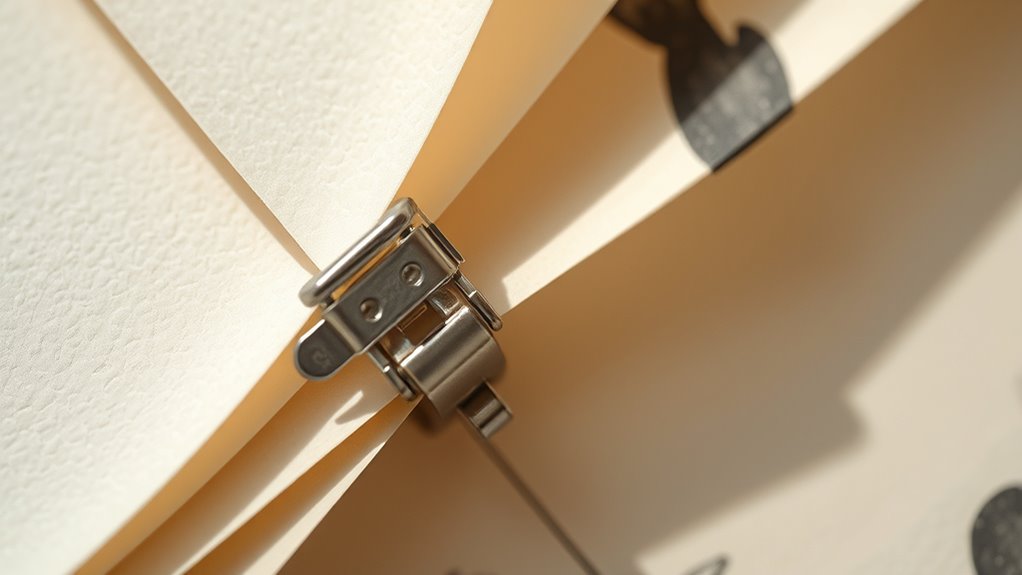

Hinging artwork with Japanese paper offers a gentle, reversible way to mount and support your pieces without causing damage. You’ll use high-quality, acid-free Japanese paper and stable, conservation-grade adhesives to create discreet hinges that allow for easy removal later. This method keeps your artwork safe and preserves its original condition over time, ensuring it can be enjoyed across generations. If you want to learn more about this delicate technique, keep exploring the details.
Key Takeaways
- Use high-quality, acid-free Japanese paper cut into thin strips for discreet hinges.
- Apply conservation-grade, reversible adhesives to attach hinges without damaging the artwork.
- Position hinges carefully to support fragile surfaces and avoid stressing the media.
- Mount artwork onto backing boards or frames without nails, tacks, or permanent fasteners.
- Ensure proper environmental conditions to maintain the long-term stability of the mounted piece.
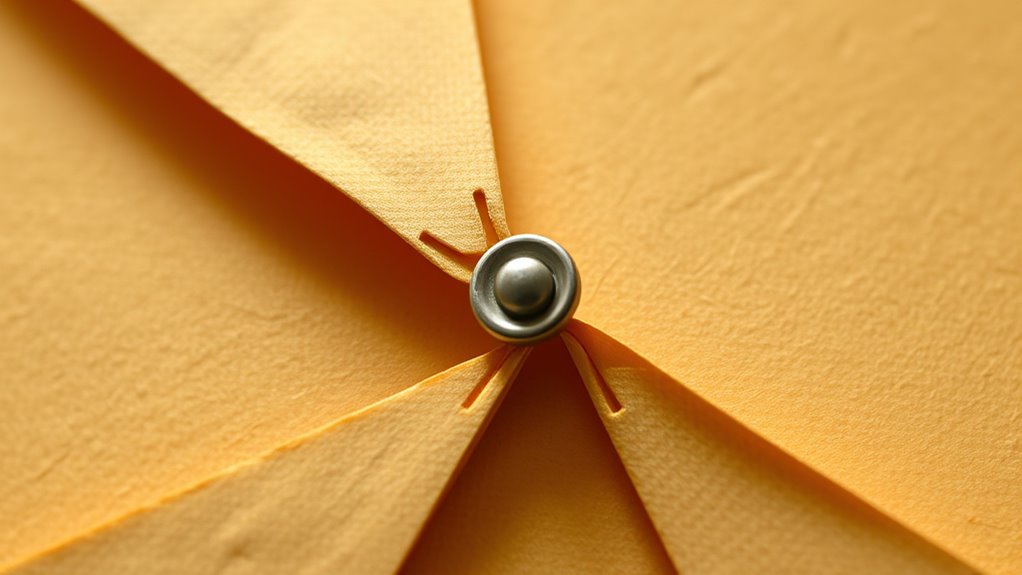
Hinging artwork with Japanese paper offers a delicate and effective way to preserve and display your pieces while maintaining their integrity. This technique is widely appreciated in art conservation because it provides a reversible, non-invasive method of mounting and supporting delicate artworks. When you choose to hinge with Japanese paper, you’re embracing a traditional approach that respects the artwork’s original condition, guaranteeing it can be appreciated for generations to come.
The process begins with understanding the importance of proper restoration techniques. You want to use conservation materials that are both archival and reversible. Japanese paper, known for its strength, flexibility, and thinness, is ideal for this purpose. Its unique fibers and lightweight nature make it suitable for supporting fragile surfaces without adding unnecessary bulk. When applying hinges, you typically use a thin strip of Japanese paper adhered with a conservation-grade adhesive, which is carefully chosen to be stable over time and removable if needed. This guarantees your artwork remains unaltered and that any future conservation efforts can be undertaken without damaging the piece.
Using the right conservation materials is essential. Acid-free, pH-neutral adhesives are necessary because they prevent deterioration over time and avoid harmful chemical reactions. The Japanese paper itself should be of high quality, free from any impurities or acids, to guarantee longevity. When you prepare to hinge your artwork, you should also consider the environment in which the piece will be stored or displayed, as humidity and temperature fluctuations can impact both the paper and the artwork itself. Proper handling and storage are imperative to prevent damage.
Applying hinges with Japanese paper isn’t just about attaching artwork; it’s about respecting its original structure. You should carefully position the hinges to support the piece without stressing the media. The hinges should be discreet, allowing the artwork to be viewed clearly while providing secure support. This method is especially useful for mounting artworks onto backing boards or framing without the need for nails or tacks, which can cause irreversible damage. The reversibility of Japanese paper hinges means you can remove or replace them without harming the artwork, a key advantage in preservation.
Frequently Asked Questions
What Types of Japanese Paper Are Best for Hinging Artwork?
You should choose Japanese papers like kozo or gampi for hinging artwork because they offer excellent durability and archival qualities. These papers are strong yet thin, making them ideal for delicate hinging without damaging the artwork. Their longevity guarantees your piece remains preserved over time. Always look for high-quality, acid-free Japanese paper to maintain the integrity of your artwork and prevent deterioration in the future.
How Long Does Japanese Paper Hinging Typically Last?
Japanese paper hinging can last over 50 years if you use proper preservation techniques and archival quality materials. Its durability depends on factors like humidity, light exposure, and handling. To guarantee longevity, always choose high-quality, acid-free Japanese paper and apply it carefully. Regularly inspect your artwork and avoid direct sunlight or moisture. With proper care, your hinging can keep your artwork secure and preserved for decades.
Can Hinging Damage the Artwork Over Time?
Hinging with Japanese paper can pose conservation concerns if not done correctly, potentially damaging your artwork over time. Using archival quality materials minimizes risks, but improper hinging might cause tearing or stress on the paper. To preserve your piece, guarantee hinges are applied carefully, and consider consulting a conservator for long-term preservation. Proper technique and high-quality supplies are key to avoiding damage and maintaining your artwork’s integrity.
What Tools Are Recommended for Applying Japanese Paper Hinges?
You should use a fine, reversible adhesive like wheat starch or methylcellulose for applying Japanese paper hinges. These adhesives are gentle and preserve the artwork over time. Focus on proper hinge placement techniques—apply the adhesive carefully to avoid excess, and position hinges precisely to prevent damage. Using the right tools, like a small brush or spatula, ensures even application, protecting your artwork while maintaining its integrity during hinging.
Is Japanese Paper Suitable for All Types of Artwork?
Japanese paper is like a versatile brushstroke in your conservation toolkit, but it’s not perfect for every artwork. You should consider your artwork’s material, condition, and your own preferences. While it’s excellent for delicate, archival repairs, some pieces may require different techniques. Always weigh your options and consult conservation techniques to guarantee you preserve each artwork’s integrity. Japanese paper can be a valuable tool, but it’s not a one-size-fits-all solution.
Conclusion
By hinging your artwork with delicate Japanese paper, you breathe new life into each piece, blending tradition with your unique vision. This technique acts as a silent bridge, connecting past craftsmanship with your creative journey. When you embrace this subtle art form, you invite a harmony that elevates your work beyond mere display—transforming it into a timeless dialogue. Remember, sometimes the most fragile touch can hold the strongest message, whispering elegance into every fold.