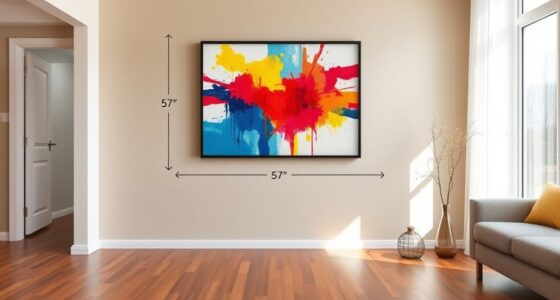
Start by choosing a bold, eye-catching anchor piece that reflects your personality and sets the tone. Build around it with frames that complement its style, whether modern, vintage, or a mix. Plan your layout with painter’s tape to experiment with spacing and arrangement, then hang at eye level. Balance larger and smaller pieces and maintain a cohesive color scheme. Keep working on your layout until it feels harmonious—you’ll discover more tips for creating a stunning gallery wall along the way.
Key Takeaways
- Select a bold, visually compelling piece as the anchor to set the tone and color palette.
- Choose complementary frame styles that align with the anchor’s aesthetic for cohesive styling.
- Position the anchor piece at eye level to serve as the focal point of the gallery wall.
- Plan layout using painter’s tape, experimenting with arrangements before hanging.
- Balance smaller pieces around the anchor, maintaining consistent spacing and visual harmony.
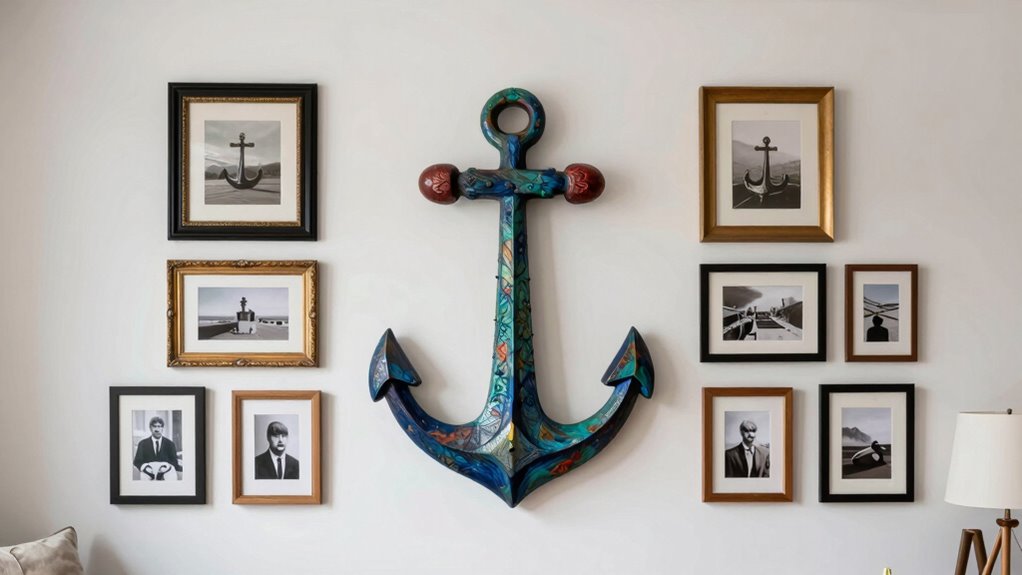
Creating a gallery wall around a single anchor piece can instantly transform a plain wall into a stunning focal point. It’s a chance to showcase your personality and style while adding visual interest to any room. The key is choosing a compelling anchor piece first—something with bold colors, interesting textures, or a striking design. Once you’ve picked it, you’ll want to build around it thoughtfully, ensuring your entire display feels cohesive. Start by considering frame styles; these set the tone for your gallery. If you opt for sleek, modern frames, your wall will look contemporary and clean. Alternatively, vintage or ornate frames bring a touch of elegance or nostalgia. Mixing different frame styles can add depth and character, but make sure they complement each other and don’t clash.
Choose a striking anchor piece to create a cohesive, stylish gallery wall that showcases your personality.
Next, think about color schemes. Your anchor piece should serve as the foundation for your palette. If it’s vibrant, you might want to keep surrounding artwork and frames relatively neutral so they don’t compete. Alternatively, if your anchor piece has a subdued palette, you can introduce pops of color through additional art or accessories, creating harmony and contrast. Consistency in color schemes helps your gallery feel intentional and well-curated, rather than cluttered or chaotic. Additionally, consider the visual balance of your arrangement to ensure it feels harmonious and pleasing to the eye. Incorporating visual weight through the placement of different-sized pieces can help achieve this balance. Incorporating visual hierarchy can also guide the viewer’s eye through the display, emphasizing the most important elements.
When arranging your wall, start by positioning your anchor piece at eye level. This creates a natural focal point and helps guide the rest of your layout. From there, you can experiment with different arrangements—symmetrical, grid-like patterns work well for a polished look, while a more eclectic, asymmetrical layout offers a relaxed vibe. Use painter’s tape to mock up your layout on the wall before hanging anything. This step allows you to see how different frame styles and art pieces interact within the space, making adjustments easy.
As you assemble your gallery, balance the sizes of your frames and artwork. Place larger pieces near the anchor to anchor the display, then fill in with smaller pieces that complement it. Pay attention to spacing; consistent gaps create order, but varying distances can add visual interest if done thoughtfully. Remember, the goal is to make your gallery feel unified, so keep your chosen color scheme and frame styles in mind throughout the process. When finished, step back and review—your gallery wall should feel intentional, cohesive, and uniquely yours.
As an affiliate, we earn on qualifying purchases.
Frequently Asked Questions
How Do I Choose the Best Anchor Piece for My Space?
Choose an anchor piece that complements your space’s color scheme and reflects your style. Look for frame styles that match or contrast your other artwork for visual interest. Consider the size—an oversized piece can serve as a strong focal point, while a smaller one offers versatility. Make certain the colors harmonize with your room’s palette. This thoughtful selection sets the tone and guides your gallery wall’s overall look.
What Wall Types Are Best Suited for Gallery Walls?
You’ll find that smooth, drywall walls are ideal for gallery walls, as they support hooks and nails easily. If you have textured or brick walls, consider using adhesive hooks or specialized hardware. For an eclectic look, mix art styles and frame materials—wood, metal, or vintage frames—to add variety. Make certain your wall type can handle the weight of your art pieces, and choose appropriate hanging methods for durability and style.
How Can I Ensure Symmetry in My Gallery Layout?
To guarantee symmetry in your gallery layout, start by planning your design on paper or using a digital tool. Use consistent frame styles and coordinate colors to create harmony. Arrange your pieces around the anchor with balanced spacing, ensuring visual weight is evenly distributed. Measure carefully and use painter’s tape to outline your layout on the wall, making adjustments until everything feels balanced and symmetrical.
What Tools Are Essential for Hanging Multiple Frames?
To hang multiple frames, you’ll need essential tools like a level, tape measure, and a pencil for precise placement. Pay attention to frame sizes to guarantee consistent spacing, and use appropriate hanging hardware for each piece’s weight. A stud finder can help locate secure spots on the wall, especially for heavier frames. These tools help you create a balanced, professional-looking gallery wall effortlessly.
How Do I Update or Change My Gallery Wall Over Time?
You can update your gallery wall by rotating artwork and making seasonal updates. Regularly swap out pieces to keep the display fresh and relevant. Use removable hooks or frames that allow for easy changes without damaging the wall. Incorporate new art, photos, or decorative items to reflect current seasons or your evolving style. This approach keeps your gallery wall dynamic, engaging, and personalized over time.
As an affiliate, we earn on qualifying purchases.
Conclusion
Remember, your gallery wall isn’t just a display—it’s a story waiting to be told. By anchoring your design around one stunning piece, you create a focal point that guides the eye and invites conversation. Think of it as the heart of your space, beating with your personality. With patience and a keen eye, your wall will become an enthralling masterpiece that turns any room into a masterpiece of your own making.
As an affiliate, we earn on qualifying purchases.
As an affiliate, we earn on qualifying purchases.