When designing curved staircase galleries, you should focus on precise radii to create smooth, harmonious lines that enhance your space’s visual flow. Pay attention to sightlines to maximize openness and natural light, making your interior feel larger and more inviting. Safety matters, so guarantee handrails follow the curve seamlessly and treads are slip-resistant. Balancing form and function is key—continue exploring how the right radii and sightline planning can transform your staircase into an elegant centerpiece.
Key Takeaways
- The radius of a curved staircase influences its aesthetic silhouette and visual flow within the gallery space.
- Properly designed radii enhance sightlines, maximizing visibility and openness from various viewpoints.
- Precise curvature ensures safety, comfort, and smooth navigation across the staircase gallery.
- Sightline planning integrates natural light and views, making the gallery appear more spacious.
- Balancing radii and sightlines maintains both structural safety and architectural elegance.
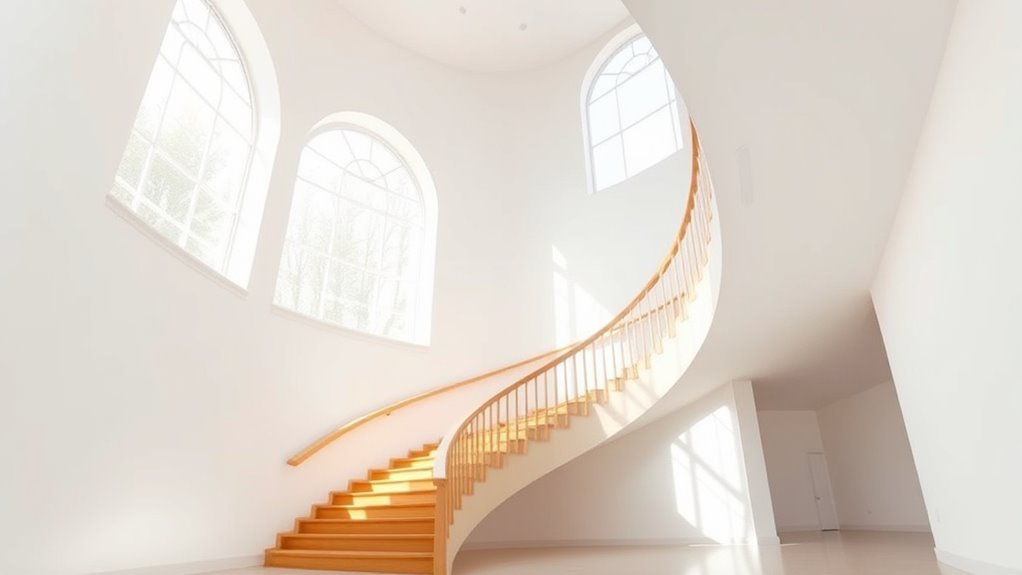
A curved staircase gallery instantly elevates the elegance of any space, drawing attention with its graceful, sweeping design. When you choose a curved staircase, you’re not just adding a functional element; you’re making a statement of architectural elegance. The fluid lines and seamless progressions create a visual harmony that transforms ordinary interiors into sophisticated masterpieces. The radii of the staircase are fundamental to its aesthetic appeal, shaping the overall silhouette and influencing how light plays across its surfaces. A well-designed radius ensures the staircase complements your space, whether it’s a grand foyer or an intimate corridor. The curvature must be precise, balancing the visual flow with the practical considerations of space. To achieve this, measuring and designing the radii accurately is crucial for creating a cohesive look. Sightlines are equally critical when planning a curved staircase gallery. You want to maximize visibility and openness, allowing natural light to flow freely and offering unobstructed views of your interior. Properly designed sightlines can make a room appear larger and more inviting, emphasizing the staircase as a centerpiece without creating visual clutter. This is especially important in open-concept layouts where the staircase acts as both functional access and a design feature. You’ll need to reflect on how the staircase’s radius affects sightlines from different angles, ensuring it enhances the space without creating awkward blind spots or obstructed views. Safety considerations are paramount when designing a curved staircase gallery. While the aesthetic appeal is essential, it shouldn’t compromise safety. The handrails should follow the curve seamlessly, providing continuous support, and be installed at a comfortable height. The treads must be slip-resistant, with consistent depth and width to prevent accidents. Balancing the radii of the staircase with safety standards means paying attention to the curvature’s sharpness—circles with tighter radii can be more challenging to navigate and may require additional safety features. Adequate lighting along the entire length of the staircase ensures visibility at all times, reducing the risk of trips or falls. You should also consider the structural integrity, ensuring the staircase can support the expected loads, especially in high-traffic areas. Additionally, understanding the signs of spoilage in materials used can help maintain the staircase’s safety and longevity over time. Ultimately, a curved staircase gallery combines artistry with functionality. By carefully reflecting on the radii and sightlines, you can create a stunning feature that enhances your space’s architectural elegance while maintaining safety for all who use it. It’s about striking the perfect balance between beauty and practicality, transforming your interior into a harmonious blend of form and function.
Frequently Asked Questions
How Do Curved Staircases Impact Overall Home Airflow?
Curved staircases can enhance your home’s airflow circulation and ventilation efficiency by promoting better air movement. Their design encourages air to flow smoothly around the curves, reducing stagnant spots. You might notice improved temperature regulation and fresher air throughout your space. Plus, the open sightlines created by the curves help distribute natural or artificial light, further supporting healthier and more comfortable indoor environments.
What Are the Best Lighting Options for Curved Staircase Galleries?
You should choose LED fixtures for energy efficiency and a sleek look, placing them along the handrail or ceiling. Chandeliers add elegance and focal points, especially over the landing. Recessed lighting offers subtle illumination that highlights the staircase’s curves without cluttering the space. Wall sconces provide ambient light along the walls, enhancing safety and style. Combining these options creates a layered, inviting atmosphere that complements your curved staircase gallery beautifully.
Can Curved Staircases Be Integrated With Smart Home Technology?
Yes, you can seamlessly integrate curved staircases with smart home technology. Think of it as fitting a puzzle piece perfectly—smart integration and home automation systems can be customized to follow the unique curves. You can control lighting, security, and even climate settings from your device. With the right setup, your staircase becomes a sleek, intelligent feature that enhances your home’s style and convenience effortlessly.
What Maintenance Challenges Are Unique to Curved Staircase Galleries?
You’ll face unique maintenance challenges with curved staircase galleries, especially regarding balustrade durability and tread replacement. The curved design puts extra stress on the balustrades, so regular inspections are vital to prevent loosening or cracking. Tread replacement can be tricky due to the custom shapes, requiring precise measurements and careful handling. Staying proactive ensures your curved staircase remains safe, sturdy, and visually appealing over time.
How Do Curved Staircases Influence the Acoustics of a Space?
Sound reflects and amplifies uniquely around curved staircases, creating mesmerizing acoustics. You’ll notice that the smooth, sweeping surfaces often cause sound reflection, which can lead to noise amplification, making speech or music more vibrant or, sometimes, muddled. The curvature directs sound waves differently than straight staircases, enhancing sound projection but also risking echoing or reverberation. So, you should consider acoustic treatments to balance clarity and ambiance.
Conclusion
As you admire the elegance of curved staircase galleries, remember that their radii and sightlines do more than please the eye—they shape your experience within the space. Think of this design as a secret passage from old-world castles, where every turn reveals a new surprise. By understanding these elements, you can craft environments that feel both timeless and inviting. So, next time you ascend, imagine you’re stepping into a scene straight out of a Victorian novel—without the need for a TARDIS.