Choosing between canvas and framed paper depends on your space’s style and lighting. If you want a bold, textured look with flexibility in framing options, canvas is ideal for gallery displays and durability. For a more refined, detail-focused appearance suited to cozy interiors, framed paper works well. Consider your environment’s humidity and light. Want to discover which material fits best with your decor and long-term needs? Keep exploring for detailed insights.
Key Takeaways
- Canvas offers a textured, immersive look ideal for galleries and bold displays, while framed paper provides a refined, detailed appearance suited for cozy spaces.
- Choose canvas for modern, large-scale, or versatile presentation options; framed paper complements elegant, intimate settings and fine details.
- Canvas’s durability and minimal maintenance make it suitable for high-traffic or outdoor areas; framed paper needs gentle care and protection from environmental factors.
- Consider budget and long-term investment: canvas is costlier upfront but more durable; framed paper is affordable but may require replacement over time.
- Match material choice to your space’s lighting, wall size, and decor style for optimal visual impact and harmony.
Texture and Visual Impact
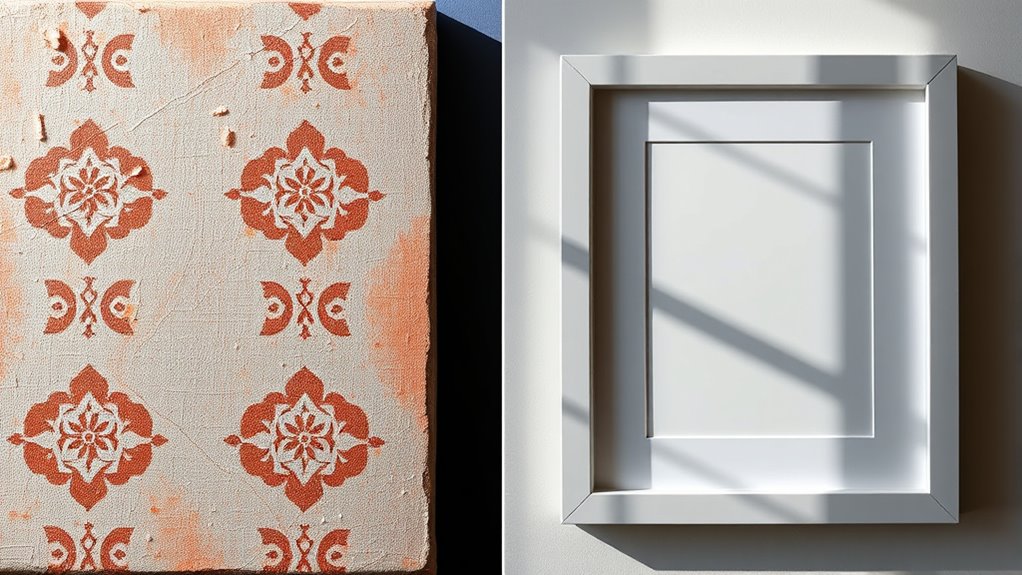
When comparing canvas and framed paper, texture plays a significant role in shaping the artwork’s visual impact. Canvas offers a rich texture depth that adds physical dimension to your art, making brushstrokes more prominent and engaging. This tactile quality enhances visual prominence, drawing viewers’ eyes to the details and giving your piece a more dynamic, lively appearance. Additionally, canvas texture can influence how light interacts with your artwork, creating different visual effects depending on the lighting conditions. The textural richness of canvas can also contribute to the overall mood and atmosphere of your piece, making it more immersive. Framed paper, on the other hand, typically has a smoother surface, which results in a flatter, more uniform look. While it may lack the tactile richness of canvas, it provides a clean, crisp background that highlights fine details without distraction. Your choice depends on whether you want a textured, vibrant effect or a sleek, polished finish that emphasizes precision and clarity. Additionally, understanding artistic mediums can help in selecting the most suitable surface for your creative style. Considering surface textures and their impact can also influence how viewers perceive your artwork’s depth and mood.
Versatility and Framing Options
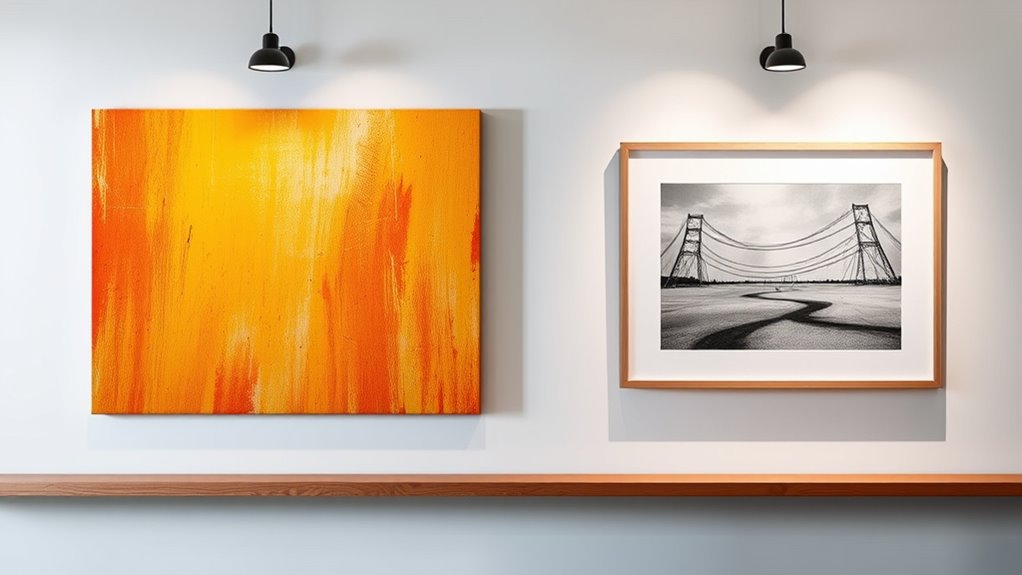
Canvas offers greater versatility in framing options, allowing you to choose from stretched, gallery-wrapped, or even unframed displays that suit different aesthetic preferences. This versatility enhances your gallery presentation, giving you multiple ways to showcase your artwork. With framing flexibility, you can adapt your piece to various spaces and styles easily. Additionally, the adoption of digital assets like NFTs is influencing modern framing trends by enabling virtual displays and innovative presentation methods. Incorporating professional guidance in selecting the right framing can further optimize how your artwork complements your environment. Moreover, understanding the types of framing available can help you make more informed decisions tailored to your artwork’s specific needs. Recognizing the significance of custom framing options can also ensure your artwork is presented in the most protective and aesthetically pleasing manner, suited to its unique characteristics.
Suitability for Different Spaces
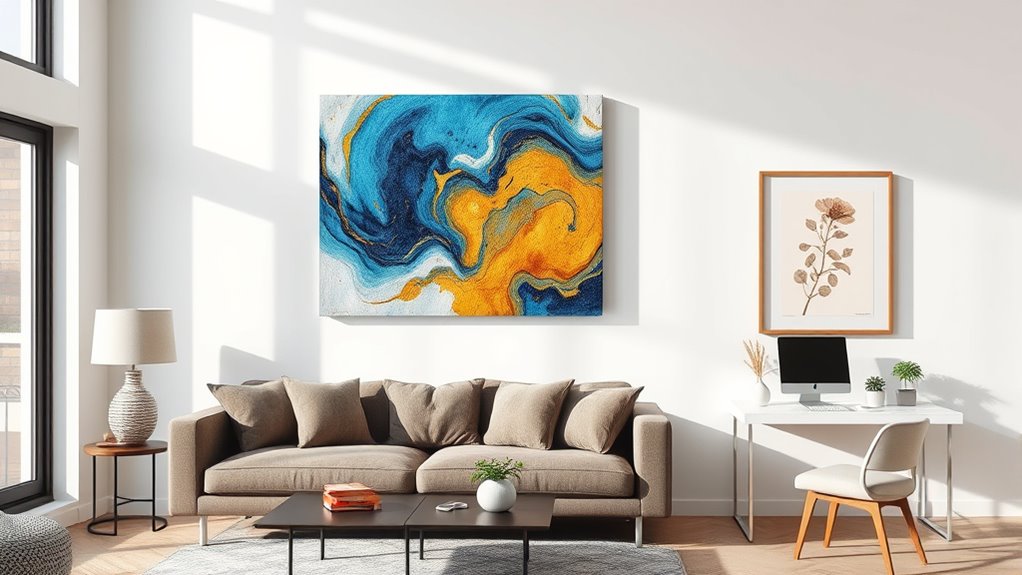
Choosing the right display option depends heavily on the space you plan to showcase your artwork in. For a gallery display, canvases often work best because they offer a professional look and can be hung directly on walls, making them ideal for art exhibitions or modern interiors. If your space features a more personalized interior decor, framed paper can add a touch of elegance and detail, fitting well in cozy living rooms or offices. Consider the lighting and wall space too; canvases tend to have a bold presence, while framed paper provides a refined, finished look. Additionally, understanding color accuracy and how it affects the visual impact of artwork can help you make a better choice. For example, certain display methods can influence the perception of visual depth, enhancing the overall presentation. To ensure your artwork looks its best, paying attention to lighting conditions can significantly impact how colors and textures are perceived. Ultimately, your choice should complement your existing decor style and the atmosphere you want to create, ensuring your artwork enhances your space seamlessly. Furthermore, selecting the appropriate display method can influence how viewers perceive the artwork’s depth and vibrancy.
Maintenance and Durability
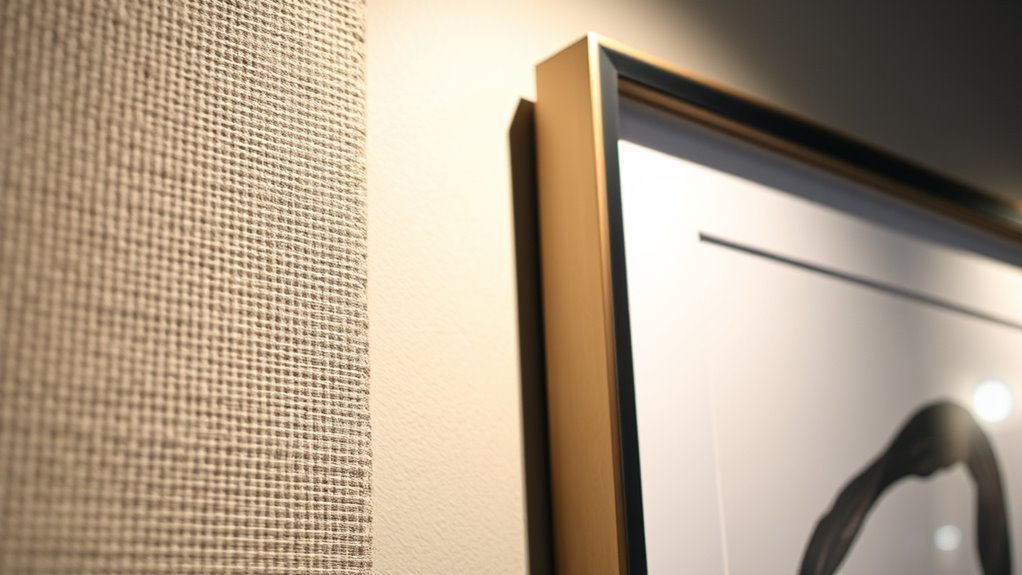
Maintaining the appearance and integrity of your artwork depends on how well you care for its display materials. For canvases, cleaning requirements are minimal—dusting with a soft brush or cloth keeps them looking fresh. Framed paper, however, can be more sensitive; gentle wiping is necessary to avoid smudges or damage. Environmental factors play a significant role in durability: high humidity can cause paper to warp or mold, while excess moisture may damage canvas textures. Sunlight exposure can fade colors on both materials over time, so protecting your artwork from direct sunlight is essential. Proper care involves controlling temperature, humidity, and light levels to preserve vibrancy and prevent deterioration. Additionally, choosing quality framing materials can help extend the lifespan of your artwork. Regular maintenance, environmental controls, and proper storage techniques are crucial for long-term preservation, ensuring your art remains stunning and intact for years to come. Incorporating protective coatings can also provide an extra layer of defense against environmental damage.
Cost and Investment Considerations
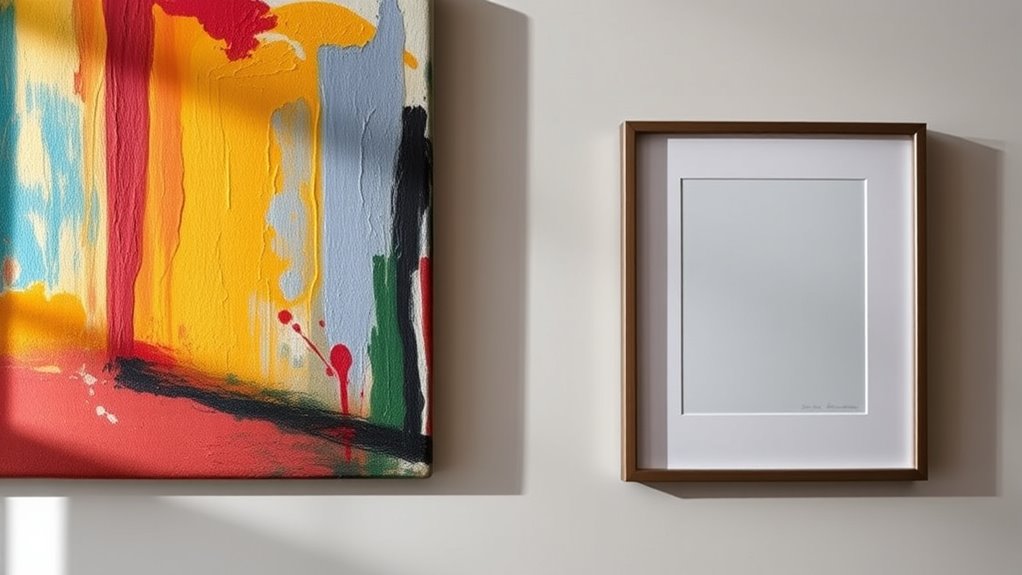
The initial investment for artwork display options varies considerably between canvases and framed paper. Generally, canvases tend to have a higher upfront cost but offer better long-term value due to their durability. Framed paper may be more affordable initially but can require more frequent replacement or restoration. Consider this price comparison when planning your budget and long-term investment. Additionally, materials used in each option can significantly impact their overall longevity and appearance over time, especially considering factors like material durability. For example, the canvas material often withstands environmental exposure better than traditional paper, which can be more susceptible to damage. Moreover, understanding the climate control needs for display areas can help in choosing the most suitable option to preserve artwork quality over time.
Frequently Asked Questions
Which Option Is Better for Outdoor Display?
For outdoor display, canvas is the better choice because of its weather resistance. It withstands moisture and sunlight better than framed paper, keeping your art protected. Canvas also offers ease of installation, as it can be stretched or mounted quickly without special tools. Framed paper, on the other hand, is more susceptible to weather damage and can be tricky to install securely outside. Choose canvas for durability and simplicity outdoors.
Can I Customize Framed Paper Easily?
Yes, you can easily customize framed paper. For example, an artist might add personal touches with decorative mats or unique frames, showcasing artistic flexibility. Framed paper allows flexible framing options, making it simple to match your decor or change styles over time. The framing ease means you can incorporate your personality and preferences without hassle, creating a tailored display that truly reflects your artistic vision.
How Does Lighting Affect Each Material’s Appearance?
Lighting impact varies between canvas and framed paper, affecting each material’s appearance differently. Bright, direct light enhances the sheen of a framed paper, making colors pop and details sharper. In contrast, softer or angled lighting reduces glare on canvas, highlighting its texture and giving a more muted, artistic feel. You should consider how your space’s lighting interacts with each material to choose the right option for your display.
Are There Eco-Friendly Options for Canvases or Framed Paper?
Like a breath of fresh air in a classic gallery, eco-friendly options are available for your art. You can choose canvases made from recyclable materials or opt for biodegradable options that break down naturally. These sustainable choices reduce environmental impact without sacrificing quality, allowing you to enjoy your artwork responsibly. Whether you prefer the texture of canvas or the sophistication of framed paper, eco-conscious materials help you create beautiful spaces while caring for the planet.
What Are the Best Options for High-Traffic Areas?
For high-traffic areas, opt for durable wall coverings like vinyl or tempered glass prints, as they offer superior wall durability and resist scuffs and scratches. These options require minimal maintenance, making them ideal for busy spaces. Avoid delicate papers or fabrics that can easily damage or stain. Choose materials that are easy to clean and maintain, ensuring your artwork stays vibrant and intact despite constant use.
Conclusion
Ultimately, choosing between canvas and framed paper shapes your space’s entire vibe. Canvas offers a stunning, gallery-like impact that can transform any room into an art sanctuary, while framed paper provides elegance with flexibility. Think about your style, space, and budget—this decision isn’t just a small detail; it’s the masterpiece of your decor journey. Whichever you pick, make sure it’s a choice that speaks to your heart—your walls deserve nothing less than brilliance.