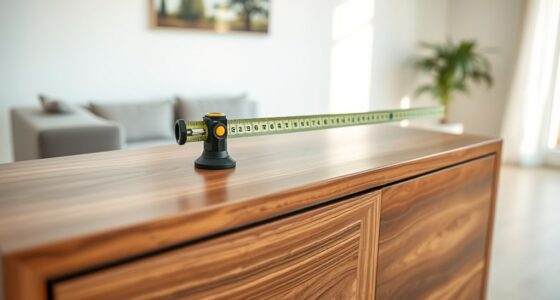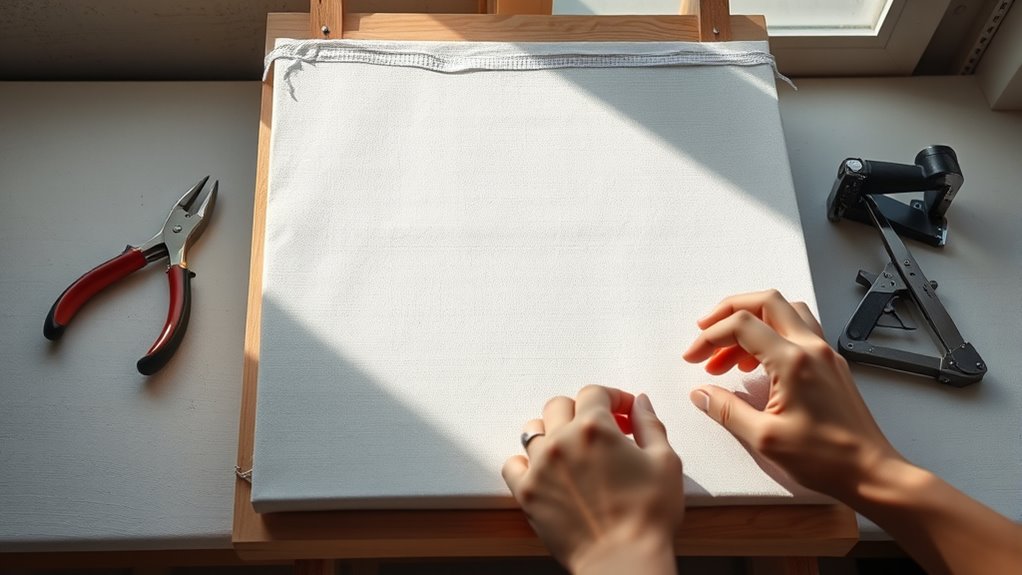

To stretch a canvas at home, gather essential tools like a staple gun, stretching pliers, a ruler, and a cutting tool. Start by preparing the fabric, ensuring it’s taut and smooth, then position it over your frame. Begin stapling from the middle of each side and work diagonally for even tension. Keep checking for smoothness and tightness. For more detailed steps and tips, keep exploring how to achieve professional results right in your space.
Key Takeaways
- Gather essential tools: staple gun, stretching pliers, ruler, cutting tool, and prepped high-quality canvas.
- Prepare the fabric by ensuring it is tightly woven, wrinkle-free, and smooth before stretching.
- Center the fabric over the frame, then stretch from the middle of each side, stapling at 2-3 inch intervals.
- Work diagonally across the frame to distribute tension evenly, tightening with pliers as needed.
- Trim excess fabric, check tautness, and finish with proper framing for a polished, durable artwork.

Ever wondered how to give your artwork a professional finish without leaving your home? The secret lies in mastering proper canvas stretching and understanding essential framing techniques. When you take on the task of stretching your own canvas, you gain control over the quality of your finished piece, ensuring it looks polished and gallery-ready. The first step is proper canvas preparation. You want to start with a high-quality, pre-cut canvas or stretch your own from raw materials. Make sure the canvas fabric is tightly woven and free of wrinkles or creases. Before stretching, lightly iron or smooth out the fabric if needed. This helps prevent puckering during the process and ensures a smooth painting surface.
Next, selecting the right tools makes all the difference. You’ll need a good staple gun, stretching pliers, a ruler or straight edge, and a cutting tool. When you’re ready to stretch, position your canvas on a clean, flat surface. Lay the frame or stretcher bars on the ground, then center the canvas over it. Use your hands to stretch the fabric evenly across the frame, starting from the middle of each side. This helps avoid slack or uneven tension. Once the fabric is roughly positioned, begin stapling it to the frame, working from the center of each side outward toward the corners. Apply staples about every 2-3 inches, pulling the fabric taut as you go. Using stretching techniques like working diagonally across the frame ensures even tension, preventing wrinkles and sagging later.
After the initial stapling, go back and add more staples along each side, pulling the fabric tighter with your pliers if needed. The key to a professional finish is maintaining consistent tension and smoothness across the entire surface. Once stapling is complete, trim any excess fabric, and double-check the tautness. To further ensure durability and prevent loosening over time, consider using proper framing techniques that enhance the longevity of your artwork. Now, your canvas is ready for painting or display. When it’s time to frame, choose framing techniques that complement your artwork and protect your creation. Whether you opt for a simple black frame or a more ornate style, ensure the frame fits well and enhances your work. A well-framed piece not only looks polished but also preserves your art for years to come.

Craftersmark Dimmable Cordless Picture Light for Wall 16n, 5000mAh Rechargeable Battery Wall Sconce Art Light, CRI 95+ 350LM Wall Light for Gallery Artwork, Paintings, Photo, Portraits - Black
【Bright & Wide Illumination for Artworks】 With 350 lumens output and a 16-inch light bar, our picture light...
As an affiliate, we earn on qualifying purchases.
Frequently Asked Questions
What Are the Risks of Stretching a Canvas Incorrectly?
If you stretch a canvas incorrectly, you risk causing warping or paint cracking. Improper tension can make the canvas uneven, leading to distortion over time. Too tight, and the canvas might warp or tear; too loose, and it’ll sag or ripple. These issues compromise your artwork’s appearance and durability. To avoid these risks, follow proper stretching techniques and guarantee even tension across all sides.
Can I Stretch a Canvas Without Professional Tools?
Yes, you can do DIY stretching without professional tools, but it’s important to be cautious. Proper canvas preparation is key to avoid wrinkles or uneven tension. Use household items like a staple gun, pliers, or a flat surface to help stretch and secure the fabric. Just make sure to work gradually, checking tension often, and take your time to prevent damage or warping.
How Do I Prevent Wrinkles During Stretching?
Did you know that improper stretching causes up to 60% of canvas warping? To prevent wrinkles, start with proper canvas preparation by lightly dampening it. Use gentle stretching techniques, working from the center outward, and secure the canvas evenly on your frame. Avoid pulling too tightly, which can cause creases. Regularly check for tension and adjust as needed to keep your canvas smooth and wrinkle-free during the process.
What Size of Canvas Is Easiest for Beginners?
As a beginner, choose a smaller canvas size, like 16×20 inches, because it’s easier to handle and control. Opt for canvas materials that are sturdy yet lightweight, such as cotton or linen, which work well with stretching techniques. Smaller canvases help you practice without feeling overwhelmed, and as you gain confidence, you can move on to larger sizes. This approach makes the stretching process more manageable and enjoyable.
How Long Does a Stretched Canvas Last Before Sagging?
Think of your stretched canvas as a loyal friend—its durability depends on how well you care for it. Usually, it lasts several years before sagging, especially with proper tension and climate control. To prevent sagging, regularly check tension and re-tighten if needed. Good quality materials and proper stretching techniques help guarantee your canvas stays firm and beautiful longer, giving your artwork a lasting, vibrant life.

Shiftshade Mirror Wall Full Length,12X14 Inch Unbreakable Mirror Tiles for Bedroom Home Gym Door, Acrylic Mirror Full Body Shatterproof Mirror Stickers for Walls,Mirror Sheets (4pcs)
(Acrylic Material) : The mirror is made of acrylic material;Eco-friendly plexiglass mirror. shatterproof, it is a great alternative...
As an affiliate, we earn on qualifying purchases.
Conclusion
Now that you know how to stretch your canvas at home, you’re all set to create professional-looking artwork. Did you know that DIY canvas stretching saves you up to 50% compared to professional framing? With the right tools and steps, you can achieve a perfectly taut surface without leaving your house. So, go ahead—start stretching your canvases and bring your creative visions to life with confidence and ease!

Lutron Diva Smart Dimmer Light Switch with Wallplate for Caseta Lighting (Lutron Smart Hub Required), for LED Lights, 150W, Single-Pole/3-Way, No Neutral, White (DVRFW-6L-WH-A)
MOST CONNECTED: The Caseta Smart Dimmer Switch connects with more leading smart home devices - including Alexa, Apple...
As an affiliate, we earn on qualifying purchases.

Lutron Caseta Original Smart Dimmer Switch (Lutron Smart Hub Required), for LED Lights, 150 Watt, Single-Pole/3-Way, No Neutral Required, PD-6WCL-WH, White
MOST CONNECTED: Caseta connects with more leading smart home devices - including Alexa, Apple Home, Google Assistant, Sonos...
As an affiliate, we earn on qualifying purchases.