Placing art near windows boosts its visual impact with natural light, but you should consider UV rays and heat that can fade and damage your pieces over time. UV exposure causes colors to dull and materials to deteriorate, while heat can warp or crack both paint and fabric. To safeguard your artwork, use UV-filtering films, protective glass, and strategic placement away from direct sunlight. If you keep these tips in mind, you’ll ensure your art stays vibrant and well-preserved longer.
Key Takeaways
- Place artwork near windows to benefit from natural light while using UV filters and protective glass to prevent fading.
- Use UV-filtering films and UV-protective glazing to block harmful rays without sacrificing brightness.
- Position art slightly away from direct sunlight to reduce heat buildup and material warping.
- Employ curtains, blinds, and climate control to manage temperature and light exposure around artwork.
- Regularly inspect artwork for signs of fading or damage and update protective measures as needed.

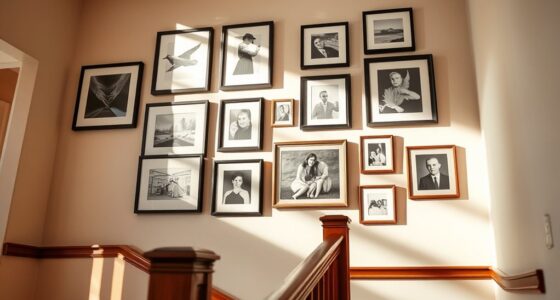
Windows are more than just sources of light; they can also be perfect spots to showcase art that interacts with natural brightness. Placing artwork near windows allows natural sunlight to enhance colors, add depth, and create dynamic visual effects. However, while sunlight can elevate your art’s presence, it also brings challenges like UV damage and heat effects that can compromise its longevity and appearance. Understanding these risks helps you make smarter choices about where and how to display your art.
UV damage is a major concern when art is exposed to sunlight. Ultraviolet rays can cause fading, discoloration, and deterioration of most art materials, including paper, textiles, and even certain paints. Over time, this exposure can considerably diminish the clarity and vibrancy of your artwork, making it look aged and worn. To protect your pieces, consider using UV-filtering films on your windows, which can block out harmful rays without sacrificing the natural light you want to enjoy. Alternatively, placing art behind UV-protective glass or acrylic also reduces the risk of fading, allowing you to enjoy the brightness without sacrificing the piece’s integrity.
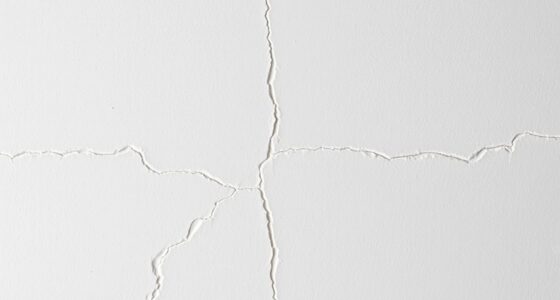
Heat effects are another factor that demands your attention. Sunlight streaming through windows can raise the temperature near your artwork, especially during hot months. Excessive heat can cause materials to warp, crack, or dry out faster than intended. It can also accelerate chemical reactions in certain paints and dyes, leading to discoloration or deterioration. To mitigate heat effects, you might position your art at a slight distance from the window or use window coverings like curtains or blinds to regulate sunlight intensity. Ventilation and climate control can also help maintain a stable environment, reducing temperature fluctuations that could harm your art over time.
It’s important to balance the desire for natural light with the need for preservation. You don’t have to hide your art away or block all sunlight; instead, you can optimize the viewing experience while protecting your investment. Using protective glazing, UV filters, and strategic placement allows you to enjoy the beauty of natural brightness without risking damage. Regularly inspecting your artwork for signs of fading or warping can alert you to potential issues before they become serious. Remember, the goal is to embrace the positive effects of sunlight—like the way it enhances colors—while minimizing the adverse effects of UV damage and heat.
Frequently Asked Questions
How Do UV Rays Affect Different Types of Artwork?
UV rays can cause significant damage to your artwork, especially if it’s light-sensitive. They lead to fading, discoloration, and deterioration over time. Different materials like paintings, textiles, or photographs react uniquely, but all are vulnerable to UV damage. To protect your art, you should minimize exposure to direct sunlight, use UV-filtering glass or film, and keep the environment cool and stable, preventing unnecessary heat buildup that accelerates deterioration.
What Window Treatments Best Protect Art From UV Damage?
You should choose window treatments with UV protection like UV-filtering films or UV-blocking curtains to shield your artwork. Installing window insulation helps reduce heat transfer, which also protects art from heat damage. These options block harmful UV rays effectively and maintain a stable environment, preventing fading and deterioration. Combining UV protection with good insulation offers the best defense, so your artwork stays vibrant and preserved over time.
Can UV Filters Be Added After Artwork Is Installed?
Yes, you can add UV filters after artwork is installed. UV filter installation is a straightforward way to enhance your artwork’s preservation techniques without removing or repositioning it. Simply consult a professional to guarantee proper handling and fit. Installing UV filters helps block harmful ultraviolet rays, protecting your art from fading and damage over time. This easy step can considerably extend your artwork’s lifespan and maintain its visual integrity.
How Does Heat From Sunlight Impact Artwork Longevity?
Heat from sunlight can considerably impact your artwork’s longevity by causing light reflection and indoor heat buildup. Prolonged exposure to heat accelerates fading, warping, and deterioration of materials. To protect your pieces, consider using UV filters and positioning art away from direct sunlight, which reduces heat exposure. Regularly monitor indoor temperatures and maintain good ventilation to minimize heat-related damage, keeping your artwork vibrant and well-preserved over time.
Are There Seasonal Variations in UV Exposure Indoors?
Yes, seasonal UV fluctuations cause indoor UV variability that can affect your artwork. During summer months, you’ll experience higher UV levels due to longer days and stronger sunlight, increasing potential damage. In winter, UV exposure drops, reducing risks. You should consider these seasonal changes when placing art near windows, using UV-protective glazing or curtains to shield your pieces year-round and preserve their beauty and longevity.
Conclusion
As you carefully choose where to display your art near windows, remember the hidden risks lurking in the light. With UV rays and heat quietly working against your masterpieces, the beauty you cherish could fade faster than you expect. But with mindful placement and protective measures, you hold the power to preserve their brilliance. Keep your eye on the horizon—because what’s just beyond that glass might hold the key to safeguarding your art’s future, or its silent demise.