When placing art above wainscoting, aim to hang the center of your artwork at about 58-62 inches from the floor for the most balanced look. Keep the art proportionate to your wall space and wainscoting height, ensuring it doesn’t seem lost or overwhelming. For multiple pieces, leave 2-4 inches between them, and position artwork just above the wainscoting edge to create harmony. To perfect your setup, there’s more to contemplate that can elevate your space.
Key Takeaways
- Hang artwork so its center is at eye level, typically 58-62 inches from the floor.
- Position art just above the top edge of the wainscoting for a cohesive look.
- Adjust hanging height based on wainscoting height; taller wainscoting may require higher placement.
- Ensure artwork is proportionate to wall space and wainscoting height for balanced aesthetics.
- Maintain 2-4 inches spacing between multiple pieces to prevent clutter and enhance visual harmony.
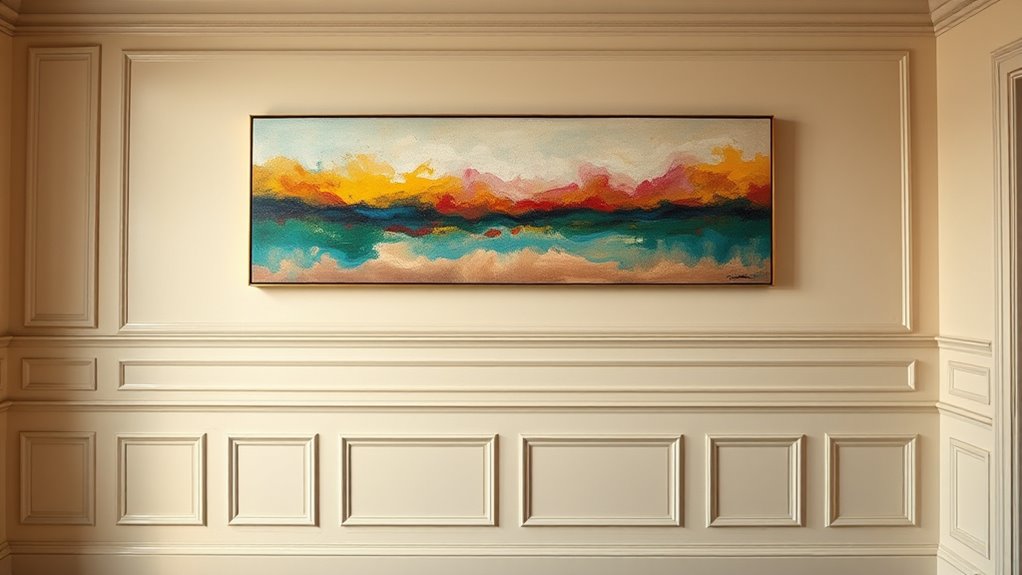
If you’re looking to elevate your interior design, placing art above wainscoting offers a simple yet impactful solution. This approach not only adds visual interest but also helps define the room’s style and personality. When selecting art for this space, consider the frame styles carefully. The right frame can complement both the artwork and the wainscoting, creating a cohesive look. For a classic feel, opt for ornate, gilded frames that echo traditional decor. If your space leans modern, sleek, minimalist frames in metal or simple wood can make a bold statement without overwhelming the room. Matching or contrasting frame colors with the wainscoting and wall tones can enhance the overall aesthetic, so think about color coordination carefully. For example, if your wainscoting is painted in a neutral shade, choosing frames that pick up accent colors from the room can create harmony. Conversely, contrasting frame colors can add a vibrant pop and draw attention to the art.
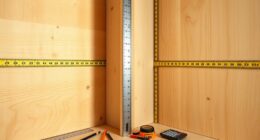
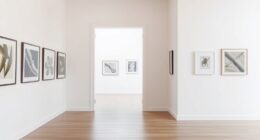
Heights and proportions are critical when hanging art above wainscoting. You want to strike a balance so the artwork doesn’t seem lost or overpowering. A good rule of thumb is to hang your art so that its center is roughly at eye level, about 58 to 62 inches from the floor. This height works well whether you’re working with a single piece or a gallery wall. For larger artwork, keep in mind that it should be proportionate to the wainscoting and the wall space. Too small, and it can get lost; too large, and it can feel overwhelming. When arranging multiple pieces, leave enough space between them—typically around 2 to 4 inches—to maintain visual clarity and flow. Additionally, incorporating proper lighting techniques can enhance the visibility and impact of your artwork, creating a more inviting and polished look.
The height of the wainscoting itself influences how high you should hang your art. If your wainscoting reaches about one-third to halfway up the wall, position your art just above the wainscoting’s top edge for a unified appearance. If you have tall wainscoting, consider hanging art slightly higher to avoid crowding the space. Remember, the goal is to create a visual connection between the wainscoting and the artwork, so they work together rather than compete. Taking these factors into account will help you achieve a balanced, polished look that enhances your room’s style and makes your art stand out beautifully.
Frequently Asked Questions
What Are the Best Types of Artwork for Above Wainscoting?
You should choose artwork that complements your space and emphasizes height. Opt for pieces with bold, striking visuals, and consider varying frame styles to add interest. Use gallery lighting to highlight your artwork and create a focal point. Keep in mind, larger pieces work well above wainscoting, while smaller works can be grouped. This combination creates a balanced, inviting look that draws attention and enhances your room’s style.
How Do Ceiling Height and Room Size Influence Art Placement?
Think of your room as a grand stage where ceiling height and room size are the spotlight and backdrop. If your ceilings are tall, you can elevate artwork higher, creating a sense of grandeur. In smaller rooms, keep art closer to eye level for intimacy. Larger spaces allow for bigger pieces or multiple works, while lower ceilings benefit from smaller, well-proportioned art to avoid overwhelming the space.
Can Decorative Moldings Affect the Choice of Artwork Height?
Decorative moldings and architectural details substantially influence your artwork height choices. Molding styles, like crown or picture rails, create natural visual guides, prompting you to position art at eye level or just above the molding for harmony. They can also frame your pieces, emphasizing their importance. By considering these details, you guarantee your artwork complements the room’s architecture, creating a cohesive and polished look that highlights both the art and the moldings.
Are There Specific Styles of Art That Complement Wainscoting?
You’ll find that historical art, like classical paintings, pairs beautifully with traditional wainscoting, enhancing its timeless charm. Modern sculptures, on the other hand, create a striking contrast that adds contemporary flair. When choosing artwork, consider how these styles balance with your molding details. Opt for pieces that complement the height and proportions of your wainscoting, ensuring a harmonious and visually appealing display in your space.
How to Balance Artwork Proportions With Wainscoting Design?
Imagine your walls as a symphony where scale harmony creates visual equilibrium. To balance artwork proportions with wainscoting, choose pieces that complement its height—typically, art should be centered about 60-66 inches from the floor. Larger works work well if they span the width above the wainscoting, while smaller pieces can be grouped. This balance guarantees your decor feels cohesive, inviting, and visually satisfying.
Conclusion
Now that you’ve explored the art above wainscoting, you’re ready to enhance your space with confidence. Think of the artwork as the cherry on top of a sundae—perfectly placed to elevate the room’s style. When you choose the right heights and proportions, you create a harmonious balance that feels natural and inviting. So, don’t be afraid to experiment, trusting your eye to find that sweet spot where art and architecture beautifully meet.