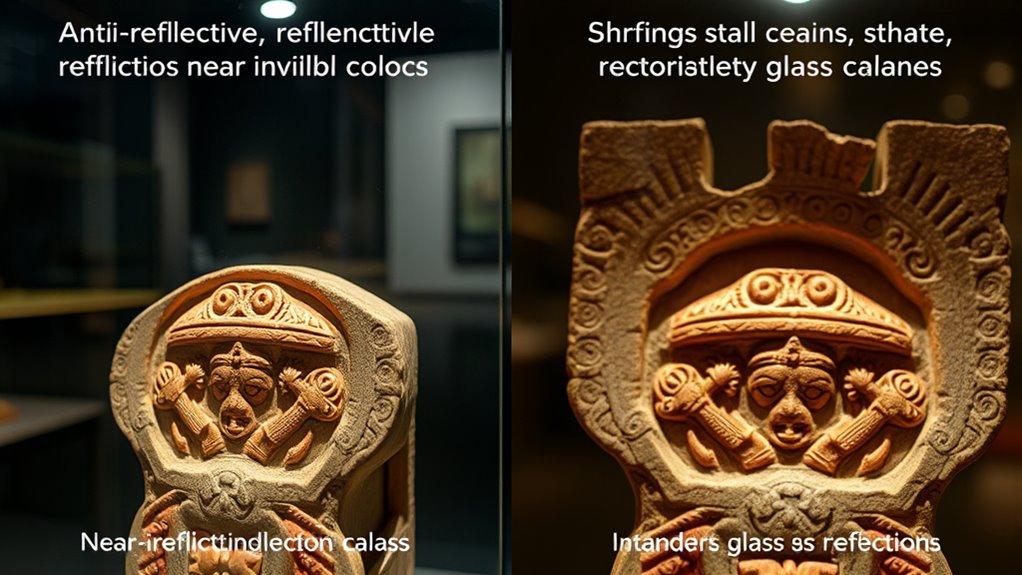

Anti-reflective glass reduces glare and reflections, making objects clearer from different angles, especially in bright environments. Museum glass offers high clarity, minimal distortion, and often includes UV protection to preserve valuable items over time. While anti-reflective glass focuses on glare reduction, museum glass provides broader protection and color accuracy. Understanding these differences helps you choose the right for your display, and exploring further reveals how each type enhances your viewing and preservation needs.
Key Takeaways
- Anti-reflective glass reduces glare and reflections for clearer viewing, especially in bright lighting conditions.
- Museum glass offers superior clarity, minimal distortion, and often includes UV filters for protecting artworks.
- Anti-reflective glass focuses on glare reduction, while museum glass emphasizes protection and preservation.
- Museum glass is ideal for high-value or delicate items needing comprehensive UV and environmental protection.
- Both enhance viewing experience but serve different purposes: glare control versus preservation and clarity.
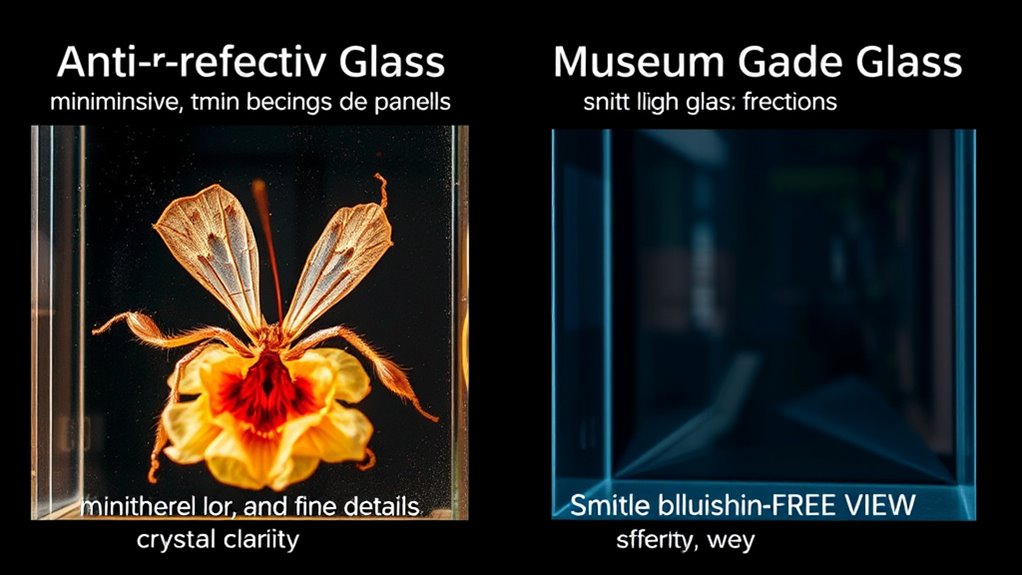
When choosing glass for displaying artwork or valuable items, understanding the differences between anti-reflective glass and museum glass is essential. These options are designed to protect and enhance your pieces, but they serve different purposes, especially regarding light transmission and glare reduction. Anti-reflective glass is engineered to minimize reflections, making it ideal when you want your artwork to be clearly visible without distraction. Its special coating reduces glare markedly, allowing viewers to see the piece from various angles without the glass interfering with their view. This is particularly helpful in brightly lit spaces or areas with multiple light sources, where reflections can obscure details or diminish the visual impact of your display. Understanding light transmission helps you choose the best glass for your specific environment and display needs.
Museum glass, on the other hand, is designed to provide superior clarity and protection for valuable or delicate items. It typically combines high light transmission with excellent glare reduction, ensuring your artwork or collectibles are showcased in the best possible light. Museum glass often contains a UV-filter that blocks harmful ultraviolet rays, preventing fading and deterioration over time. Its optical clarity is exceptional, offering almost invisible coverage that preserves the true colors and details of your pieces. When you look at artwork behind museum glass, you’ll notice minimal distortion or reflections, making it seem as if it’s not behind glass at all.
While both types improve viewing conditions, the key difference lies in their primary focus. Anti-reflective glass emphasizes glare reduction and improved light transmission, making it suitable for situations where visibility from multiple angles is vital. Museum glass balances light transmission with glare control while adding UV protection, making it the preferred choice for high-value or irreplaceable items. If you’re displaying artwork in a well-lit gallery or a room with many windows, anti-reflective glass can help you see the piece clearly without reflections distracting viewers. Meanwhile, if you’re protecting a priceless painting or antique, museum glass ensures your piece remains vibrant and protected from damage caused by UV rays.
In essence, your choice depends on your display environment and the level of protection needed. Both types offer excellent glare reduction and high light transmission, but museum glass provides a broader spectrum of protection and clarity. When you understand these differences, you can select the right glass to showcase your artwork beautifully while maintaining its integrity over time.
Frequently Asked Questions
How Does Anti-Reflective Coating Impact Glass Durability?
Anti-reflective coating can slightly reduce glass strength because it adds a thin layer that may introduce minor stress points. However, with proper application, coating longevity remains high, and the impact on durability is minimal. You’ll find that quality coatings are designed to withstand daily wear, ensuring your glass stays clear and protected over time. Just avoid harsh cleaners to maintain both the coating’s effectiveness and the glass’s overall durability.
Can Museum Glass Be Customized for Specific Lighting Conditions?
Yes, museum glass can be customized for specific lighting conditions. You can work with providers to tailor lighting customization options that optimize glare management and reduce reflections based on your display environment. This guarantees your artwork or artifacts are viewed clearly, even under challenging lighting. Customization helps you control light angles and intensity, creating the ideal viewing experience and protecting delicate pieces from harmful UV rays while enhancing visibility.
What Is the Maintenance Process for Anti-Reflective Versus Museum Glass?
You should regularly clean both anti-reflective and museum glass with a soft, lint-free cloth and gentle cleaning solutions to prevent scratches and maintain clarity. Anti-reflective glass may require more frequent cleaning due to smudges, while museum glass’s longevity factors include avoiding harsh chemicals and abrasive materials. Always follow manufacturer instructions to preserve the coatings, ensuring your display remains pristine and protected over time.
Are There Environmental Considerations for Choosing Either Glass Type?
You should consider the environmental impact and sustainability considerations when choosing between these glass types. Anti-reflective glass often involves coatings that may require energy-intensive manufacturing, while museum glass can contain lead or other chemicals affecting recyclability. Opting for eco-friendly options or recycled materials can reduce your environmental footprint. Ultimately, evaluate how each type’s production, durability, and disposal align with your sustainability goals to make an informed decision.
How Do Costs Compare Between Anti-Reflective and Museum Glass Options?
You’ll find that pricing comparison shows museum glass generally costs more than anti-reflective glass due to higher material costs. While anti-reflective glass is more affordable and offers excellent glare reduction, museum glass includes UV protection and enhanced clarity, driving up its price. Your choice depends on your budget and the level of preservation needed. Be prepared for a higher investment if you opt for museum glass, but it provides superior protection.
Conclusion
So, here you are, choosing between anti-reflective and museum glass, trying to protect your masterpiece. Ironically, while one minimizes reflections for clearer viewing, it might sacrifice some authenticity. The other preserves the original look but can be more reflective. Whichever you pick, remember: in art, sometimes the very thing you seek to hide—glare or distortion—becomes the story worth telling. After all, perfection is just a reflection of your priorities.