TL;DR

Get furniture and decor delivered free with Prime
- Fast, free delivery on millions of items
- Prime Video, Amazon Music and more included
- Member-only deals all year
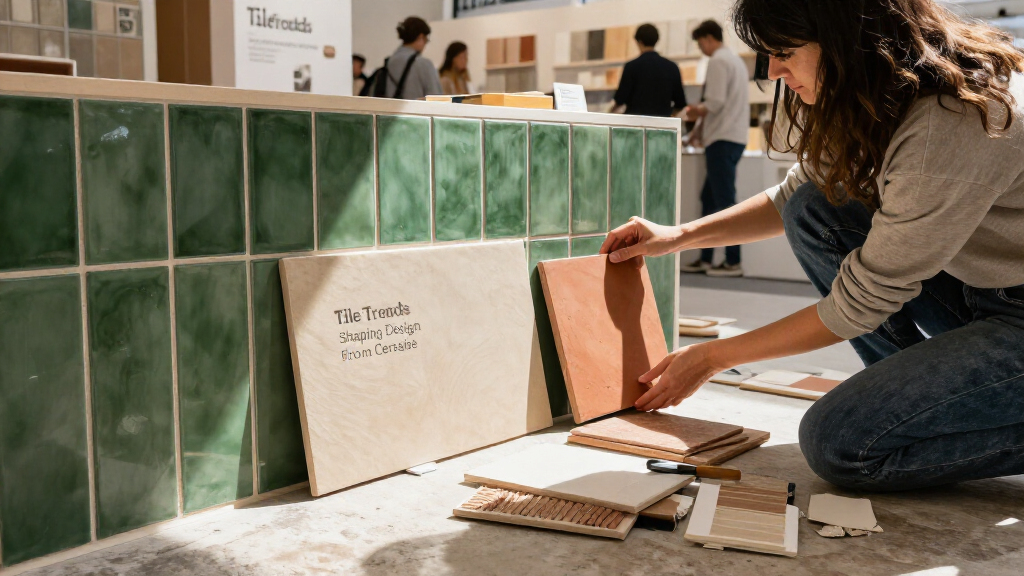
Cersaie 2026 in Bologna brought together more than 90,000 visitors and 600 exhibitors from 24 countries. A Design Milk report identified six themes across the fair: richer color, green and earthy palettes, optical and tactile effects, realistic natural-material looks, large-format tiles and intricate digital printing.
Cersaie 2026, the annual ceramic tile and architectural-surface trade fair in Bologna, showcased six recurring design directions, according to a report by Design Milk: saturated color, green and earthy palettes, dimensional effects, natural-material looks, large-format tiles and detailed digital printing. The five-day event drew more than 90,000 visitors to see 600 exhibitors from 24 countries, making the display a broad snapshot of what manufacturers are bringing to the market—not proof that every trend will become common in homes or commercial projects.
The report described warm, moody colors as a prominent visual theme, including burgundy, brown, terracotta, red and yellow. Danielle McWilliams, principal at Novità, the communications agency for Ceramics of Italy, said manufacturers introduced collections in those shades. At the same time, several exhibitors paired stronger hues with warm whites and natural neutrals. Atlas Concorde’s Boost Hux, for example, combines natural tones with green, red, blue and ember accents; its Vivia range features vivid glazed colors inspired by Italian ceramics.
Green and nature-linked colors appeared alongside terracotta and other earthy tones. Cristina Faedi, a tile trend expert and consultant to Confindustria Ceramica, described green as a color associated with calm and natural landscapes. Products on display also used relief, gloss and light to alter how a tile reads: examples in the report include three-dimensional wall designs and tiles that create an illusion of depth while remaining flat to the touch. Atlas Concorde’s Benedetta Borghi said ceramic surfaces are increasingly being treated as architectural elements, rather than simply as reproductions of other materials.
The report also pointed to porcelain that imitates stone, large-format pieces suited to indoor and outdoor use, and advances in digital printing. Flaviker’s Magma collection, for instance, draws on slate and lava stone, with versions reported as available up to 48 inches. Verde’s Essenziale uses a printing process to evoke limestone. These are examples from individual manufacturers, not an independent product-performance comparison or a measure of sales.
How Tile Choices Are Expanding
The fair matters to readers because tile is both a finish and a lasting part of a building’s surfaces. The collections shown suggest designers and manufacturers have more options for using color, pattern and texture without relying solely on paint, natural stone or conventional flat tile. For homeowners and specifiers, the practical choice still depends on a project’s budget, installation conditions, maintenance needs and intended use.
Porcelain that resembles stone may offer a manufactured alternative where natural material cost or performance is a concern, but the report does not establish that every imitation is cheaper or better suited to every setting. Likewise, large-format or relief tiles can affect the look and detailing of a room, but product availability and installation requirements vary. Cersaie provides a view of what suppliers are presenting; it does not, by itself, show which styles consumers will adopt.
As an affiliate, we earn on qualifying purchases.
A Five-Day View of Tile Design
Cersaie is an annual trade show in Bologna for ceramic tile, architectural surfaces and bathroom furnishings. Its 43rd edition ran for five days at the end of September 2026. The event brought manufacturers together with architects, designers and other visitors to present new collections and surface technologies.
Design Milk’s coverage focuses on visual trends observed across the fair and on products from named exhibitors. The source also records comments from industry representatives and a trend expert. Those observations offer useful context for interpreting the displays, but they are not a formal market survey, and the article does not provide sales data or a ranking of the six trends.
““Warm, moody colors dominated the aisles of Cersaie 2026 and the windows of almost every storefront in Bologna.””
— Danielle McWilliams, principal at Novità, the communications agency for Ceramics of Italy
As an affiliate, we earn on qualifying purchases.
What the Fair Cannot Confirm
The six directions are observations from a trade-show report, not forecasts backed by consumer surveys, sales figures or installation data. The source does not say how widely the showcased collections will be stocked, how their prices compare with alternatives, or whether the designs will gain lasting popularity. It also does not provide a complete inventory of every exhibitor’s products or a ranked list of the trends by prevalence.
Claims about the performance, durability and suitability of individual products should be checked against manufacturer specifications and project requirements. The report describes looks and named technologies, but it does not independently test them. It also does not give detailed product information for every theme, including the full range of large-format and digital-printing examples.
As an affiliate, we earn on qualifying purchases.
From Showroom to Specification
The next step is for architects, designers, retailers and buyers to compare the collections shown at Cersaie with product specifications, samples and project needs. Manufacturers may provide further details on dimensions, finishes, availability, pricing and technical suitability through their catalogues and local distributors. No specific post-show launch schedule or sales milestone is provided in the report.
For readers following the trends, the clearest measure of their reach will be whether these colors, formats and surface effects appear in products that are widely available and selected for completed projects. Until that information emerges, Cersaie 2026 is best read as a snapshot of manufacturers’ current design direction.
As an affiliate, we earn on qualifying purchases.
Key Questions
What were the main tile trends reported at Cersaie 2026?
Design Milk identified saturated color, green and earthy palettes, dimensional effects, natural-material looks, large-format tiles and intricate digital printing among the themes at the fair.
When and where was Cersaie 2026 held?
The five-day trade fair took place at the end of September in Bologna, Italy.
How large was the event?
The source reports more than 90,000 visitors and 600 exhibitors from 24 countries. Those figures describe attendance and exhibitors, not consumer demand for any particular trend.
Does the report show that these trends are becoming standard?
No. It records products and observations from a trade show, but supplies no sales data or consumer research to establish how broadly the trends will be adopted.
What should buyers check before choosing a tile?
Review the manufacturer’s technical specifications, availability, cost, finish and intended-use guidance. The report highlights design directions but does not independently test the products.
Source: rss
Halloween Picks
halloween
As an affiliate, we earn on qualifying purchases.